Portuguese
Citizenship
01/07/2026

Portuguese Citizenship by Birth: Does Being Born in Portugal Make You Portuguese?

portuguese citizenship by birth

Being born in Portugal does not automatically make you Portuguese.

Unlike many countries in the Americas, Portugal does not grant a baby citizenship just for being born in Portugal on its soil. It can, but only under specific conditions.

Portuguese citizenship by birth runs mostly through your parents, not your birthplace. The main route is having a Portuguese parent. A child born in Portugal to foreign parents can also be Portuguese by birth, in the conditional cases set out below.

So the real question behind "Portuguese citizenship by birth" is short: who is Portuguese the moment they are born, and who is not? This guide answers exactly that, for a child born in Portugal and for a child born abroad to a Portuguese parent, and clears up the Portuguese nationality myths people arrive with.

In this guide you'll see what the 2026 law changed and the outdated numbers still online, whether a Portuguese parent makes you automatically Portuguese, the residency requirements, how to apply step by step, the documents you need, timelines and cost, and how citizenship by birth differs from descent or naturalization.

Does being born in Portugal make you Portuguese?

It depends, and mostly on your parents. Being born on Portuguese soil is not enough on its own, but it is also not the deciding factor. If a parent is Portuguese, yes, the child is Portuguese. If a parent has lived in Portugal legally for five years, yes again. If two foreign parents just arrived, no.

Portugal is not an unconditional jus soli (right of soil) country like much of the Americas. It runs mainly on jus sanguinis(nationality through your parents), with a few conditional soil-based exceptions.

So the honest answer to "my baby was born in Lisbon, are they Portuguese?" is: it depends on the parents, and the four situations below are the whole answer.

Who qualifies for Portuguese citizenship by birth?

A child is Portuguese from birth in four situations. The whole guide comes back to this list:

  1. A Portuguese parent. At least one parent was already Portuguese when the child was born. This is the main route, in Portugal or abroad.
  2. A parent with five years of legal residence, plus a declaration. A parent had been legally resident in Portugal for five years at the time of the birth, and the parents opt in by declaring they want the child to be Portuguese. This one is not automatic: without that declaration at registration, and proof of the parent's residence title, the child does not get nationality this way. The parent's own nationality does not matter, only the residence.
  3. Double soil. At least one parent was also born in Portugal and was living here, with any status, at the birth.
  4. Statelessness. The child would otherwise have no nationality at all.

In every other case, a child born in Portugal is not Portuguese by birth, and takes the parents' nationality instead.

Portuguese law calls all four of these nationality of origin (originária): you are Portuguese from the day you were born, retroactively, not from the day a form is approved.

A worked example

Take a foreign couple who have lived in Portugal for six years, hold residence permits, and never took Portuguese citizenship. Their baby is born in Lisbon. Can the baby be Portuguese? Yes, by origin, because a parent has more than five years of legal residence. They do have to opt in, declaring it and showing the residence title at registration, and the parents not being Portuguese changes nothing.

Now change one detail. The couple have been in Portugal six years, but only received their residence permits four years ago. Same baby, same city. Not Portuguese by birth, because neither parent had five years of legal residence when the child was born, so there is nothing to declare. The five years is measured at the birth, not today.

The rule that counts is the one at the birth

One more catch. The version of the law in force when the child was born is the one that applies.

Before the 2026 law, one year of a parent's residence was enough. A child born under the old rule, to a parent who met it then, was Portuguese by origin then, and stays Portuguese. A child born now needs the full five years. An older sibling can qualify while a newborn does not, purely because the law changed between the two births.

Born to a Portuguese parent

One Portuguese parent is enough. A Portuguese mother or a Portuguese father passes nationality of origin to their child, born in Portugal or anywhere else.

This route has no residency requirement, it does not expire, and both minors and adults are eligible. It is the strongest path to a Portuguese passport, and most of this guide keeps its focus here.

Does it matter how your parent became Portuguese?

What matters is one thing: was your parent already Portuguese, in law, when you were born?

If your parent is Portuguese by origin (born Portuguese, including through their own parent or grandparent), the answer is always yes. Nationality of origin is retroactive to their birth, so they count as Portuguese from the day they were born, even if they only had it formally recognized later, after you were born. You are covered.

If your parent became Portuguese by acquisition (through naturalization or marriage), timing decides it:

  • Born after your parent became Portuguese: you are Portuguese by origin.
  • Born before your parent became Portuguese: you are not automatically Portuguese by origin, because at your birth your parent was still a foreign national. A minor at that point can follow the parent through a separate declaration (an acquired nationality, not origin). An adult needs a route of their own.

Check the dates before you assume a whole family is covered. This is one of the most common surprises.

Born in Portugal to a foreign parent

This covers situations 2, 3, and 4 above, and it is a genuine route to citizenship by birth. A child born in Portugal to foreign parents is Portuguese by origin when a parent had five years of legal residence at the birth (by declaration), when a parent was also born in Portugal, or when the child would be stateless.

A separate naturalization route exists too, for a minor born in Portugal whose parent reaches five years of legal residence later and who is in school here. That one counts the five years at the time of the request, and it is naturalization, not citizenship by birth.

The full mechanics (which residence counts, visa versus residence permit, the declaration, the naturalization alternative) are in our dedicated guide to Portuguese citizenship for children born in Portugal to foreign parents.

Does EU or CPLP nationality change this?

No. Being an EU or CPLP national gives the child no shortcut to citizenship by birth. The territorial rules above apply the same, whatever the parents' nationality. What these statuses change is the parents' side.

  • EU nationals: EU citizens hold legal residence in Portugal easily through free movement, which makes the five-year residence condition simpler to meet. Since the 2026 law, they (parents) also sit in the shorter seven-yearnaturalization bracket. The child is still not automatically Portuguese.
  • CPLP nationals (Brazil, Angola, Cape Verde, Mozambique, and others): facilitated residence for the parents, and the same shorter seven-year naturalization period that EU Nationals have. Once a child does qualify by origin, that can open a naturalization route for the parents. None of it is birthright citizenship for the child.

What changed under the 2026 law, and the outdated info you will find online

The 2026 law made several rules stricter.

Older guides still quote the old numbers, so here is what changed, so you can spot outdated advice fast.

Children of foreign parents born in Portugal.

  • Before, no longer valid: a parent resident in Portugal for as little as one year could pass nationality of origin to a child born here.
  • Now: a parent must have been legally resident for five years at the time of the birth.

Naturalization, the parents' own route.

  • Before, no longer valid: five years of legal residence.
  • Now: seven years for EU and CPLP nationals, ten years for other nationalities, counted from the date the residence permit was issued, not from arrival.

The Portuguese-parent route itself did not change. A child of a Portuguese parent is still Portuguese by origin. What the 2026 nationality law reinforced is the weight of registration, covered next.

The impact in one line: if a guide tells you "one year of residence" or "five years to naturalize," it is describing the old Portugal citizenship rules, and it is out of date.

Portuguese nationality by birth

Are you automatically Portuguese if a parent is Portuguese?

In principle yes, in practice not quite. Nationality of origin is a right you hold from birth, but for a birth outside Portugal you have to activate it by registering or declaring. Until you do, you cannot use it.

What "by origin" means

The law treats you as Portuguese from the day you were born, retroactively. When your birth is finally registered in Portugal, it reaches back to your birth date, not the date the paperwork cleared.

That retroactivity is what separates this from becoming Portuguese later through residence or marriage.

Why registration matters more since 2026

The new citizenship law did not change who is Portuguese through a Portuguese parent. The rule for children of Portuguese citizens is untouched.

What changed, according to legal commentary on the new law, is the weight of the registration itself. Portugal used to treat the birth registration as mostly a formality that recorded a status you already held.

Under the new framing, the full legal effects of your nationality lean more heavily on that registration being completed.

The practical read from lawyers writing about the change: until your registration is concluded, you can be treated as a regular foreigner for immigration purposes, even with a Portuguese parent. So do not sit on it. Register it and document it early.

What are the residency requirements?

For a child of a Portuguese parent, there are none. Neither the child nor the parent has to live in Portugal, and the citizenship application can be made from abroad.

Residency only enters when neither parent is Portuguese. In that foreign-parents route, a parent must have been a legal resident in Portugal for five years (according to the 2026 law) at the time of the birth.

And it is residence actually held that counts, not just legal status today. Since 2026, the clock runs from the date the residence permit was issued, not from entry into the country.

So a recent arrival on a D-type visa does not meet it. A valid visa is the step before the residence permit, so someone who moved a year ago with a D visa has barely started the five-year count. A parent who has held a residence permit for five years or more is in a strong position. If you see "born in Portugal" tied to residency requirements, that rule is about children of foreign parents, and the full detail sits in the dedicated guide above.

How do you apply for Portuguese citizenship by birth?

You either register the birth in the Portuguese civil registry, or you declare that you want to be Portuguese. Both run through a Portuguese consulate, the Central Registry Office in Lisbon, or the online service on the Justice Portal.

These are two different acts, and it helps to know which one you need. Registering the birth (an assento de nascimento) records a child of a Portuguese parent, and the nationality follows from that record.

declaration of will is the active opt-in the law asks for in some cases: a child born abroad who was not registered as an infant, or the five-year-resident foreign-parent route. For a newborn to a Portuguese parent, the two usually happen together at registration.

Born in Portugal to a Portuguese parent

This is the simplest case. The birth is registered directly in Portugal, usually at the maternity unit or a civil registry office soon after the birth, and the child's Portuguese nationality is recorded from the start. There is no separate claim to file later.

Born abroad

This is the situation for most of the diaspora, and the process depends on the applicant's age.

If the person is a minor. The parents, as legal representatives, make the declaration and register the birth for the child. It is the cleanest version, because a minor's link to the Portuguese parent is usually current and easy to prove.

If the person is an adult. An adult can still claim nationality of origin through a Portuguese parent, with one extra piece of proof.

You have to show that your legal link to the Portuguese parent, your filiation, was established while you were still a minor. If the parents were not married at your birth, and the parent named on your birth certificate was foreign, you will need a certificate of parentage proving the Portuguese parent's filiation was set during your minority.

If that link was only established in adulthood, through a court, a separate window applies: you generally have to request nationality within three years of that court decision.

If your parents were married. Their marriage has to be registered in Portugal before your nationality request can move. This is a common and avoidable delay, so sort the marriage transcription first, then file.

Where you actually apply

Three channels, depending on where you are.

Online, on the Justice Portal. Portugal runs an online birth-registration and nationality service that uses the Chave Móvel Digital (the national digital key), through your phone or a Citizen Card with a card reader. The foreign parent has to activate a Chave Móvel Digital too, using their passport. It is the fastest channel when it is open, though the service goes offline for stretches, so check that it is running before you count on it.

At a Portuguese consulate, if you live abroad. This is by appointment, booked in the Portuguese citizen's name, and each consulate only takes cases from its own district (a consulate may accept only applicants born in that country and living in specific states or regions). Appointment waits can run months, so book early.

At the Central Registry Office (CRC) in Lisbon, in person or by post, which is also where consular and online files land for the final decision.

What documents are needed for citizenship by birth?

The core documents are the applicant's birth certificate, the Portuguese parent's birth certificate, proof of the parents' marriage registered in Portugal (if they were married), the filiation proof (for adults), the completed form, and ID.

Document Notes
Attribution (nationality of origin) form Portuguese only, signed before a consular officer or the registrar
Applicant's birth certificate Full/long-form, apostilled, translated into Portuguese if needed
Portuguese parent's birth certificate Recent full-form certificate. Consulates often issue it on the spot if it is computerized
Parents' marriage certificate registered in Portugal Required if the parents were married at the applicant's birth
Certificate of parentage For adults, as proof the filiation was established during minority
Applicant's valid ID or passport Certified copy
Proof of payment To the IRN

Register the Portuguese parent's civil status first. To have the filiation recorded correctly in the civil registry, you may first need to update the Portuguese parent's civil status, for example their marriage. This step is quietly decisive, and often the difference between a clean file and one that gets sent back.

Apostille and translation. Any foreign document needs a Hague Apostille from the issuing country and a certified Portuguese translation if it is not already in Portuguese. One time-saver: consulates will often issue the Portuguese parent's certificate for you on the day, if it is already in the system.

What gets a nationality-by-birth application rejected or stuck?

Most delays come from the file, not from eligibility. The right to nationality is usually clear, and the paperwork is where the months go. The problems that come up again and again:

The Portuguese parent's marriage is not registered in Portugal. If the parents were married at the child's birth, that marriage has to be transcribed onto the Portuguese record first. File the nationality request without it and the process stalls.

A foreign document has no apostille, or no certified translation. Every foreign certificate, the child's birth certificate and any foreign marriage or court records, needs a Hague Apostille from the issuing country plus a certified Portuguese translation if it is not already in Portuguese. A missing stamp is enough to send the file back.

For an adult, filiation was established after 18. Nationality of origin through a parent needs the parent-child link set during minority. If it was only established in adulthood, you either fall outside the route or face the three-year court-decision window, and either way you need the certificate of parentage.

The residence proof is missing at the declaration. For the five-year-resident foreign-parent route, the parent has to show a valid residence title at the moment of the declaration. No proof of the title, no attribution.

Names or dates do not match across documents. An incomplete name on a birth certificate, a mismatch between the local record and the Portuguese one, a dropped accent: small inconsistencies trigger correction requests that add months. Align the records before you submit.

How long does it take, and how much does it cost?

There is no fixed statutory deadline, and processing runs long. As of 2026, the Central Registry Office reports taking more than a year to conclude attribution cases. Treat that as the current reality from official sources, not a promise, since cases vary.

On cost, the government fee for attribution (nationality of origin) is lower than for acquisition routes like marriage or naturalization, at around €175. Budget for that plus apostilles and certified translations, and confirm the current amount with the IRN or your consulate before you pay, since the fee schedule changes.

What happens once your nationality is confirmed?

You are formally recorded as Portuguese, with effect back to your birth.

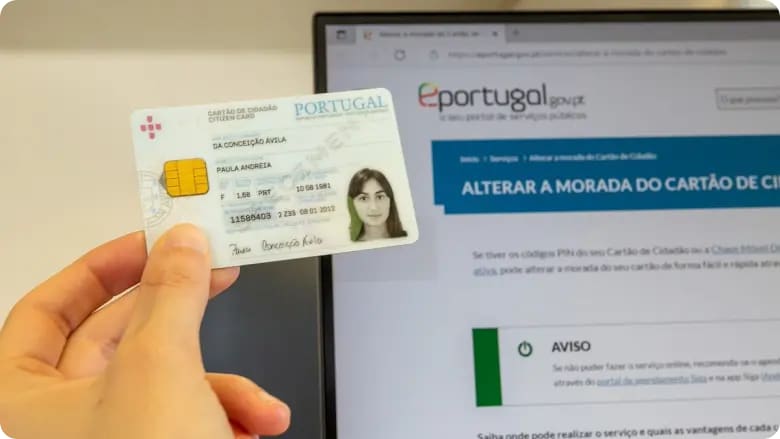
From there, two documents make it usable. You apply for a Cartão de Cidadão (the Portuguese Citizen Card, the national ID), and then a Portuguese passport.

Both are booked through a consulate if you are abroad, or a Loja de Cidadão in Portugal. A minor recorded as Portuguese has the same right to a Citizen Card, so the child's ID and passport follow the same way.

What Portuguese citizenship by birth gives the child, and the parents

For the child, it is full Portuguese and EU citizenship, from birth. That means a Portuguese passport, the right to live, work, and study in any of the 27 EU countries, and access to healthcare and education as a national. Because it is nationality of origin, the child can later pass it to their own children, the same way it reached them.

For foreign parents, a Portuguese child can open a door of their own. A foreign parent of a child who is Portuguese by origin (not by naturalization) can apply for naturalization after around five years of residence in Portugal, held under any title, through a specific route for parents of Portuguese citizens. The child's status does not hand the parents citizenship, but it gives them a path others do not have. The exact conditions sit in our guide to Portuguese citizenship by naturalization, so confirm the current period there before you count on it.

Portuguese citizenship by birth vs by descent vs naturalization

People mix these three up constantly, and the difference decides which rules apply to you.

Route Core requirement Ties or language test? Type
By birth (this route) A Portuguese parent, or birth in Portugal in specific cases No Origin (attribution)
By descent A Portuguese grandparent or great-grandparent Yes, for grandparents and beyond Origin or naturalization (attribution or acquisition)
By naturalization Legal residence in Portugal (7 or 10 years) Yes Naturalization (acquisition)

One contrast is worth naming. The direct-parent route, this one, has no language test, no effective-ties test, and no criminal bar attached to it. It is a right by blood.

The grandparent route is different. It requires proof of an effective connection to the Portuguese community, and it now meets criminal conditions too. So it matters whether your claim runs through a parent or a grandparent. If it is a grandparent or further back, start with our guide to Portuguese citizenship by descent. If you have no Portuguese ancestry but you live in Portugal, see Portuguese citizenship by naturalization.

Common questions

Is my child automatically Portuguese if born in Portugal?

Only in specific cases. If one parent is Portuguese, yes, the child is Portuguese by birth. If both parents are foreign(including EU and CPLP nationals), it depends on residence and other conditions, covered in our separate guide to children born in Portugal to foreign parents.

Can children born abroad get citizenship?

Yes, if a parent is Portuguese. Children born abroad to a Portuguese parent are Portuguese by origin under the nationality law, but it is not fully automatic in practice: you still register the birth in Portugal for it to take effect. If your claim runs through a grandparent instead, that is Portuguese citizenship by descent, a separate route.

I am Portuguese by descent. Can I pass it to my child?

Yes. Once you are Portuguese, your child is Portuguese by origin too, through the same registration step. What matters is that you already held it when your child was born.

Do I lose my current citizenship?

No. Portugal allows dual citizenship, so you keep your original passport. This holds for the child too, and for Brazilian, American, British, and nearly every other nationality.

Do I need to live in Portugal to get citizenship by birth?

No, not for the parent route. A child of a Portuguese parent has no residency requirement at all, and the whole application can be done from another country. Residency only enters the five-year foreign-parent route.

Can I do the whole process from abroad?

Yes. You file at a Portuguese consulate in your country, or online through the Justice Portal with a Chave Móvel Digital. You do not need to travel to Portugal to register a birth or claim nationality of origin.

How long does it really take right now?

Plan for well over a year. The Central Registry Office reports more than a year to conclude attribution cases, and if you go through a consulate, the appointment wait comes on top of that. Start early and keep copies of everything.

What if only one parent is Portuguese?

One is enough. A single Portuguese parent, mother or father, passes nationality of origin to the child. The other parent's nationality does not change that.

So, are you already Portuguese?

The short version undoes the most common wrong assumption: being born in Portugal does not make you Portuguese.

A Portuguese parent is the foundation. One parent is enough, born in Portugal or abroad, and you are Portuguese from the day you were born, retroactively.

Timing matters for that parent. They had to be Portuguese, in law, when you were born. A parent Portuguese by origin always counts, even if recognized late. A parent who naturalized only counts if it happened before your birth.

For a birth abroad, the right is real but dormant until you register or declare it, and the 2026 law made finishing that registration matter more, not less.

EU or CPLP parents get no shortcut for the child. Those nationalities help the parents with residence and a shorter naturalization period, not with birthright citizenship for a baby born in Portugal.

Key Takeaways

The most useful next step is to pin down which case you are in: a Portuguese parent (this route), a grandparent (descent), or two foreign parents (the separate guide). Then register the parent's marriage if needed, and get every foreign document apostilled and translated before you file. If you want a second set of eyes on your file before it goes to Lisbon, that is the kind of groundwork AnchorLess helps with. Talk to us, and we will point you in the right direction.

!: This is general information about Portuguese nationality law, not individual legal advice. It reflects the new nationality law in force since May 2026, and the implementing regulation is still being updated, so confirm the details for your own case before you file. AnchorLess helps people set up their life in Portugal and can point you to legal support when you need it.

Share this article

Share this article

Join a community of 10,000+ expats
Get the weekly tips, success stories, and step-by-step guides we share with our members to make their move a success.
Stjerne Trustpilot
Stjerne Trustpilot
Stjerne Trustpilot
Stjerne Trustpilot
Stjerne Trustpilot
I love AnchorLess! They have been fantastic for my move to Portugal with the NIF, checking account, lawyer and tax consultation. I will be happy with when this process is over, but at least the journey has been smoother with them.
LD
Lisa D
From South Africa
Stjerne Trustpilot
Stjerne Trustpilot
Stjerne Trustpilot
Stjerne Trustpilot
Stjerne Trustpilot
Guilherme was the best! I had so many questions and moving parts and he was responsive, always professional, and went above and beyond to help me with everything! He is a PRO!!!!
DS
Debra Savage
From The United States

Our readers also viewed

opretter faciliteter Portugal indvandrere
Electricity in Portugal
Energy Bill Portugal
Heating in Portugal
Utilities in Portugal
09/05/2025
Undgå forsinkelser ved at tænde for strøm og opvarmning i Portugal. Checkliste for expats: NIF, skif...
Brenda
Brenda
Content Manager
apps portugal landskabsudsigt
Flytning
Portugal
29/04/2026
Bor du i Portugal som indvandrer? Disse essentielle apps hjælper med MB WAY, tog, madlevering, sundh...
Brenda
Brenda
Content Manager
Beach Portugal

Start your new life in Europe

Turn relocation stress into success with AnchorLess.

Relocating to Europe made simple.

Start to relocate now

Arrow icon
Talk to us for free
AnchorLess support team
4.9/5 Excellent
Star
Star
Star
Star
Star
Logo AnchorLess

AnchorLess er ikke en bank, regnskabsfører, skatterådgiver, investeringsrådgiver eller advokatfirma, og vi er heller ikke en regering eller officiel regeringshjemmeside. Vi fungerer som en mellemmand, der hjælper med at forbinde dig med akkrediterede fagfolk og strømline administrative processer for din flytning i Europa.

Instagram ikon
Reddit ikon
LinkedIn ikon
Amex logo
Visa logo
Mastercard logo
& mere
Betal 4 gange uden gebyr
Klarna logo

🇵🇹 FLYT TIL PORTUGAL

Pil

🇪🇸 FLYT TIL SPANIEN

Pil
🇮🇹 Flyt til Italien
Pil

Ressourcer

Betingelser og vilkår

Personvernpolitik

Frafaldspolitik

© 2022 - 2026 anchorless.io, alle rettigheder forbeholdt.