




Umzug in ein anderes EU-Land mit einem Aufenthaltstitel: Langfristiger Aufenthalt und Ihre Rechte

Kurz gesagt
Können Sie also in ein anderes EU-Land mit einer Daueraufenthaltserlaubnis umziehen? Als EU-Bürgerin oder EU-Bürger ist das ohne Weiteres möglich, allerdings verliert Ihre Daueraufenthaltserlaubnis ihre Gültigkeit im neuen Land und Sie müssen sie dort neu aufbauen. Bei Nicht-EU-Bürgerinnen und -Bürgern kommt es auf eine einzige Zeile auf Ihrer Karte an.
Lassen Sie den Artikel von der KI Ihrer Wahl zusammenfassen:
Wenn Sie eine dauerhafte Aufenthaltserlaubnis in einem EU-Land haben, können Sie dann einfach in ein anderes EU-Land umziehen? Eine der häufigsten Fragen, die sich Menschen stellen, nachdem sie sich endlich niedergelassen haben – und die ehrliche Antwort ist die, die niemand hören möchte: Es kommt darauf an, welche Art von „dauerhaft“ Sie haben.
Dieser Leitfaden erklärt, was Ihnen eine „dauerhafte Aufenthaltserlaubnis“ tatsächlich im EU-Ausland ermöglicht, die entscheidende Unterscheidung, die alles bestimmt, und welche Unterschiede es gibt, je nachdem, ob Sie EU-Bürger:in oder Nicht-EU-Bürger:in sind. Er führt Sie durch Ihre Freizügigkeitsrechte, ob Sie in einem zweiten Land arbeiten dürfen, die Voraussetzungen und benötigten Dokumente, wie das Antragsverfahren funktioniert und die einzelnen Schritte.
Abschließend wird aufgezeigt, wie Portugal und Spanien in dieses Thema passen, da beide Länder spezifische Wege für Menschen anbieten, die von einem anderen EU-Land umziehen, sowie eine klare Handlungsempfehlung für Sie.
Inhaltsverzeichnis9
- Kann ich in ein anderes EU-Land umziehen? Die kurze Antwort vorab
- Der entscheidende Unterschied
- Welche Mobilitätsrechte gibt es?
- Darf ich in einem anderen EU-Land arbeiten?
- Welche Voraussetzungen gelten für einen Umzug?
- Welche Dokumente benötige ich für den Umzug?
- Wie Sie einen Aufenthaltstitel im Zielland beantragen
- Wie läuft der Umzug in ein anderes EU-Land ab?
- Wo es Menschen besonders schwerfällt
Umzug in EuropaKostenlos
Sprechen Sie mit uns über Ihren Umzug
- Teilen Sie uns zuerst Ihre Pläne mit
- Auf Ihren Umzug zugeschnittene Beratung
- Buchen Sie einen Termin, der Ihnen passt
4,8/51.500+ Bewertungen
Kann ich in ein anderes EU-Land umziehen? Die kurze Antwort vorab
Es kommt auf Ihren Status an – und es gibt drei sehr unterschiedliche Antworten. Ihr Recht, in ein anderes EU-Land zu ziehen – nicht nur zu besuchen – hängt davon ab, ob Sie EU-Bürger:in sind, eine nationale Daueraufenthaltserlaubnis als Nicht-EU-Bürger:in besitzen oder den Status einer:r langfristig aufenthaltsberechtigten Nicht-EU-Bürger:in in der EU haben.
Die Freizügigkeit ist das eine, Ihre Aufenthaltsrechte sind etwas anderes – und eine dauerhafte Niederlassung in einem Land überträgt sich nicht automatisch auf ein anderes.
Hier ist der gesamte Artikel in einer Tabelle zusammengefasst.
| Ihr Status | Dürfen Sie in ein anderes EU-Land ziehen, um dort zu leben? | Was das bedeutet |
|---|---|---|
| EU-Bürger:in (mit oder ohne Daueraufenthalt) | Ja | Sie genießen Freizügigkeit und können in jedem EU-Land leben, arbeiten, studieren, nach Arbeit suchen oder in Rente gehen. |
| Nicht-EU-Bürger:in mit Status als langfristig Aufenthaltsberechtigte:r in der EU | Ja, unter Bedingungen | Sie können sich in einem anderen teilnehmenden EU-Land für Arbeit, Studium, Ausbildung oder einen anderen gültigen Grund niederlassen. Sie bewerben sich dort und müssen die Voraussetzungen erfüllen. |
| Nicht-EU-Bürger:in mit nur nationaler Daueraufenthaltserlaubnis | Meist nein, nicht automatisch | Ihre Erlaubnis gilt dauerhaft nur in dem Land, das sie ausgestellt hat. Für ein anderes EU-Land benötigen Sie in der Regel einen neuen Aufenthaltsweg. |
| Familienmitglied einer:r EU-Bürger:in | Vielleicht, abgeleitet | Ihre Rechte leiten sich in der Regel davon ab, dass die:der EU-Bürger:in in ein anderes EU-Land zieht oder dort lebt, und Sie ziehen zu dieser Person. |
Der Rest dieses Leitfadens erklärt jede Zeile im Detail, denn der Unterschied zwischen „Ja“ und „meist nein“ ist der Punkt, an dem Menschen Monate verlieren.
Der entscheidende Unterschied
Wenn Sie kein EU-Bürger sind, entscheidet die einfache Tatsache, ob auf Ihrer Karte „langfristig Aufenthaltsberechtigter – EU“ steht oder ob dort nur eine nationale Daueraufenthaltserlaubnis vermerkt ist, über Ihre grenzüberschreitenden Rechte.
Klingt austauschbar. Ist es aber nicht. Eine Option öffnet Türen zu anderen EU-Ländern. Die andere ist eine sehr gute Erlaubnis – die jedoch an der Grenze endet.
Was ist eine gültige Aufenthaltserlaubnis?
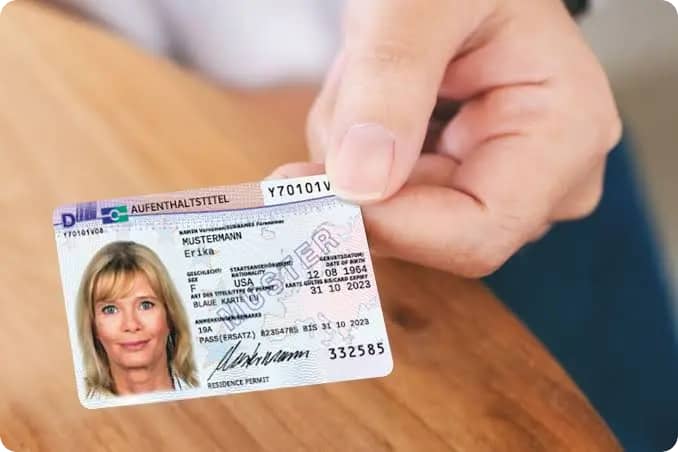
Eine Aufenthaltserlaubnis ist die Karte, die ein EU-Mitgliedstaat an Nicht-EU-Bürger ausstellt, um dort legal zu leben, und sie folgt in der gesamten EU einem einheitlichen Format.
Eine gültige Aufenthaltserlaubnis bedeutet eine aktuelle, echte Karte, die von einem EU-Mitgliedstaat ausgestellt wurde, im einheitlichen EU-Format gemäß der Verordnung (EG) Nr. 1030/2002 mit biometrischen Daten des Inhabers. Entscheidend für einen Umzug ist die Art der Aufenthaltserlaubnis – und diese ist direkt auf der Karte vermerkt.
Für Nicht-EU-Bürger gibt es drei Hauptarten von Aufenthaltskarten:
- Eine nationale befristete Erlaubnis, die an einen bestimmten Zweck gebunden ist, z. B. Arbeit, Studium, ein Visum für passives Einkommen oder ein Digital-Nomaden-Status. Die meisten Erstgenehmigungen fallen in diese Kategorie.
- Eine nationale Daueraufenthalts- oder langfristige Erlaubnis, die nach mehreren Jahren Aufenthalt nach nationalem Recht erteilt wird.
- Eine EU-Aufenthaltserlaubnis für langfristig Aufenthaltsberechtigte, die nach EU-Recht erteilt wird und den Vermerk „langfristig Aufenthaltsberechtigter – EU“ trägt (alternativ auch als Residente de longa duração – UE, Residencia de larga duración-UE, Soggiornante di lungo periodo – UE oder Daueraufenthalt-EU bezeichnet).
Der wichtigste Schritt vor jeder Umzugsplanung: Lesen Sie die genauen Worte auf Ihrer Karte. Diese eine Zeile entscheidet, welcher Abschnitt unten auf Sie zutrifft.
Nationale Daueraufenthaltserlaubnis: stark im Inland, unsichtbar im Ausland
Eine nationale Daueraufenthaltserlaubnis verschafft Ihnen sicheren, oft unbefristeten Status – allerdings nur in dem Land, das sie ausgestellt hat. Dauerhaft zu sein, bedeutet hier also: sesshaft.
Die Aufenthaltsregelung ist nationale Kompetenz, weshalb eine Daueraufenthaltserlaubnis aus Portugal, Spanien, Frankreich, Deutschland oder einem anderen Land zwar dort dauerhaft gilt, aber nicht automatisch das Recht verleiht, in einem anderen EU-Land zu leben oder zu arbeiten.
Was sie Ihnen normalerweise bietet: langfristigen oder unbefristeten Aufenthalt in diesem Land, besseren Schutz vor Ausweisung, einfachere Verlängerungen, Zugang zu Arbeit und Dienstleistungen nach nationalem Recht sowie kurzfristige Reisen innerhalb des Schengen-Raums (falls von einem Schengen-Land ausgestellt).
Was sie Ihnen normalerweise nicht bietet: ein automatisches Recht, in ein anderes EU-Land umzuziehen, ein automatisches Arbeitsrecht dort oder eine Übertragung Ihres Daueraufenthaltsstatus auf ein neues Land.
EU-Aufenthaltserlaubnis für langfristig Aufenthaltsberechtigte: die Erlaubnis mit Mobilitätsrechten
Der Status als langfristig Aufenthaltsberechtigter nach EU-Recht ist ein spezifischer EU-rechtlicher Status für Nicht-EU-Bürger, die mindestens fünf Jahre legal in einem EU-Land gelebt haben – und er ist die einzige Erlaubnis, die Mobilitätsrechte mit sich bringt.
Die Europäische Kommission beschreibt diesen Status als sicheren, dauerhaften Status, der Rechte ähnlich denen von EU-Bürgern in Bereichen wie Arbeit, Bildung, Sozialversicherung und Zugang zu Gütern und Dienstleistungen gewährt. Entscheidend ist: Dieser Status wurde von der EU geschaffen, um Menschen das Umziehen und Arbeiten in anderen Mitgliedstaaten zu ermöglichen.
Um ihn zu erhalten, benötigen Sie nach der Richtlinie 2003/109/EG in der Regel fünf Jahre legalen, ununterbrochenen Aufenthalt, stabile und regelmäßige Einkünfte sowie eine Krankenversicherung. Die Behörden müssen innerhalb von sechs Monaten entscheiden. Die Erlaubnis ist mindestens fünf Jahre gültig und verlängert sich automatisch. Dies ist der Status, der aus „Ich lebe hier“ ein „Vielleicht kann ich dorthin umziehen“ macht.

Welche Mobilitätsrechte gibt es?
Ihre Mobilitätsrechte unterscheiden sich je nach Aufenthaltsstatus erheblich: EU-Bürger genießen Freizügigkeit, langfristig Aufenthaltsberechtigte in der EU können unter bestimmten Voraussetzungen in ein zweites Land ziehen und dort einen Antrag stellen, und Personen mit einer nationalen Daueraufenthaltsberechtigung haben allein aufgrund dieser Genehmigung keines dieser Rechte.
Mobilität bedeutet hier das Recht, in einen anderen Mitgliedstaat einzureisen und dort einen Wohnsitz zu begründen. Das unterscheidet sich deutlich vom Recht auf einen Besuch.
Wenn Sie EU-Bürger sind: Freizügigkeit
EU-Bürger können in ein anderes EU-Land ziehen, um dort zu leben, zu arbeiten, zu studieren, Arbeit zu suchen oder ihren Ruhestand zu verbringen – ohne weitere Einschränkungen. Gemäß der Richtlinie 2004/38/EG über die Freizügigkeit können Sie bis zu drei Monate mit nichts weiter als einem gültigen Personalausweis oder Reisepass in einem anderen EU-Land leben.
Bei einem Aufenthalt von mehr als drei Monaten müssen Sie sich möglicherweise anmelden und Ihren Aufenthaltsgrund nachweisen, zum Beispiel als Arbeitnehmer, Selbstständiger, Student oder Person mit ausreichenden Mitteln.
Sie ziehen nach Portugal? Unsere Leitfäden für Zuziehende aus Deutschland, Frankreich, Italien und den Niederlanden führen Sie Schritt für Schritt durch die Anmeldung und den gesamten Umzug.
Nach fünf Jahren ununterbrochenen rechtmäßigen Aufenthalts in diesem neuen Land erwerben Sie dort das Daueraufenthaltsrecht, wodurch sämtliche Bedingungen entfallen.
Zieht Ihr Daueraufenthaltsrecht mit Ihnen um?
Nein. Das Daueraufenthaltsrecht ist nicht übertragbar. Wenn Sie als EU-Bürger in einem EU-Land ein Daueraufenthaltsrecht besitzen und in ein anderes Land ziehen, kommen Sie dort nicht mit einem Daueraufenthaltsrecht an.
Sie beginnen nach den Regeln der Freizügigkeit von vorn und erwerben im neuen Land innerhalb von fünf Jahren ein Daueraufenthaltsrecht. Außerdem gibt es eine Frist, die Sie beachten sollten: Sie können Ihr Daueraufenthaltsrecht verlieren, wenn Sie sich länger als zwei aufeinanderfolgende Jahre außerhalb dieses Landes aufhalten. Das Daueraufenthaltsrecht ist dauerhaft, aber nicht übertragbar.
Wenn Sie den Status eines langfristig Aufenthaltsberechtigten in der EU besitzen
Langfristig Aufenthaltsberechtigte in der EU können in ein zweites EU-Land ziehen und sich dort länger als drei Monate aufhalten, um zu arbeiten, zu studieren, eine Ausbildung zu absolvieren oder sich aus einem anderen berechtigten Grund niederzulassen, sofern sie dort einen Aufenthaltstitel beantragen und erhalten.
Sie übertragen Ihren Aufenthaltstitel nicht. Sie beantragen ihn im zweiten Land, erfüllen dessen Voraussetzungen und erhalten einen neuen Aufenthaltstitel von diesem Land. Nach fünf Jahren Aufenthalt in diesem zweiten Land können Sie auch dort den Status eines langfristig Aufenthaltsberechtigten in der EU erlangen.
Das ermöglicht echte Mobilität, sie beruht jedoch auf einem Antragsverfahren und ist nicht automatisch wie die Freizügigkeit, die EU-Bürger genießen.
Wo dies nicht gilt: Irland und Dänemark
Die Mobilität von langfristig Aufenthaltsberechtigten in der EU gilt in fast allen Mitgliedstaaten, mit zwei dauerhaften Ausnahmen: Irland und Dänemark.
Beide haben sich von der Richtlinie über langfristig Aufenthaltsberechtigte abgemeldet. Gehen Sie daher nicht davon aus, dass Ihre Karte „langfristig Aufenthaltsberechtigter – EU“ dort genauso behandelt wird. Irland gehört außerdem nicht zum Schengen-Raum und hat eigene Visabestimmungen, sodass selbst Kurzaufenthalte einem separaten Verfahren unterliegen.
Informationen zu den nationalen Aufenthaltstiteln finden Sie in unseren Leitfäden zu Aufenthaltstiteln in Irland, Zypern und Malta sowie zu Aufenthaltstiteln in den nordischen Ländern, einschließlich Dänemark.
Darf ich in einem anderen EU-Land arbeiten?
In der Regel erlaubt ein Aufenthaltstitel nur die Arbeit im ausstellenden Land. Um in einem anderen EU-Land zu arbeiten, ist in der Regel entweder die Unionsbürgerschaft, die Mobilität von langfristig Aufenthaltsberechtigten, eine EU-Blaue Karte oder ein spezifischer Weg erforderlich – ein gültiger Aufenthaltstitel allein reicht nicht aus.
Die Beschäftigungsrechte sind nicht an die Karte gebunden, sondern an Ihren Status.
Wenn Sie Unionsbürger:in sind
Unionsbürger:innen haben volle Beschäftigungsrechte in der gesamten EU und benötigen keine Arbeitserlaubnis, um in einem anderen Mitgliedstaat eine Stelle anzutreten. Dies ist die stärkste Form der Mobilität und dient als Maßstab für alle anderen Statusformen.
Wenn Sie den Status einer:r langfristig Aufenthaltsberechtigten in der EU haben
Sie können in einem zweiten EU-Land arbeiten, aber erst, nachdem Sie dort einen Antrag gestellt und die Genehmigung erhalten haben – und das zweite Land kann weiterhin Bedingungen für den Zugang zu seinem Arbeitsmarkt stellen.
Der Besitz des Status „langfristig Aufenthaltsberechtigte:r – EU“ ermöglicht Ihnen die Bewerbung um eine Beschäftigung, verleiht Ihnen jedoch nicht automatisch eine arbeitsmarktfertige Arbeitserlaubnis in jedem Land.
Die Einschränkung: der Arbeitsmarkttest
Für den Beschäftigungsweg darf ein zweites Land seinen Arbeitsmarkt prüfen und eigene Regeln anwenden, bevor es Ihnen die Arbeit erlaubt.
Einige Länder, darunter Spanien, behalten nationale Arbeitserlaubnisanforderungen bei, die auch für langfristig Aufenthaltsberechtigte aus einem anderen Mitgliedstaat gelten. Daher kann es trotz des Status „langfristig Aufenthaltsberechtigte:r in der EU“ heißen: „Zuerst prüfen wir den Arbeitsmarkt hier.“
Das einjährige Beschränkungsfenster
Sobald Sie in dem zweiten Land Ihren Aufenthaltstitel erhalten, haben Sie Anspruch auf Gleichbehandlung mit den Staatsangehörigen dieses Landes, wobei in den ersten zwölf Monaten bestimmte Beschränkungen beim Zugang zum Arbeitsmarkt gelten können.
Nach Ablauf dieses ersten Jahres entfallen diese spezifischen Beschränkungen. Es handelt sich um eine kleine Hürde, nicht um eine unüberwindbare Barriere – dennoch lohnt es sich, dies bei der Planung zu berücksichtigen, falls Ihr Umzug davon abhängt, dass Sie sofort eine Arbeit aufnehmen können.
Wenn Sie nur eine nationale Daueraufenthaltserlaubnis besitzen
Eine nationale Daueraufenthaltserlaubnis berechtigt nicht zur Arbeit in einem anderen EU-Land. Selbst wenn sie Ihnen im Heimatland volle Arbeitsfreiheit gewährt, endet diese an der Grenze, wenn es um die Aufnahme einer Beschäftigung geht. Für die Arbeit in einem anderen Land benötigen Sie den entsprechenden Weg in diesem Land.
Zur Vollständigkeit sei angemerkt: Einige Aufenthaltstitel verfügen über eigene, separate Mobilitätsregeln, wie etwa die EU-Blaue Karte für hochqualifizierte Arbeitskräfte oder die Programme für Forschende, bestimmte Studierende und unternehmensinterne Entsendungen. Dabei handelt es sich um Arbeits- und Talentwege mit eigenen Schwellenwerten und Verfahren – sie sind keine allgemeinen Rechte, die an jede Aufenthaltskarte geknüpft sind, und stellen ein anderes Thema dar als die Daueraufenthaltsberechtigung.
Welche Voraussetzungen gelten für einen Umzug?
Wenn Sie mit dem Status als langfristig aufenthaltsberechtigter EU-Bürger:in umziehen, kann das Zielland von Ihnen den Nachweis ausreichender finanzieller Mittel, eine Krankenversicherung sowie eine Unterkunft verlangen und legt die Bedingungen für den Umzug Ihrer Familie fest.
Dies sind die mit diesem Status verbundenen Aufenthaltsrechte und -pflichten, die denen entsprechen, die Sie bereits für den Erhalt des langfristigen Aufenthaltsstatus im ersten Land erfüllen mussten.
Finanzielle Mittel und Krankenversicherung
Sie müssen stabile und regelmäßige Einkünfte nachweisen, die Ihren Lebensunterhalt und den Ihrer Familie ohne Inanspruchnahme staatlicher Unterstützung decken, sowie eine Krankenversicherung, die alle Risiken im Zielland abdeckt.
Die Länder bewerten die finanziellen Mittel nach Art und Regelmäßigkeit; einige verlangen zusätzlich Integrationsmaßnahmen wie z. B. Sprachkenntnisse. Falls Sie bereits den fünfjährigen Status besessen haben, ist Ihnen dies nichts Neues – die Logik bleibt dieselbe, nur eine neue Behörde entscheidet.
Familienzusammenführung
Familienmitglieder, die bereits in Ihrem ersten Land mit Ihnen einen Haushalt gebildet haben, können mit Ihnen umziehen, und das Zielland stellt ihnen eigene Aufenthaltstitel aus.
Falls die Familie im ersten Land noch nicht bestand, erfolgt die Familienzusammenführung in der Regel als separater Antrag im Zielland. In jedem Fall erhalten Ihre Familienmitglieder nicht automatisch einen Aufenthaltstitel, sondern beantragen diesen in Abhängigkeit von Ihrem eigenen Antrag.
Sozialversicherung und Gleichbehandlung
Sobald Sie den Aufenthaltstitel im Zielland erhalten haben, haben Sie Anspruch auf Gleichbehandlung mit den Staatsangehörigen des Ziellandes in Bereichen wie Beschäftigung, Bildung, Sozialversicherung und Steuern – vorbehaltlich der oben genannten Einschränkungen auf dem Arbeitsmarkt sowie weiterer möglicher nationaler Vorgaben.
Die Gleichbehandlung ist der eigentliche Vorteil des Status als langfristig aufenthaltsberechtigter EU-Bürger:in – sie macht den bürokratischen Aufwand lohnenswert.
Welche Dokumente benötige ich für den Umzug?
Mindestens einen gültigen Reisepass oder ein gültiges Reisedokument, Ihre aktuelle Aufenthaltskarte mit Ihrem Status sowie die erforderlichen Nachweise des zweiten Landes, die in den meisten Fällen persönlich eingereicht werden müssen.
Da die Aufenthaltskarten der EU biometrische Daten enthalten und das neue Einreisesystem der EU biometrische Daten an der Grenze erfasst, sollten Sie damit rechnen, dass Ihre Identität und Ihre Vorgeschichte sorgfältig und digital überprüft werden.
Zu den typischen Unterlagen für einen Umzug als langfristig Aufenthaltsberechtigte:r in der EU in ein zweites Land gehören:
- Ein gültiger Reisepass oder ein gültiges Reisedokument mit ausreichender Restgültigkeit.
- Ihre Aufenthaltstitelkarte aus dem ersten Land, auf der „langfristig Aufenthaltsberechtigte:r – EU“ steht, oder eine beglaubigte Kopie.
- Ein Strafregisterauszug aus dem Land, das Ihnen den Status als langfristig Aufenthaltsberechtigte:r gewährt hat, ordnungsgemäß beglaubigt.
- Nachweis ausreichender Mittel und, sofern erforderlich, ein Nachweis einer Unterkunft.
- Krankenversicherung oder ein Nachweis, dass Sie über den nationalen Gesundheitsdienst versichert sind.
- Das Antragsformular des Landes und ein Nachweis über die Zahlung der Gebühr.
Dokumente aus einem anderen Land müssen in der Regel übersetzt und legalisiert oder mit einer Apostille versehen werden. Und ja, in den meisten weiteren Ländern müssen Sie den Antrag persönlich stellen – bei einer Einwanderungsbehörde oder nach Terminvereinbarung – und erneut erscheinen, um Ihre biometrische Aufenthaltskarte abzuholen. Das System möchte Ihr Gesicht schließlich immer noch sehen.
Wie Sie einen Aufenthaltstitel im Zielland beantragen
Sie stellen den Antrag im Zielland auf dessen offiziellen Formularen und zwar möglichst bald: in der Regel spätestens drei Monate nach Ihrer Einreise, wobei die Bearbeitungsfrist vom Zielland festgelegt wird.
Dies ist ein administratives Verfahren, das vom neuen Land durchgeführt wird, und kein Transfer Ihres alten Aufenthaltstitels. Daher gelten dessen Formulare, Gebühren und Anforderungen.
Die Antragstellung ist in den Ländern einheitlich geregelt:
- Sie reichen den Antrag auf dem offiziellen Formular des Ziellandes persönlich bei der zuständigen Einwanderungsbehörde nach Terminvereinbarung ein.
- Sie fügen die erforderlichen Unterlagen bei: Ihren EU-Daueraufenthaltstitel, Reisepass, Führungszeugnis, Nachweis über finanzielle Mittel, Wohnsitz und Krankenversicherung.
- Einige Länder ermöglichen es Ihnen, den Antrag bereits vor der Einreise aus dem ersten Land zu stellen, was Ihnen die Suche nach einer Wohnung nach der Ankunft erleichtern kann.
- Die Behörde muss innerhalb der gesetzlichen Frist entscheiden. Die EU-Richtlinie sieht eine maximale Bearbeitungsdauer von vier Monaten vor, nationale Verfahren können kürzer sein.
Verpassen Sie die dreimonatige Antragsfrist, kann Ihr legaler Aufenthalt im neuen Land gefährdet sein, selbst wenn Ihr Daueraufenthaltsstatus aus einem anderen Land stammt. Die Frist beginnt mit Ihrer Einreise und berücksichtigt nicht, dass Sie möglicherweise noch auf der Suche nach einer Wohnung sind.
Wie läuft der Umzug in ein anderes EU-Land ab?
Der Ablauf gestaltet sich wie folgt: prüfen Sie Ihren Status, wählen Sie die korrekte Route für Ihr Zielland aus, sammeln und beglaubigen Sie Ihre Unterlagen, beantragen Sie innerhalb von drei Monaten im zweiten Land und holen Sie Ihre Aufenthaltskarte ab. Anschließend registrieren Sie sich vor Ort für Steuer- und Sozialversicherungszwecke.
Für die Mobilität von langfristig in der EU ansässigen Personen benötigen Sie in der Regel kein Visum – einer der wenigen wirklich unkomplizierten Schritte.
Schritt für Schritt:
- Lesen Sie Ihre Karte. Prüfen Sie, ob auf Ihrer Karte „Langzeitaufenthalt – EU“ oder nur eine nationale Daueraufenthaltserlaubnis vermerkt ist. Dies entscheidet über alle weiteren Schritte.
- Wählen Sie die passende Route. Ermitteln Sie die spezifische Route des Ziellandes für Langzeitaufenthaltsberechtigte aus einem anderen Mitgliedstaat oder – falls Sie nur eine nationale Erlaubnis besitzen – die reguläre Aufenthaltsroute, die auf Sie zutrifft (Arbeit, Selbstständigkeit, passive Einkünfte, Studium, Familienzusammenführung).
- Erstellen Sie Ihre Unterlagenmappe. Reisepass, Langzeitaufenthaltskarte, beglaubigtes Führungszeugnis, Nachweis über finanzielle Mittel und Unterkunft, Krankenversicherungsschutz, Übersetzungen und Apostillen.
- Beantragen Sie im Zielland. Füllen Sie das offizielle Formular aus, reichen Sie es persönlich ein – spätestens drei Monate nach Einreise oder, falls das Zielland dies zulässt, bereits vor der Ankunft.
- Erhalten Sie Ihre Aufenthaltskarte. Nach Genehmigung erhalten Sie eine Aufenthaltserlaubnis und nach Abgabe Ihrer biometrischen Daten Ihre physische Karte des neuen Landes.
- Registrieren Sie sich vor Ort. Besorgen Sie sich Ihre lokale Steuernummer, melden Sie Ihre Adresse an und klären Sie die Sozialversicherung – die praktischen Formalitäten, die den Umzug erst vollenden.

Wo es Menschen besonders schwerfällt
Einige Muster fangen Menschen immer wieder ein. Es lohnt sich, sie zu kennen, bevor sie dich einfangen.
Der Mythos vom „mein Daueraufenthalt gilt für die gesamte EU“
Der häufigste Fehler ist die Annahme, dass ein nationaler Daueraufenthalt es dir erlaubt, überall in der EU zu leben oder zu arbeiten. Es ist eine wiederkehrende Frage in Expat-Foren und Q&A-Seiten, und die Antwort ist eindeutig: Ein Daueraufenthalt aus einem Land gilt nur in diesem Land.
Der Status mit grenzüberschreitenden Rechten ist die EU-Daueraufenthaltsberechtigung, und selbst diese erfordert, dass du dich im zweiten Land bewirbst.
Die Frist, die deinen Umzug zunichtemacht
Das dreimonatige Antragsfenster im Zielland ist eine harte Grenze, keine Richtlinie.
Menschen betrachten den Umzug als abgeschlossen, sobald sie angekommen sind, und stellen dann fest, dass der Aufenthalt im neuen Land weiterhin von einem fristgerechten Antrag abhängt. Merke dir das Einreisedatum und beginne sofort mit den Formalitäten.
Die Reform, die noch kein Gesetz ist
Mehrere Umzugsportale beschreiben einen deutlich einfacheren Regelkatalog: einen dreijährigen Weg zum Daueraufenthalt, keinen Arbeitsmarkttest im Zielland, längere zulässige Abwesenheiten – als würden diese Regeln bereits gelten. Das tun sie nicht.
Die Europäische Kommission hat 2022 einen Vorschlag zur Neufassung der Richtlinie über langfristig Aufenthaltsberechtigte vorgelegt, doch die Verhandlungen zwischen Rat und Parlament stocken und die Vorlage wurde noch nicht verabschiedet.
Die geltende Rechtslage basiert weiterhin auf der Richtlinie 2003/109/EG in der Fassung von 2011. Plane mit den Regeln, die heute gelten, nicht mit denen, die noch in Brüssel feststecken.
Können Sie also in ein anderes EU-Land mit einer Daueraufenthaltserlaubnis umziehen? Als EU-Bürgerin oder EU-Bürger ist das ohne Weiteres möglich, allerdings verliert Ihre Daueraufenthaltserlaubnis ihre Gültigkeit im neuen Land und Sie müssen sie dort neu aufbauen. Bei Nicht-EU-Bürgerinnen und -Bürgern kommt es auf eine einzige Zeile auf Ihrer Karte an.
Eine nationale Daueraufenthaltserlaubnis berechtigt Sie zwar zu einem dauerhaften Aufenthalt in Ihrem Heimatland und ermöglicht Ihnen kurzfristige Besuche im Schengen-Raum, aber sie ist nicht übertragbar. Der Status als langfristig Aufenthaltsberechtigte oder Aufenthaltsberechtigter der EU eröffnet Ihnen jedoch einen echten Weg, in einem anderen Mitgliedstaat zu leben und zu arbeiten. Selbst dann müssen Sie sich im Zielland bewerben, dessen Voraussetzungen erfüllen und die dreimonatige Frist einhalten.
Der einfachste nächste Schritt kostet Sie nichts: Lesen Sie die genauen Angaben auf Ihrer Aufenthaltskarte. Steht dort „langfristig Aufenthaltsberechtigte/r – EU“, haben Sie Optionen, die es sich zu prüfen lohnt. Steht dort „Daueraufenthalt nach nationalem Recht“, benötigen Sie wahrscheinlich einen neuen Weg in Ihrem Zielland. In jedem Fall ist dies unser Ausgangspunkt.
Teilen Sie diesen Artikel









 UMZUG INNERHALB EUROPAS