DNI Spanien: der umfassende Leitfaden für 2026
Kurz gesagt
Für Ausländer in Spanien ist der DNI ein Begriff, den man kennt, kein Dokument, das man anstrebt. Er gehört spanischen Staatsbürgern, und wenn Sie eines Tages von einem Vermieter oder einem Formular nach „DNI?“ gefragt werden, ist der richtige Schritt, einfach Ihren NIE vorzuzeigen und weiterzumachen.
Wenn Sie einen Umzug nach Spanien planen und sich bereits über den DNI informiert haben, hier die kurze Version, bevor Sie einen ganzen Nachmittag damit verbringen: Sie werden ihn wahrscheinlich nie benötigen. Der DNI ist die spanische Personalausweiskarte für spanische Staatsbürger. Für Ausländer ist in Spanien nicht der DNI, sondern das NIE das Dokument, das Ihr Leben regelt.
Das macht den DNI jedoch nicht überflüssig zu verstehen. Ein Vermieter wird nach Ihrem „DNI“ fragen. Ein Bankformular wird ein Feld mit „DNI“ enthalten. Eine Liefer-App lässt Sie ohne Angabe eines solchen nicht zur Kasse kommen. Zu wissen, was das Wort bedeutet und welches Dokument stattdessen vorzulegen ist, entscheidet darüber, ob Sie die Angelegenheit in fünf Minuten erledigen oder einen verwirrenden Nachmittag verbringen. Dieser Leitfaden erklärt daher, was der DNI ist, warum er immer wieder auftaucht und welches Dokument Sie tatsächlich benötigen, damit nichts Sie aufhält.
Inhaltsverzeichnis7
- Was ist der DNI in Spanien?
- DNI, NIE, NIF und TIE: Was ist der Unterschied?
- Wie funktioniert der DNI für Ausländer?
- Wie wird ein DNI in Spanien beantragt und verlängert?
- Neues 2026: der digitale DNI und die MiDNI-App
- Was Ausländer:innen über den DNI in Spanien wissen sollten
- Wie kann Ihnen AnchorLess helfen?
Was ist der DNI in Spanien?
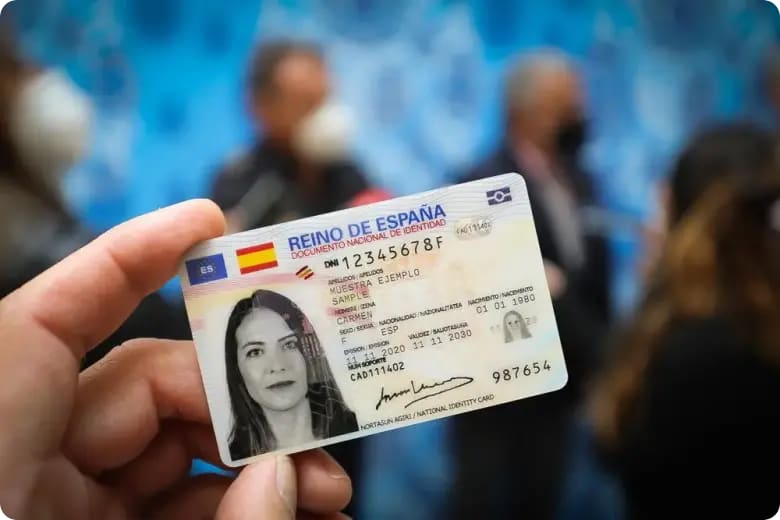
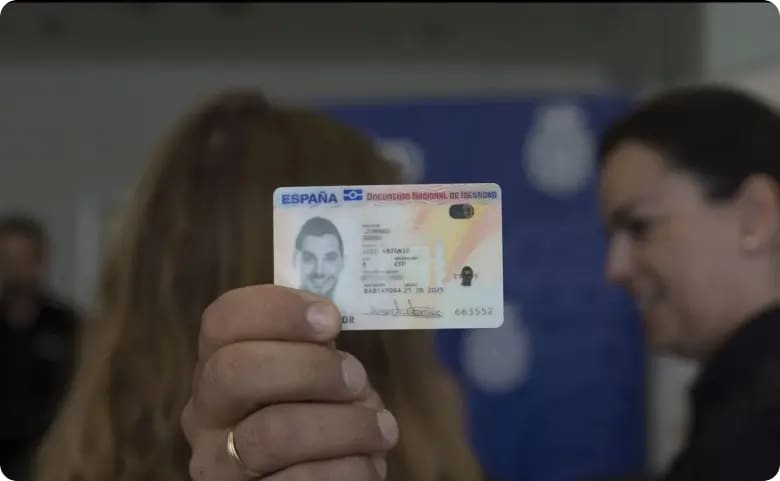
Der DNI (Documento Nacional de Identidad) ist der nationale Personalausweis Spaniens für spanische Staatsbürger. Er dient als Nachweis Ihrer Identität, Ihrer persönlichen Daten und Ihrer spanischen Staatsangehörigkeit und ist das einzige Dokument, das all diese Funktionen allein erfüllt.
Er wird vom Innenministerium über die nationale Polizei (Dirección General de la Policía) ausgestellt und ist ein öffentliches, amtliches, persönliches Dokument, das nicht übertragbar ist. Nach spanischem Recht gilt er als vollwertiger Identitätsnachweis, weshalb öffentliche Stellen und private Unternehmen ihn in dieser Funktion akzeptieren müssen.
Zwei weitere Funktionen sind in ihm integriert: Er ist eine Chipkarte und dient damit auch der elektronischen Identifizierung sowie der elektronischen Unterzeichnung von Dokumenten, sowohl online als auch vor Ort. Diese digitale Anwendung des DNI, die gelegentlich auch für Ausländer relevant sein kann, wird im Folgenden näher erläutert.
Jeder spanische Staatsbürger hat Anspruch auf einen DNI. Für spanische Bürger, die in Spanien leben, wird er ab dem 14. Lebensjahr verpflichtend. Auch spanische Staatsangehörige über 14 Jahren, die im Ausland leben und nach Spanien ziehen (für sechs Monate oder länger), benötigen einen DNI. Wenn dies nicht auf Sie zutrifft, sind Sie hier im richtigen Leitfaden gelandet.
Wie lange ist ein DNI gültig?
Die Gültigkeitsdauer eines DNI hängt vom Alter der Inhaberin oder des Inhabers ab und reicht von zwei Jahren für Kleinkinder bis zu einer langfristigen Gültigkeit für Personen über 70 Jahre. Die vom Innenministerium festgelegten Gültigkeitszeiträume sind wie folgt:
| Alter bei Ausstellung oder Verlängerung | Gültigkeitsdauer des DNI |
|---|---|
| unter 5 | 2 Jahre |
| 5 bis 29 | 5 Jahre |
| 30 bis 69 | 10 Jahre |
| 70 und älter | mehr als 10 Jahre, mit aufgedrucktem Enddatum |
Die oft wiederholte Aussage, dass ein DNI nach dem 70. Lebensjahr „nie abläuft“, stimmt so nicht ganz. Es handelt sich um eine lange, festgelegte Gültigkeitsdauer mit einem Datum auf der Karte, nicht um eine Karte ohne Ablaufdatum. In Ausnahmefällen gibt es zudem eine außergewöhnliche 1-Jahres-Gültigkeit, etwa wenn vorübergehend keine Fingerabdrücke genommen werden können oder ein erforderliches Dokument fehlt.
Ein Detail, das viele verwirrt: Die elektronischen Zertifikate im Chip gelten nur 2 Jahre, selbst wenn die physische Karte zehn Jahre gültig ist. Sie können erneuert werden, ohne dass eine neue Karte ausgestellt wird. Diese Lücke zwischen „die Karte ist gültig“ und „die Zertifikate im Chip sind gültig“ ist genau die Art von Sache, die niemand erwähnt, bis die digitale Signatur plötzlich nicht mehr funktioniert.
Beantragen Sie Ihre spanische NIE online in nur 5 Minuten
Ihre NIE-Nummer bis zu 3X günstiger als die Beauftragung eines Anwalts dafür!
Holen Sie sich Ihre spanische NIE


DNI, NIE, NIF und TIE: Was ist der Unterschied?
Das DNI ist für spanische Staatsbürger, die NIE ist die Identifikationsnummer für Ausländer, die NIF ist eine Steuernummer, und die TIE ist der physische Aufenthaltstitel für viele Nicht-EU-Bürger. Die Begriffe überschneiden sich so stark, dass sie echte Verwirrung stiften können – hier die klare Übersicht.
| Begriff | Was es ist | Für wen es gilt |
|---|---|---|
| DNI | Spanischer Personalausweis | Spanische Staatsbürger |
| NIE | Ausländer-Identifikationsnummer (Número de Identidad de Extranjero) | Alle Ausländer mit wirtschaftlichen, beruflichen oder sozialen Bindungen an Spanien |
| NIF | Steuer-Identifikationsnummer | Alle, die in Spanien steuerpflichtig sind |
| TIE | Ausländerausweis (physische Karte) | Viele Nicht-EU-Bürger mit Aufenthaltserlaubnis von über sechs Monaten |
Der entscheidende Zusammenhang: Für einen spanischen Staatsbürger ist der NIF einfach seine DNI-Nummer zuzüglich eines Prüfbuchstabens. Für einen Ausländer ist der NIF seine NIE. Gleiche Logik, unterschiedliche Dokumente. Die spanische Steuerbehörde Hacienda bestätigt dies direkt und warnt davor, die NIE (eine Nummer) mit dem TIE (eine Karte) zu verwechseln.
Der entscheidende Punkt, den es zu beachten gilt, ist, dass die NIE lediglich eine Nummer ist. Sie identifiziert Sie gegenüber den Behörden, beweist aber allein weder Ihren legalen Aufenthalt in Spanien noch Ihre Arbeitserlaubnis. Dieser Nachweis erfolgt über Ihr Aufenthaltsdokument: ein TIE, wenn Sie außerhalb der EU sind, oder eine EU-Registrierungsbescheinigung, wenn Sie EU-Bürger sind.
Wie funktioniert der DNI für Ausländer?
Als Ausländer erhalten Sie keinen DNI. Sie erhalten eine NIE, und je nach Status zusätzlich eine TIE oder eine EU-Anmeldebescheinigung. Das ist die ganze Antwort. Der DNI kommt erst in Ihr Leben, wenn Sie später die spanische Staatsbürgerschaft erwerben.
Das bedeutet, die praktische Frage lautet nicht „Wie bekomme ich einen DNI?“, sondern „Was gebe ich an, wenn etwas nach einem DNI fragt?“
Ein Formular, ein Vermieter oder eine Bank fragt nach meinem DNI. Was gebe ich an?
In fast allen Fällen geben Sie Ihre NIE an. Spanische Systeme sind um die DNI-Nummer herum aufgebaut, sodass das Wort „DNI“ oft locker für „Ihre hier benötigte Identifikationsnummer“ verwendet wird. Wenn auf der anderen Seite des Formulars ein Ausländer steht, wird dieses Feld mit Ihrer NIE gefüllt.
Einige konkrete Beispiele:
- Online-Formulare mit nur einem „DNI“-Feld: Geben Sie Ihre NIE ein. Das Format wird in den meisten Systemen akzeptiert, auch wenn dies nicht explizit angegeben ist. Schlecht programmierte private Formulare können damit gelegentlich Probleme haben. In diesem Fall ist die Lösung meist ein Anruf, da die NIE die einzige Ihnen zur Verfügung stehende Identifikationsnummer ist.
- Vor Ort, wenn nach „deinem DNI“ gefragt wird: Übergeben Sie Ihre TIE-Karte, falls vorhanden (sie enthält Ihr Foto und Ihre NIE), oder Ihren Reisepass zusammen mit Ihrem NIE-Zertifikat, falls Sie keine TIE besitzen.
- Ein Formular, das tatsächlich einen DNI eines spanischen Staatsbürgers erfordert – etwa bei bestimmten Melde- oder Wahlverfahren – ist eines, für das Sie als Nicht-Staatsbürger ohnehin nicht berechtigt sind. Das Fehlen eines DNI ist hier also keine zu lösende Hürde, sondern die Antwort auf Ihre Situation.
Sobald Sie aufhören, einen DNI zu erwarten, und stattdessen mit Ihrer NIE arbeiten, verschwinden die meisten Reibungspunkte.
Dokumente unterzeichnen und sich online ohne DNIe ausweisen
Ausländer können den elektronischen DNI (DNIe) nicht erhalten, aber Sie können dieselben digitalen Möglichkeiten auf anderem Weg nutzen: über ein digitales Zertifikat der FNMT oder das Cl@ve-System. Dies ist der Teil der DNI-Geschichte, der Ihr administratives Leben tatsächlich beeinflusst.
Die spanische Bürokratie findet zunehmend online statt, und viele Vorgänge erwarten, dass Sie sich identifizieren und elektronisch unterzeichnen – so wie ein Spanier dies mit dem Chip seines DNIe tun würde. Die beiden für Ausländer verfügbaren Optionen sind das digitale Zertifikat der FNMT, das für ausländische residents mit NIE und Reisepass erhältlich ist, sowie Cl@ve, das Sie mit einer EU-Anmeldebescheinigung, einer TIE oder einem Aufenthaltstitel registrieren können. Mit einer dieser Optionen können Sie Steuern einreichen, Termine buchen und offizielle Dokumente von Ihrem Laptop aus unterzeichnen – ganz ohne spanische ID-Karte.
Wenn die Einrichtung dessen wie ein weiterer Kampf wirkt, ist es genau die Art von Aufgabe, die wir für unsere Kunden im Rahmen unseres Service für spanische digitale Zertifikate übernehmen. So erhalten Sie die Unterschriftsmöglichkeit, ohne sich durch die FNMT-Website kämpfen zu müssen.
Wann kann ein Ausländer tatsächlich einen DNI erhalten?
Ein Ausländer kann einen DNI erst nach Erlangung der spanischen Staatsbürgerschaft erhalten. Sobald Sie eingebürgert sind, durchlaufen Sie denselben DNI-Prozess wie jeder in Spanien Geborene, und Ihre bisherigen ausländischen Dokumente werden dabei abgegeben.
Wie lange dies dauert, hängt vollständig von Ihrem Hintergrund ab. Der allgemeine Weg führt über zehn Jahre rechtmäßigen Aufenthalts, aber es gibt deutlich kürzere Pfade: Häufig reichen zwei Jahre für Staatsangehörige iberoamerikanischer Länder, Portugals, Andorras, der Philippinen und Äquatorialguineas sowie ein Jahr für Ehepartner eines spanischen Staatsbürgers und andere Kategorien. Diese Regelungen unterliegen Bedingungen und Ausnahmen, sodass Sie sie als Ausgangspunkt betrachten und Ihren eigenen Fall vorab prüfen sollten. Für diesen Leitfaden ist die Kernaussage einfacher: Der DNI ist das Dokument am Ende des Weges zur Staatsbürgerschaft – nicht etwas, das Sie bei Ihrer Ankunft in Spanien regeln.
Wie wird ein DNI in Spanien beantragt und verlängert?
Auch wenn Sie selbst keinen Antrag stellen werden, lohnt es sich zu wissen, wie das Verfahren funktioniert – denn Ihr spanischer Partner, Ihre in Spanien geborenen Kinder oder Ihr zukünftiger eingebürgerter Selbststand werden es durchlaufen müssen. Und das Terminbuchungssystem, das dabei zum Einsatz kommt, ist dasselbe, das auch bei Ihrem NIE Ihre Geduld auf die Probe stellen wird.
Wie beantragt man einen DNI in Spanien?
Ein erster DNI wird persönlich in einer Dokumentenstelle der Nationalpolizei nach vorheriger Terminbuchung (cita previa) ausgestellt. Sie buchen den Termin über die offizielle Website (citapreviadnie.es) oder unter der Telefonnummer 060 und erscheinen dann mit den erforderlichen Unterlagen sowie der Gebühr.
Die Gebühr beträgt 12 € für Ausstellung oder Verlängerung – gesetzlich festgelegt, einheitlich in allen Dienststellen und ohne Aufschläge. In bestimmten Fällen ist sie kostenfrei, etwa bei Verlängerung einer gültigen Karte wegen Adress- oder Personendatenänderung oder für Mitglieder großer Familien.
Welche Unterlagen werden für einen DNI benötigt?
Für einen ersten DNI bringen Sie eine Geburtsurkunde speziell für den DNI, ein aktuelles Farbfoto sowie einen aktuellen Meldebescheinigungsnachweis (empadronamiento) mit. Genauer gesagt:
- Eine ausführliche Geburtsurkunde (certificación literal de nacimiento), die speziell für die Beantragung eines DNI ausgestellt wurde.
- Ein aktuelles passfotoähnliches Farbfoto mit neutralem Hintergrund.
- Eine Meldebescheinigung oder den sogenannten „volante de empadronamiento“, die Ihre Adresse bestätigt und nicht älter als drei Monate sein darf. Hier erfahren Sie mehr zum Thema.
Wer gerade eingebürgert wurde, bringt zusätzlich seine bisherige TIE oder EU-Aufenthaltsbescheinigung mit, die die NIE ausweist und bei der Bearbeitung des ersten DNI abgegeben wird.
Wie verlängert man einen DNI in Spanien?
Ein DNI wird innerhalb der letzten 180 Tage vor Ablauf persönlich verlängert – mit einem aktuellen Foto und der Gebühr von 12 €. Falls sich Ihre Adresse geändert hat, bringen Sie eine aktualisierte Meldebescheinigung mit, sofern die Behörde die Daten nicht elektronisch abrufen kann. Bei Verlust, Diebstahl oder Beschädigung muss der DNI umgehend ersetzt werden; Diebstahl oder Verlust sollte zudem umgehend bei der Polizei gemeldet werden.
Ein realistischer Hinweis aus der Warteschlange: Die Terminbuchung ist der schwierigste Teil – und sie gestaltet sich noch herausfordernder, als es die offizielle Beschreibung vermuten lässt. Anfang 2026 berichten Auswanderergemeinschaften und Umzugsdienstleister in ganz Spanien, dass Terminbuchungsslots in beliebten Städten wie Madrid und Barcelona innerhalb von Sekunden vergeben sind, die Online-Plattform während Stoßzeiten abstürzt und Bots Termine blockieren, um sie weiterzuverkaufen. Der DNI nutzt zwar ein eigenes Terminbuchungssystem, doch die Knappheit an Terminen ist ein gemeinsames Problem aller spanischen Ausweisdokumente – inklusive des NIE, den Sie tatsächlich benötigen werden. Planen Sie dies frühzeitig ein.
Beantragen Sie Ihre spanische NIE online in nur 5 Minuten
Ihre NIE-Nummer bis zu 3X günstiger als die Beauftragung eines Anwalts dafür!
Holen Sie sich Ihre spanische NIE
Neues 2026: der digitale DNI und die MiDNI-App
Die DNI-Regeln Spaniens wurden 2025 neu gefasst, und ab April 2026 muss eine mobile Version des DNI in ganz Spanien akzeptiert werden. Dies ist der aktuellste Teil der Geschichte, und die meisten englischsprachigen Leitfäden haben dies noch nicht aufgegriffen.
Die maßgebliche Rechtsgrundlage ist das Real Decreto 255/2025, veröffentlicht am 2. April 2025, das sowohl den physischen als auch den digitalen DNI regelt und das alte Dekret von 2005 ersetzt. Es bringt Spanien in Einklang mit der EU-Verordnung zur Sicherheit von Identitätsdokumenten. Die aktuelle Generation der Karte ist der DNI 4.0.
Die wichtigste Neuerung ist die MiDNI, die offizielle App, die am 2. April 2025 gestartet wurde. Nach einer zwölfmonatigen Übergangsphase müssen öffentliche und private Stellen sie ab April 2026 mit derselben Rechtsgültigkeit wie die physische Karte akzeptieren. Sie funktioniert über einen QR-Code, der von der Nationalpolizei generiert wird, und deckt alltägliche Anwendungen wie Hotel-Check-in, Altersnachweise, Autovermietung, Paketzustellung sowie Identitätsnachweise beim Notar ab. Sie bietet drei Privatsphäre-Stufen – von der Anzeige nur von Foto, Name und Volljährigkeitsstatus bis hin zu allen Daten.
Warum dies für Sie als Ausländer relevant ist: Die MiDNI basiert auf einem gültigen physischen DNI und ist daher ein Werkzeug für spanische Staatsbürger, das Sie nicht nutzen können. Allerdings werden Sie zunehmend Formulare und Schalter mit dem Hinweis „Zeigen Sie Ihre MiDNI“ neben „Zeigen Sie Ihren DNI“ sehen – und jetzt wissen Sie, dass es sich dabei um dasselbe Dokument in anderer Form handelt. Die gleiche Antwort gilt: Sie legen stattdessen Ihr auf dem NIE basierendes Dokument vor.
Was Ausländer:innen über den DNI in Spanien wissen sollten
Ein paar kurze Antworten auf die Fragen, die sich nach den Grundlagen stellen.
Kann ich meine NIE verwenden, wenn ein DNI angefordert wird?
Ja, in fast jeder Situation ist Ihre NIE die Nummer, die dort eingetragen wird, wo ein „DNI“ verlangt wird. Spanische Formulare verwenden „DNI“ als Kurzform für „Ihre nationale Ausweisnummer“, und für Ausländer:innen übernimmt diese Rolle die NIE. Ausnahmen sind Verfahren, die ausschließlich spanischen Staatsbürger:innen vorbehalten sind – diese würden Sie ohnehin nicht durchführen.
Ist meine DNI-Nummer dieselbe wie meine NIF?
Für Sie als Ausländer:in ist Ihre Steueridentifikationsnummer (NIF) Ihre NIE. Es gibt keine separate DNI-Nummer in Ihrem Fall. Für spanische Staatsbürger:innen sind ihre DNI-Nummer und NIF dieselbe Zeichenfolge. Für Sie erfüllt die NIE beide Funktionen.
Kann ich mit einem DNI in Europa reisen?
Der DNI ist für spanische Staatsbürger:innen ein gültiges Reisedokument innerhalb der EU, als Ausländer:in reisen Sie jedoch mit Ihrem Reisepass. Ihre NIE oder Ihr TIE belegt Ihren Status in Spanien, nicht Ihr Recht, Grenzen zu überschreiten. Führen Sie Ihren Reisepass als Reisedokument mit und in manchen Fällen zusätzlich Ihre Aufenthaltskarte.
Brauche ich einen DNI, um ein Bankkonto zu eröffnen oder einen Vertrag in Spanien zu unterzeichnen?
Nein. Sie benötigen eine NIE. Die Eröffnung eines Kontos, das Unterzeichnen eines Mietvertrags, der Abschluss eines Mobilfunkvertrags oder der Beginn einer Beschäftigung erfolgen allesamt mit Ihrer NIE, nicht mit einem DNI. Manche Banken verlangen zusätzlich einen Adress- oder Wohnsitznachweis, aber die von ihnen gewünschte Identifikationsnummer ist Ihre NIE.
Können meine Kinder einen DNI erhalten, wenn ein Elternteil Spanier:in ist?
Ja, ein Kind mit spanischer Staatsangehörigkeit kann einen DNI erhalten, unabhängig vom Geburtsort. Spanische Eltern können diesen bereits ab der Geburt des Kindes beantragen, sobald es registriert ist – was für Reisen innerhalb Europas tatsächlich nützlich ist. Ein Kind ohne spanische Staatsangehörigkeit nutzt wie jede:r andere Ausländer:in eine NIE.
Der einfachste Weg, die spanische NIF Ihrer Firma zu erhalten
Die NIE (Número de Identificación Fiscal) ist die Steuernummer, die die spanischen Behörden Ihrem Unternehmen zuweisen. Jedes ausländische Unternehmen, das auf einem spanischen Marktplatz verkauft, sich für die EPR-Compliance registriert oder eine einmalige Tätigkeit in Spanien ausübt, benötigt eine solche Nummer. Sie ermöglicht es der Agencia Tributaria, Ihr Unternehmen auf spanischem Boden zu identifizieren – selbst ohne eine lokale Niederlassung oder Tochtergesellschaft.
Jetzt meine Bewerbung starten
Wie kann Ihnen AnchorLess helfen?
Hier die ehrliche Zusammenfassung: Wir können nichts für Ihr DNI tun, denn Sie werden keines erhalten. Was wir jedoch für Sie übernehmen, ist das Dokument, das Ihr Leben in Spanien tatsächlich regelt: die NIE, wenn Sie in Spanien leben möchten, oder der NIF Spanien, falls Sie lediglich geschäftlich tätig sind.
Die NIE ist das erste, wovon fast jeder weitere Schritt abhängt – von Ihrem spanischen Bankkonto (das wir ebenfalls für Sie einrichten) über Ihren Mietvertrag bis hin zu Ihrem Arbeitsverhältnis. Das Terminbuchungssystem, das die NIE ausstellt, ist dasselbe überlastete System, das wir bereits oben beschrieben haben.
Wir kümmern uns online um alles, ohne das nervenaufreibende Ritual, um Mitternacht Termine zu ergattern. So erhalten Sie die Nummer bereits in der Hand, wenn Sie ankommen. Wenn Sie diesen Teil Ihres Umzugs lieber überspringen möchten, können Sie Ihre NIE, Ihren NIF oder Ihr spanisches Bankkonto mit AnchorLess erledigen lassen.
Abschließende Gedanken
Für Ausländer in Spanien ist der DNI ein Begriff, den man kennt, kein Dokument, das man anstrebt. Er gehört spanischen Staatsbürgern, und wenn Sie eines Tages von einem Vermieter oder einem Formular nach „DNI?“ gefragt werden, ist der richtige Schritt, einfach Ihren NIE vorzuzeigen und weiterzumachen.
Sorgen Sie frühzeitig für diese eine Nummer, und die gesamte DNI-Frage hört auf, überhaupt eine Frage zu sein.
Teilen Sie diesen Artikel