OUR EXPERT
Brenda L.

Written by

Brenda.L

After completing her higher education, Brenda joined AnchorLess in 2023. She is an expert on relocation issues in Europe.
WHY YOU CAN TRUST ANCHORLESS
+10,000
Expats guided
1194

reviews noted 4.9/5

European Health Insurance Card
EU Health Cover
24/06/2026

What Is the European Health Insurance Card (EHIC)? Full Guide

European health insurance card

There is a piece of free healthcare cover that may be sitting in most European wallets, and a surprising number of people have no idea it is there or what it does.

It is called the European Health Insurance Card, or EHIC. If you are registered in the public health or social security system of an EU country, you almost certainly qualify for one. In several countries you already hold it, printed on the back of your national health card, under a name that is not "EHIC."

This guide explains what the EHIC is, who can get one, what it covers and what it leaves out, how long it lasts, and how to apply, renew, replace or report it lost. It also covers whether you still need travel insurance in the EU, and what changes when you are moving to another EU country rather than just passing through. The card exists across the whole EU, plus Iceland, Liechtenstein, Norway, Switzerland and the United Kingdom.

If you are planning a move within Europe, this is one of the small things that quietly makes travel feel less stressful once you are settled.

What is the European Health Insurance Card?

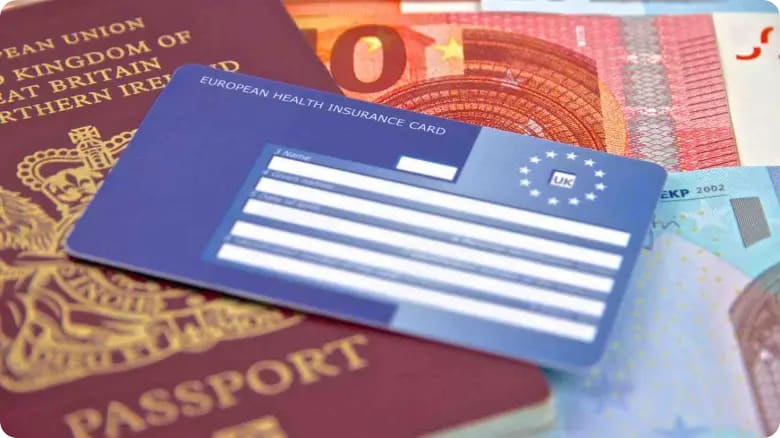
The European Health Insurance Card is a free card that lets you access medically necessary, state-provided healthcare during a temporary stay in another participating European country, on the same terms and at the same cost as people insured there.

It is issued by the public health insurance body of the country where you are insured. The card proves that you are covered by a statutory health system, so a doctor or hospital abroad treats you as a local patient rather than a foreign one.

"Medically necessary" is wider than "emergency only." According to the European Commission and the EU's Your Europe portal, the health insurance card covers sudden illness, accidents, the care of chronic or pre-existing conditions that cannot wait, and pregnancy and childbirth, as long as the purpose of your trip was not to give birth or get treatment abroad.

The card works across the 27 EU countries plus Iceland, Liechtenstein, Norway, Switzerland and the United Kingdom. One detail matters for families: it is personal and non-transferable, so each family member needs their own card, including children.

One thing the EHIC is not: it is not travel insurance, and it is not a substitute for it. More on that below.

The card you may already have, under another name

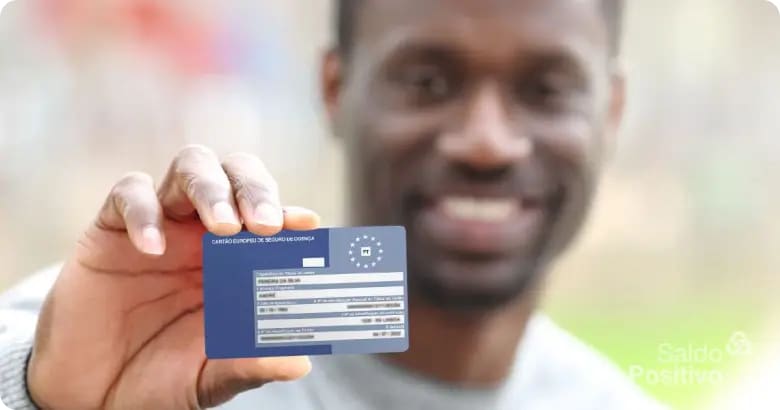
In several countries the EHIC is printed on the back of your national health insurance card, so people hold it without ever thinking of it as a separate "European" card.

This is also why recognition is uneven across Europe. Ask someone "do you have an EHIC?" and they may say no. Ask the same person about the local card and recognition jumps, because most people know it by their national acronym.

Here is how the same card is known in some of the larger markets:

Country Common name Note
Portugal CESD (Cartão Europeu de Seguro de Doença) Applied for separately through Segurança Social
France CEAM (Carte Européenne d'Assurance Maladie) Requested through your ameli account
Spain TSE (Tarjeta Sanitaria Europea) Applied for through Seguridad Social
Italy TEAM (Tessera Europea di Assicurazione Malattia) Printed on the back of the Tessera Sanitaria
Germany, Austria EHIC / EKVK Usually on the back of the national insurance card
Poland EKUZ Issued by the NFZ
Sweden EU-kort Ordered through Försäkringskassan
Denmark The blue card (det blå EU-sygesikringskort) The blue card sits beside the yellow national one

To round off the basics, the EHIC used to be a paper document called the E111 form. It was replaced by the card between 2004 and 2006.

Who is entitled to an EHIC?

You are entitled to a European Health Insurance Card if you are covered by the public or statutory health insurance scheme of an EU country, Iceland, Liechtenstein, Norway, Switzerland or, in some post-Brexit cases, the UK.

Entitlement follows your insurance, not your passport. A French citizen registered in Social Security in Portugal deals with Portugal. The relevant question is which country of residence runs the public system you pay into, not where you were born.

This is the point most newcomers miss, and the one that matters most if you have just moved. You do not need to be a citizen. Legal residents who are settled and enrolled in a country's social security or national insurance system can get that country's card. In Portugal, for example, the official Segurança Social guidance confirms the CESD is open to Portuguese citizens, pensioners, students and legally resident foreigners enrolled in the system.

There is one limitation worth flagging clearly, because it is easy to get wrong. Non-EU nationals cannot use their EHIC in Denmark, Iceland, Liechtenstein, Norway or Switzerland, and some EU pages also list the UK here. The exception is for refugees residing in an EU country and for people covered as family members of an EU citizen. France's own public service gives the textbook case: a Mauritian national insured in France can hold a card for most of the EU, but cannot use it on holiday in Denmark.

One more case to keep in mind. If you are a pensioner whose pension is paid by another country's mandatory system, you request the card from the country that pays your pension, not from where you live.

eu health insurance card

What healthcare services does the EHIC cover?

The EHIC covers the public healthcare and medical treatment that becomes necessary during your stay, so you are not forced to cut a trip short and fly home for care. You are treated under reciprocal healthcare rules, on the same terms and at the same cost as an insured resident of that country.

In practice that includes a doctor's visit, emergency hospital treatment after an accident, sudden illness, the ongoing care of a chronic condition such as diabetes or asthma, and unexpected childbirth. Prescriptions are dispensed on the same basis as for residents.

Two caveats sit on top of this. The card gives you local terms, not free care everywhere, so where residents pay a co-payment, you pay it too, and in some countries you pay the medical care costs upfront and claim them back later. And for treatment that needs specialist equipment or staff, such as dialysis, oxygen therapy or chemotherapy, the EU advises arranging it with the healthcare provider before you travel.

What the EHIC does not cover

The EHIC only works inside the public system, and it leaves several big gaps that catch people out.

Private healthcare

The card covers care from public providers or providers contracted to the public system. If you go to a private clinic or hospital, the EHIC generally does not help.

Planned treatment abroad

It does not cover treatment you travel specifically to receive. Going abroad for a scheduled operation is a different route (the S2 form), not an EHIC matter.

Repatriation and rescue

It does not pay for a medical flight home, mountain rescue in a ski resort, or transport after a serious accident. The EU's own example is a Swedish skier who needed mountain rescue in France and paid the full bill himself, because rescue is not covered.

These three gaps are exactly why travel insurance still has a job to do, which the section below covers.

How long is the EHIC valid?

There is no single EU-wide answer: the period for which the card is valid is set by the country that issues it, so check the expiry date printed on your own card.

As a rule the card lasts a few years, and its validity cannot run past your entitlement to public health insurance. Some worked examples from official sources: in Portugal the CESD is valid for three years, in France the CEAM is valid for a maximum of two years, and Ireland issues cards valid for up to four years.

Country Card Valid for Issued by
Portugal CESD 3 years Segurança Social
France CEAM 2 years (maximum) Assurance Maladie (ameli)
Ireland EHIC Up to 4 years HSE
Most other countries EHIC / local name Varies National health insurer

Two practical notes. An expired card is not reissued automatically, so you have to renew it. And in the countries where the card is embedded on your national health card, its renewal usually follows the national card's own cycle.

How to apply for an EHIC?

To apply for an EHIC, you go to the health insurance institution or social security body in your country of residence. Most countries let you apply online, and many also accept an app, a phone request, post, or an in-person visit. The card is free.

A warning that fits AnchorLess's whole reason for existing: you should never pay a third party for this. The EU explicitly flags that some rogue websites charge a fee to "order" your card. The card costs nothing, so ignore those sites and go straight to your national body.

Below are the two worked examples. The pattern is the same elsewhere in the EU.

Applying in Portugal

In Portugal you apply for the European card through Segurança Social, and the simplest route is online.

Online through Segurança Social Direta

Log in to Segurança Social Direta with your NISS and Chave Móvel Digital or password, open the "Doença" menu, and choose "Obter Cartão Europeu de Seguro de Doença." The card is sent to your registered address within five to seven working days.

If you are travelling within 10 days

If you have to travel before the card arrives, request a Certificado Provisório de Substituição (CPS). It is issued as a PDF you can print, it carries the same rights as the card, and it is valid for three months.

In person or by post

You can also apply at a Segurança Social desk or a Loja or Espaço Cidadão by completing the application form (Modelo GIT 53). The request receipt itself is not accepted by health providers abroad, so apply with time to spare.

Applying in France

In France you request the CEAM, and the recommended route is your online account.

Online through your compte ameli

Log in to your compte ameli, open "Mes démarches," and order the card. It usually arrives in about ten to fifteen days, and the official advice is to request it at least 20 days before departure. If you are late, a provisional replacement certificate (valid three months) is downloadable straight away.

By phone or at a CPAM counter

You can also order it by phone (3646), through the ameli app, or at a CPAM counter. Self-employed workers and people in the agricultural (MSA) or public-service schemes apply through their own fund.

Applying in Spain

In Spain you request the TSE through Seguridad Social, and the card is free. The official services portal is blunt about it: the INSS never charges for the card and does not issue it through outside websites, so use only the official Social Security channels.

Online through the Seguridad Social e-office

Apply through the Seguridad Social Sede Electrónica or the "Tu Seguridad Social" portal, using a digital certificate or Cl@ve, an SMS code sent to a phone registered with Social Security, or a simple form with no electronic ID. The card is posted to your registered address within about five days, and is never handed over in person.

In person at a CAISS, and the provisional certificate

First-time applicants without online credentials go to a CAISS, a Social Security information centre. If the card cannot be issued in time or your trip is imminent, request the Certificado Provisional Sustitutorio (CPS), valid for up to 90 days, which you download and print straight away.

Applying in Italy

In Italy you usually do not apply at all. The TEAM is printed on the back of your Tessera Sanitaria, the national health card, and the Agenzia delle Entrate issues it automatically to everyone enrolled in the public health service (SSN). As it nears expiry, a new card is sent to you.

If you have just enrolled or the card is missing

If you have just registered with the SSN, or the back of your card does not show the TEAM, go to your local ASL, the health district's general-practice desk, with your ID, codice fiscale and regional health card.

New residents register at the district with their codice fiscale, residence permit or Questura receipt, and proof of address. The card is then posted, usually within about 30 days.

If you need it sooner, or it is lost

If you must travel before it arrives, your ASL can issue a provisional substitute certificate that carries the same rights. If the card is lost, stolen or damaged, request a duplicate through the Agenzia delle Entrate website, an Agenzia delle Entrate office, or your ASL.

Applying elsewhere in the EU

In other countries the principle holds: find your national health insurer or social security office, and apply online, in person, or through whatever digital service the country runs. In Germany, Austria, and a few others, you may not need to "apply" at all, because the card is already on the back of your national health card. Wherever you are, request it at least two to three weeks before travelling, and ask for a provisional certificate if your trip is sooner.

EU Countries

Country of insurance What it is called locally How to get it
Austria Europäische Krankenversicherungskarte / EKVK, usually on the back of the e-card Usually already printed on the back of the Austrian e-card. If the back shows stars or no EHIC data, contact your Austrian health insurer for entitlement or a provisional certificate.
Belgium CEAM in French, EZVK in Dutch, EKVK in German Request it from your mutualité/mutualiteit/health fund. Some mutualities let you order it online. Belgian sources say the EHIC can be valid for up to two years.
Bulgaria ЕЗОК, European Health Insurance Card Apply through the National Health Insurance Fund/NHIF route. EU/official sources point to NHIF; Bulgaria has also moved toward online applications through the national e-government route, with postal delivery options reported from 2025.
Croatia EKZO, Europska kartica zdravstvenog osiguranja Apply online through the Croatian Health Insurance Fund / HZZO / CHIF portal or at a CHIF regional office.
Cyprus Ευρωπαϊκή Κάρτα Ασφάλισης Ασθενείας Apply at a Citizen Service Centre or Cyprus Post Citizens Centre. Beneficiaries are GeSY/GHS beneficiaries.
Czech Republic Evropský průkaz zdravotního pojištění EHIC is generally issued automatically to Czech insured people as part of the health insurance card. For loss or replacement, contact your public health insurer.
Denmark Blue European Health Insurance Card, det blå EU-sygesikringskort Order it online via borger.dk / Life in Denmark. It is free and usually arrives within 2–3 weeks.
Estonia Euroopa ravikindlustuskaart Order it from the Estonian Health Insurance Fund / Tervisekassa. It is delivered within about 10 days; you need valid Estonian health insurance for at least another three months.
Finland Eurooppalainen sairaanhoitokortti Apply through Kela, usually via OmaKela, by phone, or by form SV193e.
France CEAM, Carte Européenne d’Assurance Maladie Apply through Compte ameli, the Ameli app, by phone, or through the relevant scheme such as MSA. Request it at least 20 days before travel; if urgent, download a provisional replacement certificate.
Germany Europäische Krankenversicherungskarte / EHIC For statutory insurance, the EHIC is normally on the back of the German electronic health insurance card. If not, contact your Krankenkasse. Private insurance is a separate situation and may not issue an EHIC.
Greece ΕΚΑΑ, Ευρωπαϊκή Κάρτα Ασφάλισης Ασθένειας Apply through the Greek public system, typically via gov.gr / e-EFKA. The Greek government service says the card is free and can issue or print a temporary card directly.
Hungary Európai Egészségbiztosítási Kártya Apply through the Hungarian health insurance administration, NEAK/government office route. When using the card in Hungary, providers must be NEAK-contracted.
Ireland EHIC Apply or renew through the HSE online EHIC service, or by post/email using the application form. HSE notes it is for holidays, short stays up to 3 months, and some students under 23 for the academic year.
Italy TEAM, Tessera Europea di Assicurazione Malattia Usually printed on the reverse of the Italian Tessera Sanitaria. If you do not have it or need replacement, deal with the health card / SSN route through the relevant Italian systems.
Latvia EVAK, Eiropas veselības apdrošināšanas karte Apply through Latvia’s National Health Service / NVD. The NVD page provides the EHIC application route and reimbursement information.
Lithuania Europos sveikatos draudimo kortelė, often ESDK Apply through the Territorial Health Insurance Fund / THIF. Lithuania also offers collection and delivery options, including parcel terminals in some cases.
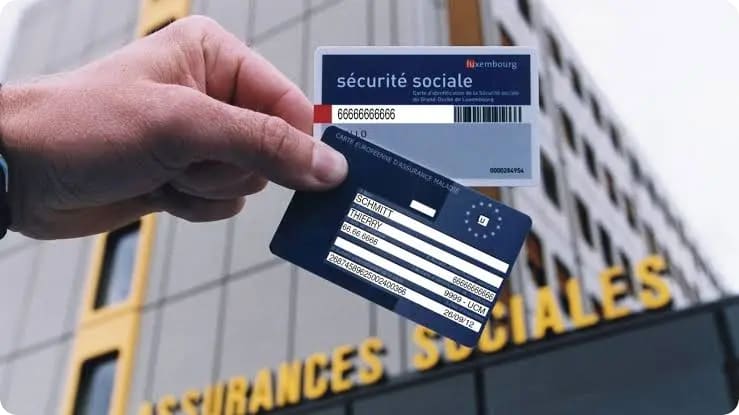
Luxembourg CEAM / European section of the social security card You must be affiliated with Luxembourg social security/health insurance. The social security card has a national side and a European side; replacement or provisional certificate routes go through CNS/CCSS/MyGuichet depending on the case.
Malta EHIC Apply online through servizz.gov.mt, via the MT Health Entitlement mobile app, or by the Entitlement Unit route. Malta recommends applying at least 15 working days before departure.
Netherlands EHIC; sometimes “European healthcare card” Request it from your Dutch health insurer, or from CAK if you are in a CAK-insured cross-border/S1-type situation. In many cases it is on the back of the Dutch insurance card or available digitally through the insurer.
Poland EKUZ, Europejska Karta Ubezpieczenia Zdrowotnego Apply through NFZ, including online routes such as IKP/mojeIKP/ePUAP, or at NFZ offices depending on your case. NFZ stresses that each traveller needs their own card.
Portugal CESD, Cartão Europeu de Seguro de Doença Apply through Segurança Social routes. The Portuguese government says the card is free, usually sent to the holder’s address within around 7 working days, and generally valid for 3 years.
Romania Cardul European de Asigurări Sociale de Sănătate If insured, submit an application to your local health insurance house. EU information says approved cards are issued within 7 working days.
Slovakia Európsky preukaz zdravotného poistenia Get it through your Slovak public health insurer or local branch. Slovak public guidance says each country’s insurer is responsible for production and distribution.
Slovenia Evropska kartica zdravstvenega zavarovanja, often EKZZ Apply through ZZZS, online, at regional offices, or by SMS/mobile route. For urgent travel, request a provisional replacement certificate.
Spain TSE, Tarjeta Sanitaria Europea Apply or renew through Seguridad Social, including the Social Security e-Office or “Tu Seguridad Social.” Spain also offers a provisional certificate, CPS, when card issue is not possible or travel is imminent. Delivery is usually to the registered address.
Sweden EU-kort, Europeiska sjukförsäkringskortet Order through Försäkringskassan online, by phone, or at an office. It is free, valid for three years, and can take up to 10 working days.

Non-EU Countries but participating countries

Country Local/common term How to get it
Iceland European Health Insurance Card / Evrópska sjúkratryggingakortið Apply online through Iceland Health / Sjúkratryggingar Íslands. Delivery can take 10–14 business days.
Liechtenstein European Health Insurance Card Apply through the competent Liechtenstein health insurance institution. The EU country-contact page lists Liechtenstein under non-EU participating countries.
Norway Europeisk helsetrygdkort Apply digitally through Helsenorge with BankID, or call Guidance Helsenorge. Norway has stricter non-EU-national rules than EU Member States.
Switzerland Carte européenne d’assurance maladie / Europäische Krankenversicherungskarte / Tessera europea di assicurazione malattia Usually issued by your Swiss health insurer and often appears on the back of your insurance card. Contact your insurer if you need a separate card or replacement.
United Kingdom GHIC for most people; UK EHIC for some Withdrawal Agreement cases Apply through the NHS. Existing EHICs remain valid until expiry; most UK residents now apply for a UK GHIC. UK GHIC and UK EHIC are free and last up to 5 years.

How to renew or replace an EHIC?

To renew the card, you apply the same way you did the first time, before it expires. Renewal is free, and an expired card is not reissued automatically, so set a reminder. In some countries you can start the renewal in the weeks before the expiry date shown on the card.

To replace a damaged card, you request a new one through the same channel. The replacement is also free.

What to do if your EHIC is lost or stolen

If your card is lost or stolen, contact the body that issued it as soon as you can, and request a Provisional Replacement Certificate (PRC), which proves the same entitlement while you wait for a new card.

The PRC has different local names. In Portugal it is the CPS, requested online through Segurança Social Direta or in person, and valid for three months. In France it is the certificat provisoire de remplacement, downloadable from your ameli account and also valid for three months. Either one acts as the emergency document that lets you keep your cover abroad without the physical card.

If you ended up paying for treatment because you did not have your card or certificate with you, you can usually claim a refund afterwards. Keep the receipts and prescriptions and hand them to your national health body when you get home.

Is travel insurance needed with an EHIC?

The EHIC is not travel insurance, and it does not replace it. You are not legally required to have travel insurance to move around the EU, but the card leaves gaps that only insurance fills, so the two work best together.

The EHIC gets you into the public system on local terms. Private healthcare, a medical flight home, ski-slope rescue, a cancelled trip or lost luggage all sit outside it. Private travel insurance covers those, and it usually covers the medical expenses of a private clinic and the repatriation the EHIC never touches.

EHIC Private travel insurance
Public healthcare on local terms Yes Sometimes
Treatment from a public healthcare provider Yes Depends on policy
Private hospitals and clinics No Usually yes
Repatriation and rescue No Usually yes
Cancelled flights, lost luggage No Usually yes
Cost Free Paid

A note for anyone moving between the EU and the UK: most UK residents now carry the Global Health Insurance Card (GHIC) rather than an EHIC, while EU citizens can still use their EHIC for temporary stays in the UK. Both serve the same role, and neither removes the need for travel insurance.

The EHIC when you are moving within the EU

Here is the part that matters if you are relocating, not just holidaying. The EHIC covers temporary stays, so it is not the card that covers you in the country you move to once that country becomes your home.

When you settle in a new EU country and register in its public health system, you stop relying on your old country's card for everyday care, and you become entitled to a card issued by your new country. From then on, that new card is what covers your trips back home and elsewhere in the EU.

For cross-border situations and some pensioners, the right tool during a move is the S1 form, not the EHIC. The S1 arranges for one country to cover your healthcare while you live in another, which the EHIC is not designed to do.

health card europe image

So the honest framing for someone moving to Portugal, Spain or Italy is this: the EHIC is the travel companion you pick up once you are in the local system, and the first real step is getting registered, with a social security number and access to public health.

Registering in a new country's systems is exactly the kind of paperwork that is slow and easy to get wrong on your own, and the part of relocation AnchorLess guides you. Once you are set up locally, the European card follows.

Key Takeaways

The European Health Insurance Card is free, it covers medically necessary public healthcare on local terms during temporary stays across the EU plus Iceland, Liechtenstein, Norway, Switzerland and the UK, and most people enrolled in a public health system qualify, citizens and legal residents alike.

You apply through your national health or social security body, never through a paid site. The card lasts a few years (three in Portugal, two in France, and varying elsewhere), you renew it the same way before it expires, and if it is lost you ask for a Provisional Replacement Certificate that holds the same rights for three months.

It is not travel insurance, so pair it with a policy for private care, repatriation and the rest. And if you are moving rather than visiting, remember the EHIC covers the temporary trips: your everyday cover comes from registering in your new country's system, which is where the real first step lies.

Share this article

Share this article

Join a community of 10,000+ expats
Get the weekly tips, success stories, and step-by-step guides we share with our members to make their move a success.
Star Trustpilot
Star Trustpilot
Star Trustpilot
Star Trustpilot
Star Trustpilot
I love AnchorLess! They have been fantastic for my move to Portugal with the NIF, checking account, lawyer and tax consultation. I will be happy with when this process is over, but at least the journey has been smoother with them.
LD
Lisa D
From South Africa
Star Trustpilot
Star Trustpilot
Star Trustpilot
Star Trustpilot
Star Trustpilot
Guilherme was the best! I had so many questions and moving parts and he was responsive, always professional, and went above and beyond to help me with everything! He is a PRO!!!!
DS
Debra Savage
From The United States

Our readers also viewed

Beach Portugal

Start your new life in Europe

Turn relocation stress into success with AnchorLess.

Relocating to Europe made simple.

Start to relocate now

Arrow icon
Talk to us for free
AnchorLess support team
4.9/5 Excellent
Star
Star
Star
Star
Star
Logo AnchorLess

AnchorLess is not a bank, accountant, tax advisor, investment advisor, or law firm, nor are we a government or official government website. We act as an intermediary, helping connect you with accredited professionals and streamlining administrative processes for your relocation in Europe.

Instagram icon
Reddit icon
Linkedin icon
Amex logo
Visa logo
Mastercard logo
& more
Pay 4X free of charge with
Klarna logo

🇵🇹 MOVE TO PORTUGAL

Arrow

🇪🇸 MOVE TO SPAIN

Arrow

🇮🇹 MOVE TO ITALY

Arrow

Resources

Terms and conditions

Privacy Policy

Disclaimer Policy

© 2022 - 2026 anchorless.io, all rights reserved.