Opening a Bank Account in Portugal Online: Step-by-Step
In short
For most people relocating to Portugal, the account itself is manageable once two things are in place: your NIF, and the right opening route for your residency status. If you already hold a residence permit or Citizen Card, opening online or in a branch is usually quick. If you are still abroad, the realistic paths are a bank that accepts non-resident applications directly, or a service that opens a mainstream account, such as a Millennium BCP account through AnchorLess, on your behalf, so the file is prepared correctly and you can complete most of it before you fly.
Opening a bank account in Portugal is often part of the relocation process, whether you're preparing a visa file, planning your AIMA residency steps, or setting up daily life with a Portuguese IBAN. The reassuring part is that you can open a bank account in Portugal as a foreigner, and in some cases you can open the account online or through remote account opening before you ever arrive.
What decides your path is your residency status. Most mainstream Portuguese banks reserve true online onboarding for people who already hold a residence permit or Citizen Card, so non-residents usually open a bank account either through a bank that accepts non-resident applications or through a third-party service that opens the account on their behalf.
If you already have your Portuguese tax identification number (the NIF), you are a step ahead: the main challenge is no longer the tax number but choosing the right route and the right bank. The typical documents needed are a valid passport, proof of address, NIF confirmation, proof of income or employment, a phone number for SMS verification, and sometimes an initial deposit (requirements vary by bank).
This step-by-step guide explains the documents, the full process, whether you need a residence permit, the minimum deposit, which banks accept non-residents, how it works if you open with AnchorLess, and the best route for expat banking before you move.
Table of contents15
- Why you need a Portuguese bank account (and why your visa may depend on it)
- How to open a bank account in Portugal?
- Can non-residents open a bank account?
- Is a residence permit needed to open an account?
- What documents are required for non-residents?
- How to obtain a Portuguese NIF?
- What is the process to open an account?
- What the process looks like if you open with AnchorLess
- Which banks accept non-resident applications?
- Best banks in Portugal (overall strength and coverage)
- Best banks for foreigners and non-residents (accessibility to open and use)
- What is the minimum deposit for opening an account?
- Which account type do you need?
- How long does it take to open a bank account in Portugal?
- What if your application is refused?
Why you need a Portuguese bank account (and why your visa may depend on it)
It is tempting, especially for EU citizens, to assume you can keep using your home-country bank account and skip this step. A German or French IBAN is already a SEPA account, so transfers work across the eurozone. In practice, a Portuguese account solves several problems that a foreign account cannot, and for many applicants it is tied directly to the visa itself.
- Proof of funds for your visa. Most Portuguese residency routes, such as the D7 and the D8 digital nomad visa, require you to show that you can support yourself. A Portuguese bank account holding those funds is one of the cleanest ways to prove it. Consulates and AIMA generally want to see that the money genuinely exists and is available, and proof of funds sitting in a Portuguese account is far easier to evidence than a promise of a future transfer.
This is a recurring pattern in applicant experiences rather than a single published rule, and exact expectations vary by consulate and visa type. Even so, it is one of the main reasons people open the account before they move.
- Multibanco, MBWay and the PT50 IBAN. Portugal runs on two domestic payment tools that locals treat as essential: Multibanco (the national ATM and payment network) and MBWay (a phone-number app for instant transfers and payments). Both are built around a Portuguese IBAN, a PT50 account, and a Portuguese card, so they simply will not work with your home-country account.
This is exactly where the "I'll just use my home account" plan breaks down for Europeans. Your home SEPA account will not give you MBWay, and it will not reliably handle the Multibanco direct debits that Portuguese landlords, gyms, telecoms and utilities expect. MBWay only works when it is linked to a Portuguese account and card. If you plan to live day to day in Portugal, a PT50 is not a nice-to-have. It is the thing that makes local payments work.
- Finanças only links to a PT50. There is a specific reason the PT50 matters that people miss. The Portuguese tax authority, Finanças, will only attach a bank account for tax refunds (reembolso) or direct debit if that account is a Portuguese IBAN.
If you want your IRS refund paid back to you, or you want to pay taxes like IMI by direct debit, Finanças needs a PT50 on file. A foreign IBAN is not accepted for this. So even the tax side of your relocation eventually pushes you toward a local account.
- Everyday setup. Beyond all of that, a Portuguese IBAN makes ordinary life smoother. It covers rent, utilities and telecoms by direct debit, a local salary, and holding money locally for deposits and living costs without constant cross-border transfers and FX. For many people the biggest benefit is simply timing. Having the account ready means one less thing to chase when appointments and document requests start landing.
How to open a bank account in Portugal?
To open a bank account in Portugal, you get your NIF, decide whether you are opening as a resident or a non-resident, choose a bank and account type, gather the standard documents, and complete identity verification. That basic flow is the same at every bank.
Opening a bank account in Portugal is generally easier than in many countries. Still, the experience varies sharply by nationality, bank, and even individual branch, largely because of anti-money-laundering and know-your-customer checks that are stricter for non-EU applicants.
The single biggest variable is where you are and what status you hold. If you can walk into a branch with a residence permit, a bank account in Portugal can be opened in as little as thirty minutes. If you are still abroad without a Portuguese digital identity, the same account goes through extra verification and takes longer. Everything else in this guide is really about navigating that one distinction well.
Can non-residents open a bank account?
Yes. Non-residents can open a bank account in Portugal, and foreigners do it regularly. Portuguese law does not restrict bank accounts to residents or citizens.
What the law requires is a Portuguese NIF and a legitimate reason to open the account. For someone moving, that reason is usually a stated plan to relocate, sometimes requested formally as a letter of intention, or a visa application.
The real limitation is not the law but bank rules due to Bank of Portugal. Each of the Portuguese banks sets its own rules about whether it will onboard a non-resident, and whether it will do so remotely. Some are comfortable opening for someone still abroad who can show a clear relocation plan. Others now ask non-residents for a letter of intention or a visa appointment first. A few decline non-resident applications altogether.
These are current operational patterns reported by applicants, not a single nationwide policy, and individual situations sometimes fit exceptions.
The practical takeaway: being a non-resident does not block you, but it narrows which banks and routes are open to you.
Is a residence permit needed to open an account?
No. A residence permit is not a legal condition for opening a bank account, and you can open an account as a non-resident without one.
But the permit changes the route, so it is worth being precise about the two cases.
If you already hold a Portuguese residence permit or Citizen Card (or a CRUE for EU citizens), you meet the identity and status requirements that unlock the standard path, including several banks' fully online onboarding through their app. This is the fast lane.
If you do not yet have a residence permit, which is the situation for most people opening before they move, you are opening as a non-resident. You can still do it, but mainstream online onboarding is usually closed to you. The bank will typically want a stronger justification (the letter of intention or visa evidence above) plus proof of a home-country address.
So the honest answer is that a residence permit is not required to open the account. Not having one is simply why non-residents need one of the two specialised routes rather than the standard app signup.
What documents are required for non-residents?
The required documents vary slightly by bank, but non-residents should expect this core set:
- Portuguese NIF, your Portuguese tax identification number. Nothing moves without it.
- Valid ID/passport. A current, valid passport is the standard identity document for non-EU applicants. EU citizens can usually use a national ID card.
- Proof of address. Most banks want proof of address in your home country if you are still abroad, and some ask for a Portuguese address later. The document must show your full name as on your ID, show your full address, be issued within the last three months, exclude P.O. boxes, and be in the Roman alphabet.
- Proof of income or funds. This is your proof of employment or financial means: an employment letter, recent payslips, bank statements, or a tax return. The name must match your ID. Submitting more than one document up front reduces the chance the bank asks for more.
- A phone number for SMS verification, often a Portuguese number, to activate the app and security codes.
- A foreign tax number. Some banks ask for the tax number you use in your country of residence. If your country does not issue one, a national ID number is usually accepted.
- An initial deposit, required by some accounts and not others.
If a document is not in Portuguese, English or Spanish, expect to provide a certified translation, since that is the language range banks here typically accept.
If you are opening the account before moving, make sure your proof of address reflects what the bank accepts for non-residents (some require an address outside Portugal; others want a Portuguese address later).
Check if you need a Portuguese NIF
What's your Passport Issuing Country
Apply for your Portuguese NIF online in just 5 minutes
An easy, secure way to get your Portuguese NIF, officially processed with the tax office and includes your Finanças password.
Get your Portuguese NIF now


Apply from abroad; no need to be in Portugal
Password for your Finanças account
Delivery via email from 24 hours

How to obtain a Portuguese NIF?
Because the whole process depends on it, handle the NIF first.
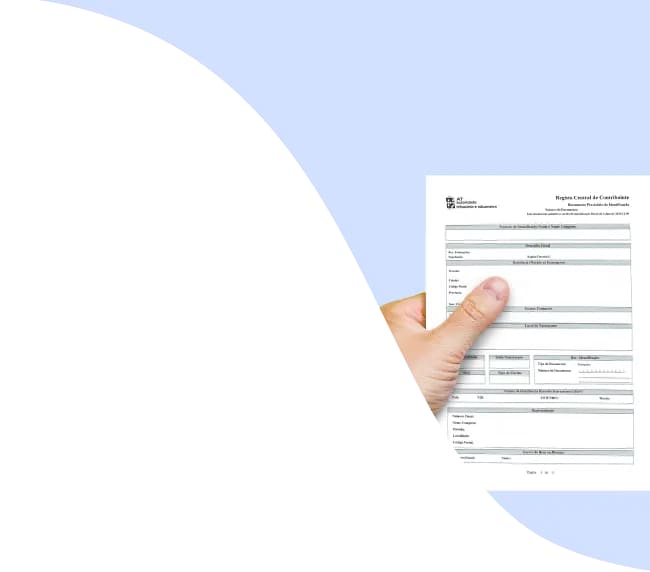
The Portuguese NIF (Número de Identificação Fiscal) is the tax identification number used for almost every administrative and financial action in Portugal, including opening a bank account, signing a lease, setting up utilities, getting paid, and paying tax. It is not a residence permit and grants no residency rights. It is purely a tax ID, and foreigners can hold one whether or not they live in Portugal.
To obtain a NIF, the number is issued by Finanças, the Portuguese tax authority. It can be requested electronically through the Portal das Finanças (the tax office's online service), but a non-resident request is normally submitted through a legal representative acting with a power of attorney.
In practice, most people moving from outside Portugal get their NIF number either by appointing a fiscal representative or by using a service that handles the request end to end and returns the number plus the Finanças access password by email.
AnchorLess offers exactly this (yes, us!), done from abroad, with no need to be in Portugal. However you do it, get the NIF sorted before you start the bank account, not after.
What is the process to open an account?
Here is the general process to open an account in Portugal, step by step, whether you go in person or open the account remotely:
- Confirm your profile, resident or non-resident. This decides your route and which proof of address is accepted.
- Get your NIF if you don't already have one. Almost nothing proceeds without it.
- Choose your opening route: a branch appointment, fully online onboarding (residents and Citizen Card holders), or a third-party service that can apply on your behalf and open the account for a non-resident from abroad (like us!).
- Choose the account type you actually need, usually a simple current account for everyday use.
- Gather your documents against the checklist above, and keep clean digital copies ready even for an in-person appointment, since branches scan them.
- Complete identity verification, in a branch, by video, or in the bank's app, depending on the institution and your status.
- Make the initial deposit if the account requires one.
- Activate digital banking and request your cards, then set up the app and security factors.
The requirements barely change between routes. What changes is how identity is verified and how long compliance takes. For a resident in a branch it can be same-day. For a non-resident opening remotely, it runs longer because the file goes through additional checks.
What the process looks like if you open with AnchorLess
If you would rather not hunt for a bank that accepts non-residents and manage the compliance back-and-forth in Portuguese, this is the part a service handles for you.
AnchorLess opens a Portuguese account remotely, before you arrive, in partnership with Millennium BCP, the largest private bank in Portugal.
The account you get is a Prestige account with a personal manager and remote assistance.
Here is how the process actually runs:
- Start the request. After you sign up, you receive an email with your dashboard login and complete the bank application there, uploading your documents (NIF, valid passport, proof of address, proof of income or financial means, and your foreign tax number).
- Document review. The documents are checked against the bank's rules, so the file goes in clean and avoids extra requests. That means a full name matching your ID, proof of address issued within the last three months, and income evidence that clearly shows your name.
- Sign the contracts. You receive your bank contracts by email as original files plus separate versions marked to print and sign. You read the originals, then print and sign the extracted pages.
- Mail the signed contracts. The physical signed contracts are couriered to the processing address in Lisbon (DHL, UPS or FedEx). This physical step is part of why remote opening takes a little longer than an in-branch signup
- Account opening. The bank processes the file, and your account is confirmed when you receive an email with your NIB (the Portuguese account number) and instructions. Typical turnaround is up to 2 to 3 weeks when the documentation is correct, excluding holidays, customs and shipping delays. The bank can still request additional documents or the process can take a longer time to be analyzed.
- Access your account. Millennium BCP sends you a Multichannel Code by SMS and a User Code by email. You download the Millennium BCP app and log in from your registered phone, in English.
- Request your cards. Debit cards are not issued automatically. You request them through the bank's website (currently around €23.50 each for extra/lost card, with the bank giving up to two per account).
A few honest notes so there are no surprises. The account carries a monthly maintenance fee of roughly €5 to €8, depending on income and assets. The lower €5 rate applies with a monthly income or pension of at least €750 paid into the account, or assets above a set threshold. Otherwise it is around €8.
The service is available to customers of all nationalities except Russia. And once the account is open, day-to-day banking is between you and the bank. A service can open the account, but it does not manage your money afterward.
You could, of course, do all of this yourself by finding a bank that accepts non-resident applications and dealing with it directly. The trade-off is the time spent locating one, the compliance back-and-forth, and doing it in Portuguese.
Open your Portuguese bank account remotely
AnchorLess partners with a leading Portuguese bank to make opening your account from abroad quick
Open your Portuguese bank account
Visa-compliant account
Debit and credit cards delivered to you
Portuguese IBAN for easy local payments and official use



Which banks accept non-resident applications?
There is no fixed list of banks in Portugal that always accept non-residents, because each specific bank sets its own compliance policy and those policies change. What is reliable is this:
The large retail banks, Millennium BCP, Caixa Geral de Depósitos, Santander Totta, Banco BPI and Novo Banco, can all hold accounts for foreigners. But most of them reserve remote or non-resident onboarding for narrower circumstances and prefer that you either already have residency or apply in person. If you apply directly, you will need to check with each bank's compliance team what they currently require for your nationality and status.
The most dependable non-resident route through a mainstream bank tends to run through a service with an established channel to a specific bank.
AnchorLess, for example, works through Millennium BCP, which is how it can open a mainstream account for someone still abroad.
Among the others, Novo Banco and Banco BPI appear frequently in expat onboarding discussions as banks people have successfully used. But reports are mixed and depend heavily on the branch and the applicant's profile.
Best banks in Portugal (overall strength and coverage)
It helps to separate two questions people often blur together: which are the strongest, most established banks in Portugal, and which banks are actually easiest to open and use as a foreigner. They are not the same list, and treating them as one is how people end up frustrated.
These are the mainstream banks most people mean by a "big" Portuguese bank. They have the widest branch and ATM networks, full product ranges, and are the default choices for salary, rent and utilities once you are set up:
- Millennium BCP. The largest private bank in Portugal, with broad coverage and a well-regarded English-language app.
- Caixa Geral de Depósitos (CGD). The state-owned bank, with arguably the most ubiquitous branch and ATM network in the country.
- Santander Totta. The Portuguese arm of the global Santander group.
- Banco BPI. A full-service bank within the CaixaBank group.
- Novo Banco. One of the core "big five" retail banks used for everyday needs.
Best banks for foreigners and non-residents (accessibility to open and use)
Here the ranking is about how workable the bank is for someone opening from abroad or newly arrived. It weighs remote-friendliness, English support, and an expat track record, not size or prestige:
- Millennium BCP. English-speaking support and app, frequently recommended by expats, and the bank AnchorLess opens remotely for non-residents before arrival.
- Santander Totta. Useful if you already bank with Santander in another country, since the global footprint can smooth setup and transfers.
- ActivoBank. A low-fee, app-first Portuguese bank that is a favourite in expat communities, though you generally need to already be a resident to join (it's actually part of the Millenium Bank).
- Revolut. Issues Portuguese IBANs once you are residing in Portugal, and works well as a bridge account while you settle in.
- Banco Atlântico Europa. A Portuguese bank with a PT50 IBAN that is particularly useful for non-residents because accounts can be opened remotely through its app from supported countries. Expats report successfully opening accounts from abroad before moving to Portugal, although its physical branch network is much more limited than the larger banks, but considering life in Portugal it's not the ideal option.
The two lists do not fully overlap, and that is the important part. Some of Portugal's biggest, best-known banks are cautious about onboarding non-residents. Meanwhile, some of the options that are easiest to open from abroad, like Wise and Revolut, are digital or bridge accounts rather than full Portuguese banks.
In other words, the bank that is simplest for you to open may not be the one topping "best bank in Portugal" lists, and the country's top banks may be the hardest to open remotely. That is a normal trade-off to plan around, not a mistake to avoid.
| Bank / service | Strong "best in Portugal" case | Easy for a non-resident to open | Notes |
|---|---|---|---|
| Millennium BCP | Yes | Yes (remotely, via a service) | English support; AnchorLess partner bank |
| CGD | Yes | Limited (usually easier after arrival) | Portugal's largest state-owned bank; extensive branch and ATM coverage |
| Santander Totta | Yes | Limited (easier if already a Santander client) | Large international banking group with a strong presence in Portugal |
| Banco BPI | Yes | Limited | Full-service Portuguese bank with broad everyday banking options |
| Novo Banco | Yes | Limited | Major Portuguese retail bank frequently discussed by expats opening local accounts |
| ActivoBank | Partly (low-fee favourite) | Limited for non-residents | App-first bank owned by Millennium BCP; low or no maintenance fees on many accounts |
| Banco Atlântico Europa | Partly (strong non-resident option) | Yes, for eligible applicants | Portuguese bank offering PT50 IBANs and remote digital onboarding for non-residents from supported countries |
| Revolut | No (not a traditional Portuguese bank) | Yes | Can provide a Portuguese PT50 IBAN to eligible Portugal-based customers; useful as an app-first or bridge account |

When comparing banks, weigh the services, the accessibility (English-speaking support, branch location), and the fees.
Recent customer reviews can also tell you about service quality. Just remember that experiences vary sharply by branch, nationality and profile, especially for non-EU applicants facing tighter KYC and AML checks.
English-language support is uneven. Millennium BCP is the one most consistently singled out for its English customer service and app, while BPI, Santander and ActivoBank offer some English pages and features.
What is the minimum deposit for opening an account?
There is no single national figure for the minimum deposit.
Many Portuguese banks ask for a small initial deposit to open or activate the account, often around €250, and sometimes anywhere from €100 to €300. Some accounts have no minimum initial deposit at all.
ActivoBank, for instance, states that opening its account has no minimum initial deposit, although digital openings require the first transaction to be a bank transfer and you need to be a resident to join.
Just as important as the deposit is what the account costs to run. Most current accounts carry a monthly maintenance fee, and this is where the real ongoing cost sits, not in the opening deposit.
As a concrete reference, the Millennium BCP account AnchorLess opens carries a monthly maintenance fee of roughly €5 to €8. The lower rate typically applies when you have a monthly income or pension of at least €750 paid into the account (or assets above a set threshold), and the higher rate otherwise.
Figures like these change, so confirm both the initial deposit and the monthly fee for your specific bank account and plan before you open an account.
Which account type do you need?
Portuguese banks offer several account types, and the differences matter more than the names suggest. Choosing the right one at the start saves you from opening a second account later.
- Current account, or 'conta à ordem'. This is the everyday checking account, and it is what almost everyone means by "a bank account." You deposit and withdraw freely, receive your salary, pay by card, set up direct debits, and use Multibanco and MBWay. If you only open one account, this is it.
- Savings account, or 'conta poupança'. A savings account lets you set money aside and earn interest on the balance. The interest is usually modest compared with other investments, but the money stays easily accessible, which makes it useful for an emergency buffer or a short-term goal. It normally sits alongside your current account rather than replacing it.
- Joint account, or 'conta conjunta'. A joint account is a current account shared by two or more people, such as couples, families or business partners, where each holder can access and manage the money. It is the natural choice when two people relocate together and want to run shared household costs from one place. Note that opening a joint account remotely involves more paperwork, since every holder has to sign the contracts.
- Term deposit, or 'depósito a prazo'. This is money committed for a fixed period, from a few months to several years, in exchange for a set interest rate. It suits funds you know you will not need for a while and want to earn a little more on than a savings account pays. Unlike a current account, you generally cannot touch the money freely until the term ends without giving up some or all of the interest.
Be careful with the Portuguese terms here. 'Conta à ordem' is the on-demand current account, while 'depósito a prazo' is the fixed-term deposit. They are opposites, not synonyms.
Once your account is live, you can use it for far more than day-to-day spending: debit and credit cards, SEPA transfers across the eurozone, a mortgage or loan application, investments, insurance, and full digital and mobile banking.
How long does it take to open a bank account in Portugal?
Timing depends mainly on your profile.
Opening in person with a residence permit in hand is usually a matter of 30 minutes to a couple of hours.
Opening remotely as a non-resident, especially without a Portuguese digital identity, typically takes around 2 to 4 weeks. The file goes through extra verification and compliance checks, and remote routes often involve mailing signed contracts.
It can take longer if the bank requests additional documents or needs more time to analyze the file, which is exactly why submitting a complete, correctly formatted document set the first time is the single best thing you can do to keep the process short.
What if your application is refused?
A bank can decline your application if you do not meet its criteria or do not supply a requested document. For non-residents, refusals usually trace back to compliance rather than anything personal.
If you believe a decision was made in error, you can file a complaint with the Banco de Portugal, the authority that oversees bank conduct in the country.
In most cases, though, the more productive move is to fix the gap the bank flagged, such as a clearer proof of address, stronger proof of funds, or a certified translation, or to apply through a bank or service whose non-resident requirements match your situation.
Open your Portuguese bank account remotely
AnchorLess partners with a leading Portuguese bank to make opening your account from abroad quick
Open your Portuguese bank account
Visa-compliant account
Debit and credit cards delivered to you
Portuguese IBAN for easy local payments and official use
Final thoughts
For most people relocating to Portugal, the account itself is manageable once two things are in place: your NIF, and the right opening route for your residency status. If you already hold a residence permit or Citizen Card, opening online or in a branch is usually quick. If you are still abroad, the realistic paths are a bank that accepts non-resident applications directly, or a service that opens a mainstream account, such as a Millennium BCP account through AnchorLess, on your behalf, so the file is prepared correctly and you can complete most of it before you fly.
The decisions that shape your experience are which bank actually fits you, remembering that the biggest Portuguese banks and the easiest banks to open as a foreigner are not the same list, and which account type you need, from a simple conta à ordem to a joint account or a savings option. Keep in mind, too, why the local account is worth the effort in the first place. Your visa may rely on showing proof of funds in it, MBWay and Multibanco only work with a Portuguese PT50 IBAN, and Finanças will only send refunds or take direct debits through a Portuguese account.
Sorting this out early, ideally alongside your NIF, means one less thing to worry about for your moving to Portugal process, so you can focus on the rest of your relocation to Portugal instead of on paperwork.
Share this article