EES Europe: Border Rules, Delays & App
In short
The easiest way to understand EES Europe is to break it into four simple points.
If you are researching EES Europe, you are really trying to understand one practical thing: what happens now when a non EU traveller arrives at the border of many European countries for a short stay.
The Entry/Exit System EES is the EU’s new digital border system for non EU nationals visiting for short stays or long stays. It replaces passport stamping with a digital record of entry and exit, adds biometric registration, and gives border authorities a clearer way to track whether someone has entered, left, or overstayed. It is one of the biggest recent changes in travel to Europe, and that is why it dominates current search results.
Here we will explain what EES is, who it affects, what happens at the border, why queues may be longer at first, how it differs from ETIAS, and whether the new Travel to Europe app can help reduce waiting time.
Table of contents10
- What is EES Europe and why does it matter?
- How does EES affect travel to Europe?
- How will EES change border controls?
- What data does EES collect from travelers?
- What countries are part of the EES?
- EES vs ETIAS
- The Travel to Europe app and the social media discussion around it
- EES Europe for tourists
- EES Europe for digital nomads
- EES Europe for people moving to Portugal or Spain
What is EES Europe and why does it matter?
What is the Entry/Exit System EES?
The entry exit system ees is an automated border database used by European countries that participate in the scheme. If you are asking what is EES, the simplest answer is this: it is the new EU border system EES that records when a non EU traveller enters and leaves instead of relying on manual passport stamps.
That change matters because border control is no longer just a visual check and a stamp. Your journey becomes part of a digital record. That record helps authorities verify identity, see how long you have stayed, and detect overstays more easily.
For travellers, the system changes the border experience more than the travel planning itself. It is not a tourist attraction issue or a booking issue. It is a border check issue.
Why was EES introduced?
The main reasons are border security, overstay tracking, and more modern border management.
For years, entry and exit across much of Europe relied on manual passport stamps. That system was familiar, but it was not very efficient for identifying overstays or checking identity in a more automated way. EES was introduced to strengthen security, digitise border records, and modernise how external borders are managed.
It affects ordinary travellers, but it was built as a border management tool.
When will EES be fully implemented?
If you search the topic, you will often find references to October 2025 EES. That date was important because the system began rolling out progressively then. But it was not the final endpoint.
The full EES implementation date was 10 April 2026. That means the full implementation of EES has already happened.
How does EES affect travel to Europe?
Who does EES affect?
This is where many people need the clearest explanation.
EES mainly affects non EU nationals travelling for a short stay to countries using the system. In plain language, that includes many tourists from the UK, the US, Canada, Brazil, and other non EU countries who are coming for short visits.
If your visit falls under the usual short stay rule, EES is relevant to you.
How does EES affect travel to Europe in practice?
When people ask about travel to Europe, they usually want the practical effect, not the legal theory.
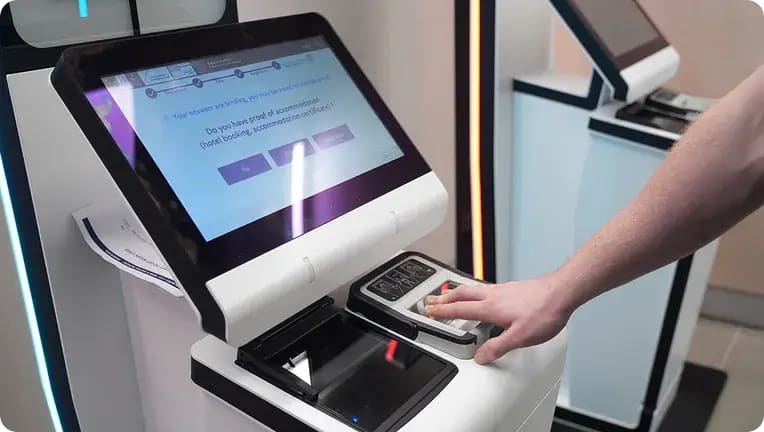
The practical impact of EES on travel is that the first border crossing can take longer. You may need to register your data, have your facial image captured, and provide fingerprints. After that, your record already exists in the system, which should make later checks more streamlined, although you still remain subject to border control every time you enter or leave.
So the real EES travel information travellers need is this:
- You should expect a more digital border process
- You should allow more time at busy entry points
- You should not assume the first trip will be as quick as the old passport stamp process
- You should not confuse EES with a visa or with ETIAS
Those are the main behavioural changes.
What are the requirements for EES registration?
A lot of people expect a separate online registration process long before travel. That is not usually how EES works.
For most travellers, EES registration happens as part of the border check itself. The requirements for EES are mostly tied to showing up at the border with the right travel document and going through the registration steps there.
This is why it is better understood as a border management process than as a classic pre trip travel authorization. You are not usually buying a permit or filling out a long standalone application for EES in advance. Instead, the registration happens when you cross the border.
In general terms, EES requirements for travelers include:
- A valid travel document
- Eligibility for short stay travel under the applicable rules
- Biometric registration when required
- Compliance with the usual conditions of entry
- There is no separate EES fee in the way people often imagine.
How will EES change border controls?
What will happen at the border now?
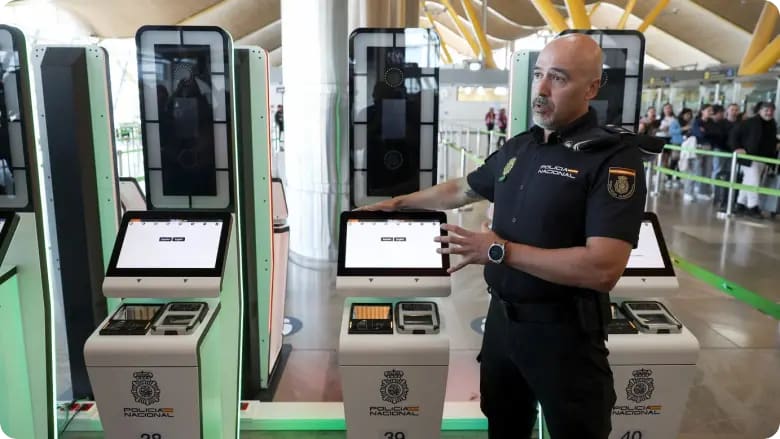
Under the new border controls, officers may scan your passport, capture a facial image, and collect fingerprints. Instead of stamping the passport, the system records your entry digitally. On exit, your departure is also recorded electronically.
So the big shift in changes in border management is this: the border becomes a digital border system rather than a mostly stamp based one.
For many travellers, especially first time users of the system, this means the border may feel more procedural and a little slower at first. That is why many reports often mention queues and delays.
Why are there concerns about delays?
Because any new border process creates friction at the beginning.
The concern is simple. If many travellers need to register biometrics and digital records, the first phase of full implementation can create bottlenecks, especially at busy airports, ports, rail hubs, and school holiday periods.
So when we consider EES Europe, many are not really looking for abstract policy. They want to know whether they should arrive earlier, expect queues, or plan for a slower crossing.
What data does EES collect from travelers?
What personal data and biometric data are collected?
The data collection under EES includes basic travel document information and movement records, along with biometric data.
In plain terms, personal data in EES can include your name, date of birth, nationality, travel document details, the date and place of entry and exit, and biometric identifiers such as facial image and fingerprints. If someone is refused entry, that can also be recorded.
This is why data privacy is part of the conversation. Travellers are not just being counted. They are being digitally registered.
What about data protection?
The good news is that the system is presented as operating under EU data protection rules.
That does not make people stop worrying about privacy, but it does mean the system is supposed to function within a legal framework governing how personal and biometric data are processed, stored, and accessed.
For most users, the practical takeaway is simple. EES is not just a passport stamp replacement. It is a structured data system.
What countries are part of the EES?
What are the EES countries?
The EES countries are the participating Schengen and associated countries using the system at their external borders. These are:
Austria, Belgium, Bulgaria, Croatia, Czechia, Denmark, Estonia, Finland, France, Germany, Greece, Hungary, Iceland, Italy, Latvia, Liechtenstein, Lithuania, Luxembourg, Malta, the Netherlands, Norway, Poland, Portugal, Romania, Slovakia, Slovenia, Spain, Sweden, and Switzerland.
When people ask about countries participating in EES, they are usually trying to confirm whether a destination like Portugal or Spain is covered. Both are.
What countries are not part of EES?
Two countries are especially important to mention because they create confusion: Ireland and Cyprus.
They are not part of EES, so this system does not apply to travel there in the same way. That is a useful point because people often assume that all EU countries work under the same border system. They do not.
EES vs ETIAS
Why do people confuse them?
Because both are new EU travel systems and both are constantly mentioned in search results and news coverage.
But they are not the same thing.
EES is the border registration system that records entry, exit, and biometric data for short stay travellers.
ETIAS is a separate travel authorisation system that is expected to start later. So if you think you must immediately apply online for EES the way you might apply for an ETA or ESTA elsewhere, that is the wrong mental model.
Which one matters right now?
Right now, EES is the system already affecting border crossings.
ETIAS is a separate future step for eligible visa exempt travellers and is expected to begin in the last quarter of 2026 (with a high chance og change).
The Travel to Europe app and the social media discussion around it
Is there really an app for EES?
Yes. This part is not just social media noise.
There is an official Travel to Europe mobile app linked to the EES framework. It has been widely shared on social media because travellers and content creators are presenting it as a way to make the process faster and reduce waiting time.
That basic idea is true, but only with important limits.
What can the app actually do?
The app allows eligible travellers to pre register some information before they reach the border. Depending on the country and the setup, this can include passport data, facial image, and an entry questionnaire.
The practical benefit is that part of the border process can be handled in advance, which may help reduce time spent at the checkpoint.
This is why the app is being promoted online as a queue reduction tool.
What can the app not do?
This is where people often get misled by oversimplified social media posts.
The app does not replace border control. It does not guarantee entry. And it does not fully eliminate waiting.
Most importantly, fingerprints still need to be collected at the border in the presence of a border guard. So the app can streamline part of the process, but it does not make EES disappear.
Where is the app available right now?
At the moment, official information says the app can currently be used for entry in Portugal and Sweden, with specific features varying by country.
Portugal has publicly promoted the app as a way to speed border controls, and its official guidance said the initial launch phase started at Lisbon Airport.
That means the app is real, useful, and relevant, but still limited in rollout.
EES Europe for tourists
What should tourists care about most?
Tourists need the simplest version of the answer.
If you are a non EU tourist visiting a participating country for a short stay, EES is part of your border process now. Your first entry may take longer than before. You may need biometric registration. You should allow extra time and not plan ultra tight connections.
For tourists, the most important topics are:
- whether EES applies to their passport
- whether their destination is in the system
- whether they should expect delays
- whether the app is available at their arrival point
That is the tourist version of EES.
Does EES change the 90 in 180 day rule?
It does not create that rule, but it makes tracking it more digital and more visible.
So tourists who try to use Schengen time carelessly should assume that the system is now better designed to detect overstays. That is one reason the topic matters beyond airport queues.
EES Europe for digital nomads
Why does EES matter differently for digital nomads?
Because digital nomads often sit in a grey area between visitor behaviour and relocation planning.
If you are entering as a short stay traveller and you do not hold a residence permit or long stay visa, EES can still apply to you just as it would apply to a tourist. The fact that you work remotely does not automatically remove you from the short stay framework.
That is why digital nomads need to think less about lifestyle branding and more about legal status.
When might EES not be the main issue for a digital nomad?
If you hold a long stay visa or residence permit issued by a participating country, EES is generally not the main system governing your entry in the same way.
That distinction is critical. A person spending a few weeks scouting Portugal while still on a visitor basis is in a very different legal position from someone entering with a national visa or residence status.
EES Europe for people moving to Portugal or Spain
Does EES matter if I am moving, not just visiting?
Yes, but usually not in the way many people think.
For a person moving to Portugal or Spain, EES may matter during an early scouting trip, an apartment search trip, or any other short stay entry before residence is formalised.
But if you are entering with a long stay visa or residence permit, EES is generally not the core system defining your legal life there. Your visa, permit, and immigration pathway matter more.
So for movers, EES is often a short stay border issue, not the main residency issue.
EES for people moving to Portugal
Portugal is one of the participating EES countries, so short stay visitors entering Portugal can be subject to the system.
Portugal is also one of the countries currently using the official app, and early official communication highlighted Lisbon Airport as the initial rollout point.
So if you are moving to Portugal and first arrive as a short stay traveller, EES may shape that first border experience. If you are arriving on a long stay basis, your visa or residence status becomes the more important framework.
EES for people moving to Spain
Spain is also part of the EES system, so the same general border logic applies to short stay arrivals there.
The difference is on the app side. Current official app information specifically highlights Portugal and Sweden, not Spain, as the countries where the app is currently available. So if you are moving to Spain, you should not assume the app will be offered for your arrival point unless updated official guidance confirms it.
The easiest way to understand EES Europe is to break it into four simple points.
First, EES is the EU’s digital entry and exit border system for non EU short stay travellers.
Second, it changes the border experience more than the travel planning experience. The biggest visible effects are biometric registration, digital records, and possible delays.
Third, it is not the same as ETIAS. EES is already operational. ETIAS comes later.
Fourth, the official Travel to Europe app can help pre register some information and may shorten part of the process where available, which is why it is being shared so heavily on social media, but it does not replace the border check itself.
Share this article