Portuguese Citizenship Through a Grandparent: Who Qualifies and How to Apply
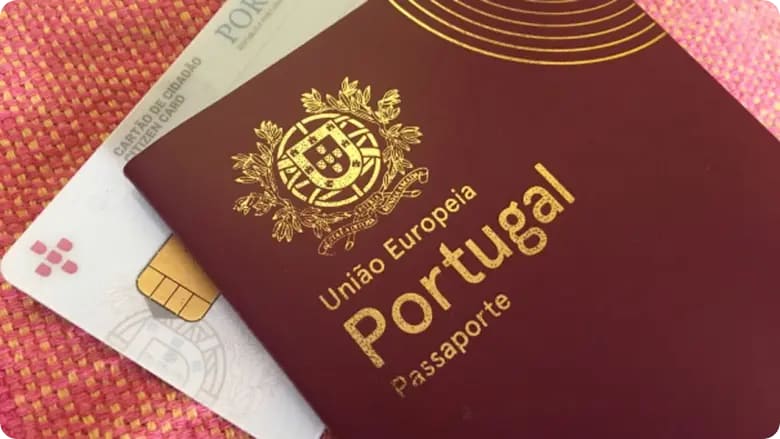
If one of your grandparents was Portuguese, you may be able to claim Portuguese citizenship by descent and qualify for an EU passport through Portugal. Here is the honest answer before any paperwork: since the 2026 nationality law, citizenship through a grandparent is a demanding path, and it is worth checking whether an easier one is open to you first.
The grandchild claim ('neto') runs on jus sanguinis, the right of blood, so your birthplace does not decide it. What decides it is a set of conditions: your Portuguese ancestor must be a citizen by origin who never lost that nationality, you must declare that you want to be Portuguese, and you must prove an effective connection to the Portuguese community. Since 2026, that last requirement is widely read as pulling in integration conditions that used to belong only to naturalisation.
This guide covers the eligibility requirements after the 2026 law, who qualifies as a citizen by descent, whether grandchildren and great-grandchildren can apply, what happens if your ancestor lost their nationality, the documentsand proof of ancestry you need, how long the application takes at the central registry in Lisbon, how to request urgent handling, and the step-by-step process.
One door most people miss: if the parent between you and your Portuguese grandparent is alive and willing, they can become Portuguese first, as a child. That makes you the child of a Portuguese national, a lighter path with no test at all. So before you build a grandchild case, check whether you even need one.
One caveat throughout: the 2026 law is in force, but the regulation that fills in the operational detail was still being finalised as this was written, so a few mechanics are confirmed in principle and pending in practice. Confirm the current rules with the IRN before you file.
Table of contents9
- How do you get Portuguese citizenship through a grandparent?
- What are the eligibility requirements for the grandchild route?
- Can great-grandchildren get Portuguese citizenship?
- Can you get citizenship if your grandparent lost their Portuguese nationality?
- What documents do you need for the Portuguese citizenship grandchild route?
- How long does citizenship through a grandparent take?
- How to apply for Portuguese citizenship through a grandparent, step by step
- Questions people ask most before applying
- How can AnchorLess help you with Portuguese citizenship through a grandparent?
How do you get Portuguese citizenship through a grandparent?
You qualify as a grandchild ('neto') if your grandmother or grandfather is Portuguese by origin, has not lost that nationality, you declare that you want to be Portuguese, and you prove an effective connection to the Portuguese community. That last condition is the one that changed in 2026, and it is the heart of this whole topic.
The grandchild route is nationality of origin, so once it is granted you are treated as Portuguese from birth. It is also handled centrally by the 'Conservatória dos Registos Centrais' in Lisbon, which matters for timing, because that is where the longest queue in the system sits.
Who qualifies as a grandchild?
This path is for individuals with no living parent able to carry the claim.
It suits individuals whose mother or father, the person between them and their Portuguese ancestor, has passed away, or already became Portuguese and passed it down, or simply cannot take it forward. In that situation the grandchild case is your path, and you study it in full.
If that parent is alive and willing, read the next section first. You may have a lighter option.
Can you go through a living parent instead?
Often, yes, and it is almost always the better plan.
Because nationality of origin is retroactive, a parent recognised as Portuguese was Portuguese from the day they were born.
The moment your mother or father, the child of your Portuguese ancestor, is recognised and registered, they count as Portuguese when you were born, which makes you the child of a Portuguese national.
So instead of applying as a grandchild, you have the person in between recognised first, as a child, and then you follow as a child too. The children of Portuguese nationals are Portuguese from birth, and their own children then qualify in turn.
The payoff is large. The child path ('filho') asks for no exam, no evidence of ties to Portugal, and no criminal-conditions bar, and it can be filed at your consulate or at any 'conservatória' with a nationality desk, rather than only in Lisbon. The full mechanics live in our guide to Portuguese citizenship through a parent.
This cascade is the single most useful thing to check before you commit. Everything below assumes it is not available to you.
What are the eligibility requirements for the grandchild route?
At least one grandparent who is Portuguese by origin and never lost that nationality, a declaration that you want to be Portuguese, and proof of effective ties to the Portuguese community.
Under the consolidated Nationality Law, the grandchild route is now widely read as presupposing the integration conditions in article 6, and that is the 2026 shift you plan around.
Does your grandparent have to be Portuguese by birth?
Yes. Portuguese by origin ('originári'a) means born Portuguese, not naturalised.
The law opens this path through a second-degree ancestor in the direct line who holds original Portuguese nationality.
A grandmother or grandfather who was born Portuguese qualifies as the anchor. An ancestor who became Portuguese later, by naturalisation, does not open it.
This is the first fact to confirm, because it decides whether you have a case at all.
Does the ancestor need to still hold the nationality?
Yes. Your grandparent must still hold the nationality in law and not have lost it.
If they lost it at some point, for example by voluntarily taking another nationality before Portugal allowed dual nationality, the direct grandchild path closes.
That situation has its own section further down, because the line can sometimes still run through your parent.
What does "proof of effective connection" mean after the 2026 law?
This is the condition that carries the weight. Under the consolidated law, the grandchild claim is now generally read as requiring the same integration tests that used to belong to naturalisation, alongside the declaration of intent.
One honesty note: legal sources do not fully agree on how far article 6 reaches into a nationality-of-origin path like this one.
Some read the 2026 law as applying the full article 6 battery to grandchildren; others treat that battery as belonging mainly to the great-grandchild naturalisation process. Until the regulation settles it, prepare for the conditions below and confirm the exact scope with the IRN before filing.
Language, culture, history, and national symbols
You are expected to show sufficient knowledge of the Portuguese language and culture, its history, and its national symbols, evidenced by a test or certification.
The linguistic part has historically been met with a CIPLE A2 certificateor Portuguese-school records. The broadened scope, culture, history and symbols, is newer, and the exact certification instrument is one of the details waiting on the pending regulation. Prepare a language certificate at minimum.
Civics and the democratic declaration
You are also expected to know the fundamental rights and duties of Portuguese nationality and how the Portuguese State is organised, and to declare your adherence to the principles of a democratic State of law. These sit alongside the language and culture evidence.
Criminal record conditions
No conviction to an effective prison sentence over three years for the grave crimes listed in the law, and no standing as a national-security or defence threat. You show this with a criminal certificate from each country where you have lived, covered in the documents section below.
What if you are from a Portuguese-speaking country?
Nationals of Portuguese-speaking countries are presumed to meet the language part, unless a clear lack of Portuguese is evident.
That presumption helps applicants from Brazil and the other lusophone countries with that element specifically.
Be precise about its limit. The presumption covers the language itself. It does not extend to the culture, history and symbols component, or to the civics condition, so a Brazilian-descended applicant still has those to satisfy. Descendants from non-Portuguese-speaking countries carry the language element in full.
Get expert immigration answers you can trust
In just 60 minutes, our licensed immigration expert clarifies your best strategy and answers all your questions
Book my immigration consultation


Help identifying the best strategy and visa category for your move
Guidance from our immigration lawyer tailored to your status, goals, and specific questions


What changed in 2026 for descendants who don't speak Portuguese?
Before 2026, this path asked mainly for sufficient Portuguese and a clean serious history. Now it asks for the full integration set.
For individuals who grew up speaking Portuguese, this is a manageable step. For individuals in a family where Portuguese faded a generation or two ago, it is a real barrier.
This is exactly why the cascade through a living parent matters. The child path carries no exam and no culture test, so having your mother or father recognized first removes the single hardest requirement for anyone who does not speak the language.
What if you applied before 19-05-2026?
Applications already pending when the new law took effect are handled under the previous rules.
A file formally submitted and pending before 19-05-2026 is protected: it keeps the lighter pre-2026 conditions.
Only a formally submitted application is protected this way, not a mere expression of interest or an incomplete file. New applications from that date forward face the tightened requirements above.
If you are unsure which side of the line your case falls on, confirm it before assuming.
Can great-grandchildren get Portuguese citizenship?
Yes, but through naturalization that requires living in Portugal, not by descent from abroad.
Unlike children and grandchildren, who can qualify from abroad by bloodline, the great-grandchild path ('bisneto') is a different, heavier animal.
Why the great-grandchild route means living in Portugal
The law lets the Government grant nationality to third-degree descendants of original Portuguese nationals who have held legal residency in Portugal for at least five years, plus the integration conditions in article 6.
Two things follow. First, this is naturalization granted by the Government, not nationality of origin claimed as a right. Second, a great-grandchild cannot sit abroad and claim by bloodline. They have to move, reside, and qualify.
The smarter path when someone is alive in between
If a grandmother or grandfather or a parent stands between you and your Portuguese great-grandparent, and they are alive and willing, route through them first.
It is the same cascade described earlier, extended one generation back: the relative in between is recognized and becomes Portuguese by origin, which either lets you follow as a child (the lightest path) or, at worst, as a grandchild.
Both avoid the five-year residency requirement that a direct great-grandchild claim cannot.
Who claims as what?
The path, and the difficulty, depend on how many generations sit between you and your Portuguese ancestor.
| Your Portuguese ancestor | You qualify as | Language and culture test? | Live in Portugal? | Where it is filed | Difficulty |
|---|---|---|---|---|---|
| Parent, Portuguese by origin | Child ('filho') | No | No | Consulate, or any 'conservatória' with a nationality desk | Lightest |
| Grandparent, Portuguese by origin, not lost | Grandchild ('neto') | Yes, the article 6 conditions | No | Central registry in Lisbon only | Heavier |
| Great-grandparent, Portuguese by origin | Great-grandchild ('bisneto'), by naturalization | Yes, the article 6 conditions | Yes, five years of legal residency | Naturalization process | Hardest |
| Any of the above, with a living intermediate | The relative in between applies first, then you | Depends where you land | Usually no, if you land on the child path | Follows where you land | Lighter, by design |
The takeaway is simple: the further back your Portuguese ancestor sits, the more the law asks of you, and the more valuable a living relative in between becomes.

Not sure if you really need a NIF?
No worries, talk to one of our experts for free and we’ll help you figure it out.
Can you get citizenship if your grandparent lost their Portuguese nationality?
If your ancestor lost it, the direct grandchild path closes, but the line may still run through your parent.
These cases turn on dates and records, so they reward careful checking before you build any plan.
When your parent still carries the line
If your mother or father was born while their parent was still Portuguese, your parent is likely Portuguese by origin, regardless of what their parent did later.
Nationality of origin attaches at birth, so a later loss does not reach back and strip a child who was already born Portuguese.
In that case you route through the parent, who applies as the child of a then-Portuguese national, and you follow as their child.
Whether this works depends entirely on the timeline of the loss against your parent's date of birth, which is why the records come first.
When the ancestor can reacquire it
A person who lost Portuguese nationality and never took another may be able to have it granted back, if they kept effective ties to the community.
That is your grandparent's own process, separate from your case, but if it succeeds they are Portuguese again, which can reopen paths for the generations below.
Why you need the records first
Lost-nationality cases are individual, and the sequence of dates decides everything.
Pull your grandparent's records first: when and how they may have lost the nationality, and whether that fell before or after your parent's birth.
This is where a Portuguese nationality lawyer earns their fee, because the difference between a closed door and an open one is often a single date on an old certificate.
In Portugal, immigration lawyers are usually also experienced in nationality and citizenship matters. So, if you need legal support with a nationality claim, you can generally look for either an immigration lawyer or a nationality lawyer.
What documents do you need for the Portuguese citizenship grandchild route?
A clean paper chain proving your ancestry from your Portuguese grandparent down to you, your identity and civil-status documents, a criminal certificate for each country of residence, and proof of connection, all legalized and translated.
Precision on the documentation is where these cases are won or lost, because the central registry checks each link.
The paper chain that proves your Portuguese ancestry
Every generation in your lineage has to be documented and connected: your grandparent's Portuguese origin record, your parent's birth certificate linking them to their parent, and your own birth certificate linking you to your parent.
The registry does not just match names. It checks that each filiation link is legally established, and here the decisive link is the one between your Portuguese grandparent and your parent.
Your grandparent's Portuguese origin record
The anchor document is proof that your ancestor was Portuguese by origin.
This is typically their Portuguese birth or baptism record ('assento'), obtained from the relevant Portuguese civil or parish registry, or an existing Portuguese registration.
Getting this document, and confirming it shows original nationality, is the first practical and essential task, because the whole application rests on it.
Your Portuguese ancestor’s original birth certificate should be the first document you gather, because it is the reference document for the entire citizenship claim.
The non-Portuguese records must follow the information in the original Portuguese registry, not the other way around. If names, birth dates, or other key details differ on foreign (non-Portuguese) birth, marriage, or death certificates in the family line, those records may need to be formally corrected to match the Portuguese document.
That is why you should obtain and review the Portuguese birth certificate before requesting, apostilling, or translating the remaining documents.
Do you need to transcribe a marriage in the chain?
Sometimes.
The registry cares about filiation, and here the marriage that usually matters is your grandparents' marriage, the one linking your parent to your Portuguese ancestor.
Whether it must be transcribed into the Portuguese registry, rather than only attached as a certificate, depends on how your parent's birth was registered.
Transcription is usually needed when something other than a clean, in-time declaration by the Portuguese grandparent established the filiation, for example when a third party or the non-Portuguese parent declared the birth, or when both grandparents are Portuguese and married abroad, or when the birth was registered late.
When the Portuguese grandparent personally declared their child's birth within its first year, the filiation is already clean and the marriage is usually not required.
Note that attaching a marriage certificate is not the same as transcribing the marriage: a Portuguese marriage record can only be created once the Portuguese person exists in the registry, so in a cascade the transcription falls into sequence afterward.
In practice, 'conservatórias' have been requesting the marriage more often than the strict rule demands, and an 'exigência' sends the file back down the queue, so many applicants keep a certified, apostilled marriage certificate ready even when it may not be needed.
Apostille and certified translation
Foreign documents need an apostille or consular legalization, plus a certified translation into Portuguese.
Documents issued outside Portugal are legalized under the Hague Apostille Convention where it applies, or through consular legalization where it does not, then translated by a certified translator.
An apostille itself does not expire (though some Portuguese conservatórias usually consider documents issued up to 6 months prior to submission), so the date that matters is the issue date of the underlying document.
Proof of connection
A language and culture certificate or test result, and whatever the regulation specifies for the civics condition.
The language element is usually evidenced by a CIPLE A2 certificate or equivalent, and applicants from Portuguese-speaking countries lean on that presumption for the language element.
The broadened culture scope and the exact civics evidence are among the items the pending regulation is expected to pin down, so prepare the language certificate now.
Criminal certificates
A criminal certificate from every country where you have lived, generally from age sixteen onward.
Portugal uses these to check the criminal condition, and they carry a short validity, commonly around ninety days, so you gather them late in the process, not first.
The documents at a glance
| Document | Apostille or legalization | Certified Portuguese translation | Notes |
|---|---|---|---|
| Grandparent's Portuguese origin record | Not applicable if issued in Portugal | Not applicable | Must show original ('originária') nationality; the anchor of the case |
| Parent's birth certificate | Yes, if issued abroad | Yes | Links grandparent to parent |
| Your birth certificate | Yes, if issued abroad | Yes | Links parent to you |
| Marriage certificate(s) in the chain | Yes, if issued abroad | Yes | Above all the grandparents' marriage; may need transcription |
| Your identity document | As required | As required | Proves identity and civil status |
| Criminal-record certificate | Yes, if issued abroad | Yes | From each country of residence; short validity, gather late |
| Language and culture certificate | Depends on issuer | Depends on issuer | CIPLE A2 or equivalent; culture scope pending regulation |
The takeaway is simple: the further back your Portuguese ancestor sits, the more the law asks of you, and the more valuable a living relative in between becomes.

How long does citizenship through a grandparent take?
Long, and longer than any path through a parent, because these cases are handled only by the central registry in Lisbon. This is where patience is part of the plan.
Grandchild applications sit in the busiest queue in the system. Applicants in Portuguese nationality forums report cases running well past a year, with some citing the registry's outer processing limit of around twenty-nine months, and files from 2021 and 2022 still waiting on final registration.
Those are dated community reports, not a promised timeline, and two forces point toward longer waits rather than shorter: the surge of applications filed just before the 2026 law took effect, and the new integration checks, which add verification steps the authorities did not run before.
Read forums for the current mood, then verify any hard number against official sources.
Can you request urgent (priority) handling?
Yes.
Since 2026, applicants aged seventy-five or over, and those facing a qualifying serious-health situation, can request priority handling of their file, according to IRN guidance.
This matters here precisely because these files sit in the long Lisbon queue. The criteria are recent and were being consolidated as this was written, so confirm the current grounds and wording with the IRN before relying on them.
Priority by age had existed, then ended, and was reintroduced with one difference: it is no longer automatic and has to be requested.
You file a formal written request ('requerimento') in European Portuguese, with your signature recognised for authenticity, citing your process number and the specific ground, addressed to the conservatória handling the case, and you attach proof of age, such as a certified, apostilled copy of your identity document.
Approval moves your file up the queue but does not prejudge the outcome, and if it is refused the file continues normally, at no penalty.
There is also a useful interaction with the cascade: if an elderly parent is applying as a child to shorten the chain, they can request age priority on their own file, which speeds the step everyone below is waiting on.
How to apply for Portuguese citizenship through a grandparent, step by step
Map the line, gather and legalise the documents, sort the connection evidence, file with the central registry in Lisbon, then track and respond. The order matters, because fixing problems before you file is far cheaper than after.
Step 1: map the line and pick the lightest path. Confirm your grandparent is Portuguese by origin and did not lose the nationality, then check whether a living parent lets you drop to the child path. This single check decides whether you run a heavy grandchild case or a light child case.
Step 2: gather and legalise the documents. Assemble the ancestry chain, apostille or legalise each foreign document, and translate them by a certified translator. Then check names and dates across the lineage against the Portuguese registry, and correct any mismatch before filing. A name spelled two ways, or a date that does not line up, is a common reason a case stalls, and it is fixable in advance.
Step 3: sort the connection evidence. Prepare the language and culture certificate, and confirm the civics evidence against current guidance. Applicants from Portuguese-speaking countries lean on the presumption; everyone else watches the pending regulation for the culture and civics detail.
Step 4: file with the central registry in Lisbon. This path is centralised at the 'Conservatória dos Registos Centrais'. A consulate can receive and forward your application, but the assessment itself is handled centrally, which is why the Lisbon queue governs the timeline.
Step 5: track, respond, and request urgency if it applies. Answer any request for further documents ('exigência') quickly, because a slow response sends the file back to the bottom of the pile. File an urgent-handling request if the applicant is seventy-five or over or in a qualifying health situation.
Questions people ask most before applying
Do I need to live in Portugal to apply through a grandparent?
No for the grandchild path, yes for the great-grandchild path.
A grandchild can apply by descent from abroad, subject to the ties and knowledge conditions.
A great-grandchild has to hold five years of legal residency in Portugal, because that route is naturalisation.
Do I have to speak Portuguese?
For the grandchild path, you are expected to prove sufficient Portuguese and knowledge of the culture.
For the child path, no, which is the strongest reason to route through a living parent when you can.
Applicants from Portuguese-speaking countries get a presumption for the language element specifically.
Can I apply if my parent never claimed?
Yes.
Your mother or father does not need to have gone through it for you to qualify as a grandchild.
If that parent is alive and willing, though, having them go first is lighter and faster.
My grandparent was born in the Azores or Madeira. Does that count?
Yes.
A grandmother or grandfather born in the Azores or Madeira is Portuguese by origin the same as one born on the mainland. Azores and Madeira though autonomous, are still Portugal.
Just like someone who was born on the Portuguese African colonies, to Portugeuse parents, prior to their indepencency also qualify as a Portuguese citizen.
Can I apply if my grandparent has already passed away?
Yes.
The ancestor does not need to be alive, only to have been Portuguese by origin and not to have lost that nationality.
What a death affects is the cascade, which depends on a living parent being able to apply first.
How can AnchorLess help you with Portuguese citizenship through a grandparent?
Here is the honest split. Recognising your lineage and getting a decision from the 'Conservatória dos Registos Centrais' is a legal and civil-registry matter, best handled with an immigration or nationality lawyer, especially in lost-nationality cases where a single date decides everything.
AnchorLess is not where that filing happens, and we will always tell you when a lawyer is the right person for the step.
Where AnchorLess fits is the part these routes make unavoidable: actually living in Portugal.
A great-grandchild has to build five years of legal residency before the claim is even possible, and many grandchild applicants move anyway, well before final registration.
That means a visa or residence route, a NIF, a Portuguese bank account, an address, and getting your tax situation in order, each with its own queue and its own paperwork. Sorting your tax residency early keeps the whole move clean.
Our relocation service handles that layer. You provide your details, and we take the move itself off your plate, from the visa and the NIF to the bank account and the first tax filing, so you can focus on becoming a Portuguese citizen while the file works its way through the registry office in Lisbon.
Get expert immigration answers you can trust
In just 60 minutes, our licensed immigration expert clarifies your best strategy and answers all your questions
Book my immigration consultation
Help identifying the best strategy and visa category for your move
Guidance from our immigration lawyer tailored to your status, goals, and specific questions
Final takeaways
If a grandparent was Portuguese by origin and did not lose that nationality, you have a path, and since 2026 it is the demanding one, read as gated by language, culture, civics, and criminal conditions. Before you commit, check for the lighter door: if the parent between you and your Portuguese grandparent is alive and willing, have them recognised as a child first, which turns your grandchild case into a child case with no test and no evidence of ties. If your Portuguese ancestor is a great-grandparent, the direct route means five years of residency, so working down through a living relative is almost always better.
Two habits protect you throughout: get the records before the plan, because a single date can decide whether a door is open or closed, and confirm the current rules with the IRN, because the 2026 law is in force while its regulation is still settling. If the applicant is seventy-five or over, or facing a qualifying serious illness, the priority request is now theirs to make.
And when your path to citizenship runs through actually living in Portugal, that move is the part AnchorLess takes on, so being recognised as Portuguese and building your new life there can happen side by side rather than one after the other.
Share this article