How to Write a D7 Visa Motivation Letter
In short
Writing a persuasive motivation letter for the D7 Visa is an important part of your process to relocate to Portugal.
Moving to Portugal with a D7 Visa can be very exciting, especially if you're looking for a change of scenery or a fresh start in this stunning country.
The D7 visa motivation letter (or personal statement, letter of intent or cover letter) is an important part of the Retirement or Passive income Visa application. This letter of intention lets you explain why you want to move to Portugal and how you plan to integrate.
In this guide we will talk about how to write a strong motivation letter to increase your chances of approval.
Table of contents7
- What is the Portuguese D7 visa?
- Why do I need a motivation letter for my D7 Portuguese visa application?
- What to include in D7 visa motivation letter?
- How should I write my motivation letter for my D7 Portuguese visa application?
- How should my motivation letter for my Portuguese d7 visa application look like?
- What tips should I know to write my motivation letter for my Portuguese visa application?
- How can AnchorLess help you with your D7 Visa application?
What is the Portuguese D7 visa?
People who have retired or have a steady income from sources outside of Portugal are specifically eligible for the D7 Visa.
This visa enables you to reside in Portugal without having to work locally, making it a beneficial option for retirees, investors, landlords, and whoever has income from capital or passive investments. Before you can fully embrace the Portuguese lifestyle, it is necessary to convince the Portuguese authorities that you are genuinely committed to your decision to relocate to Portugal.
What documents are needed for D7 visa?
For a D7 visa application, most consulates/VFS offices ask for two sets of documents: (1) the general national-visa file, and (2) the D7-specific proof that you can support yourself in Portugal with stable income.
1) General national-visa documents (almost always required)
- National visa application form (completed and signed)
- Valid passport (with sufficient validity and blank pages)
- Passport photos (recent, per local specs)
- Travel medical insurance covering medical expenses/repatriation for the visa period requested by your consulate/VFS
- Criminal record certificate from your country of nationality (and often any country where you lived for 12+ months), usually legalised/apostilled depending on the issuing country
2) D7-specific supporting documents (proof you qualify)
These are the supporting documents that show you meet the D7 visa requirements:
- Proof of stable passive/recurring income (commonly pension, rentals, dividends, interest, etc.)
- Proof of funds available in Portugal (often a Portuguese bank statement plus evidence of transfer/top-up into that account)
- Proof of accommodation in Portugal (typically a 12-month lease, property deed, or equivalent proof accepted locally)
3) If you’re bringing family (common add-ons)
- Marriage certificate / birth certificates (and, for minors, parental consent documentation when applicable). Requirements for legalisation/translation vary by country/consulate.
Your local Portuguese consulate/VFS checklist can differ slightly (format, notarisation, apostille, translations, number of copies). Use their checklist as the “final word” for your application file.


D7 Visa in Portugal: The 2026 Guide
What are the requirements for D7 visa application?
For a D7 visa, the requirements generally fall into two buckets: (1) core eligibility (why you qualify), and (2) the supporting documents that prove it. Exact checklists can vary slightly by consulate/VFS, but the fundamentals are consistent.
Core D7 visa requirements (what you must show)
1) You have stable income to live in Portugal
- The D7 is designed for retirees and people living on their “own income” (passive income), such as pensions, rentals, dividends, and other investment-derived revenue.
- Many consulates also expect proof you can cover at least 12 months of living costs and prefer to see that amount available (often with funds held in a Portuguese bank account).
2) You have accommodation in Portugal
- Typically a 12-month lease, property deed, or (less commonly) a formal “term of responsibility” from a host, with specific formalities.
3) You have a clean criminal record
- You’ll usually need a recent criminal record certificate from your country (and sometimes from any country where you lived for 12+ months), often with apostille/legalisation rules depending on the issuing country.
4) You have travel insurance for the visa period
- Consulates commonly request insurance covering medical expenses and repatriation for the initial months. This is not a health insurance, but rather a travel indurance, covering only the period BEFORE your AIMA residence appointment.
5) You submit the application correctly (formalities matter)
- Signed national visa form, passport validity, photos, and a personal statement explaining your plan, address in Portugal, and income sources.
Financial “visa requirements” in practice (how consulates usually assess them)
- Many articles and social media posts calculate minimum means using Portugal’s minimum wage logic (and adjust for dependents). The official checklist spells this out as: 100% for the main adult, 50% for an additional adult, and 30% per dependent minor, indexed to the minimum wage at the time.
- It’s common to be asked for recent bank statements plus an “up-to-date” balance showing enough funds, alongside proof of the recurring income stream.
Time for Application:
Financial Requirements:
**Amounts vary depending on whether you have dependents or not. See below for more information.
🏠 Individuals with Real Estate Investments
Why do I need a motivation letter for my D7 Portuguese visa application?
Among the requirements for the Portuguese visa grant, there is the need to present a motivation letter or personal statement explaining why, how, and when you are relocating to Portugal.
Your motivation letter is a crucial part of your process, as it sets the tone for your entire application. When it comes to moving, it's not just about listing your reasons. It's about sharing your personal story. Imagine yourself composing a message to a close friend. Be genuine, enthusiastic, and explicit about your intentions.
Authorities would like to ensure that you are dedicated to residing in Portugal for an extended period of time.
What to include in D7 visa motivation letter?
A strong motivation letter for a D7 visa is essentially a concise “case file summary” that matches your supporting documents and makes it easy for the consulate to see (1) why you’re applying and (2) how you will remain financially self-sufficient in Portugal.
VFS/consular checklists often describe it as a personal cover letter/personal statement explaining your reasons for the D7 and, especially for passive-income applicants, how you will support yourself.
Your motivation letter must include:
- Basic details: Your name, your source of income, your nationality, a brief introduction of who you are;
- Purpose of moving to Portugal: your personal reasons that are driving you to relocate to Portugal;
- Source of income: How your life in Portugal will be sustained. Income must be through pensions, rental income, or dividends;
- Savings and investments: Mention if you have any savings or investments that contribute to your overall financial security. Proof of funds is another requirement from the D7 visa;
- Banking information: Include the information about your Portuguese bank account (I have an account in X bank), how much is already available in it, complying with the requirements, and how you plan to transfer your income to your Portuguese bank account;
- Location: Insert where you plan to live and the length of your lease or property purchase;
- Culture and community: Explain your plans on integrating with Portuguese life and society;
- Signature and Personal information: Sign it and include your contact information.
How should I write my motivation letter for my D7 Portuguese visa application?
Address your visa authority
You'll be writing to an authority at a Portuguese Embassy or Consulate. Include the address of the Portuguese authority in your jurisdiction.
State your subject
As you write your motivation letter for your D7 visa application, insert as the subject your visa “Residency visa for retirement, religious or people living on their own income” and select the part that is applicable to your situation:
-> Residency visa for retirement
If you are applying with a family member, under the same visa, their subject must clarify that:
-> Residency visa for accompanying family member of a retirement visa applicant
Share your basic details
Introduce yourself, include your name, an overview of your source of income, and what you intend to do in Portugal.
-> Dear Sir/Madam,
-> I'm X, an investor/former X, who intends to move to Portugal living from my passive income, who intends to seek in the country a high quality of life.
Explain your purpose of moving to Portugal
Be honest! Tell what is driving you to make the big move.
-> I want to move to Portugal due to the great location, healthy cuisine and easygoing lifestyle.
Include your source of income
This is very important, as this is visa is suited for passive incomers. Share your source of income and how much you receive every month.
-> My funds come mainly from my real estate investments, assuring a steady income of X.000 USD per month.
State your savings
Among the main requirements for your Portuguese visa, there is the proof of funds covering at least an annual Portuguese minimum wage. This is the moment where you'll share how much you saved for your visa application.
-> I have savings in the amount of X.000 euros deposited in my Portuguese Bank account.
Share your banking information
You must have a Portuguese bank account, and your funds must be available in it. In this section, you will provide basic details about your financial circumstances. You can also share how you intend to transfer your income.
-> My funds are available in my Portuguese bank account, with Millenium BCP. I deposited X.000 euros, and will transfer my monthly income through wise app.
Open your Portuguese bank account remotely
AnchorLess partners with a leading Portuguese bank to make opening your account from abroad quick
Open your Portuguese bank account


Visa-compliant account
Debit and credit cards delivered to you
Portuguese IBAN for easy local payments and official use


Include your future address
You must have a 12-month lease or a property to assure your address in Portugal, at the time of your visa application. Include the details here.
-> I'll be residing in R das Flores no. 0, in Lisbon, where I have a 12-month lease contract with the start date of DD/MM/YY.
Get your lease agreement reviewed in 48 hours
A local legal expert reviews your rental contract for unfair clauses, or anything else that could end up costing you more than expected.
Get your lease reviewed now
Reviewed by a Portuguese lawyer
Identification of unfair or illegal clauses
Verification that the lease is registered with Finanças


Your integration in Portugal
Tell them how you plan to integrate with society.
-> I'm currently planning to learn Portuguese and explore the country's culture and habits.
Finish and sign
Inform what documents are being attached to your Portuguese visa application, proving what you shared in the letter, sign your statement and share your contact info, like email or phone number.
-> Attached to this application are the following documents:
- Passport pictures;
- Portuguese bank account statement;
- Proof of income (tax return, payslips, and savings account as proof of income);
- Lease contract in Portugal;
- Travel insurance;
- Flight booking.
If any information needs clarification, please don't hesitate on reaching me.
Sincerely,
SIGNATURE
Name
Address
Email / Phone Number
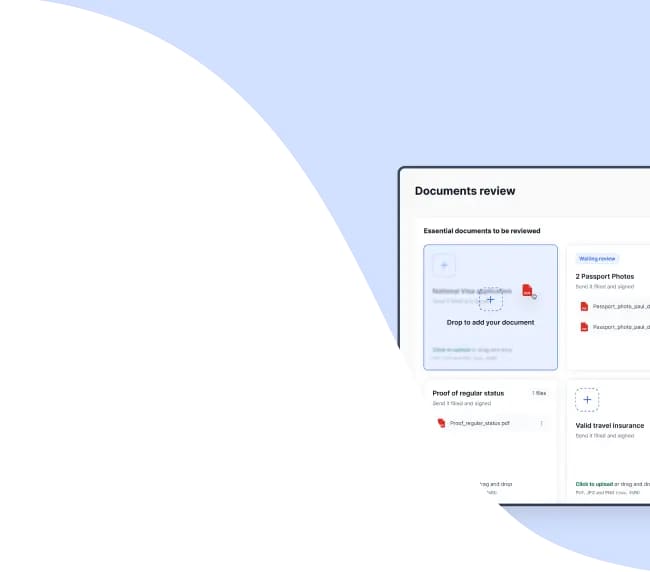
Get your visa application dossier reviewed
Have your visa dossier reviewed by a Portuguese lawyer recognised by the Portuguese Bar Association
Review my visa application
Review by a Portuguese Immigration Lawyer
100% remote: you don’t need to be in Portugal yourself

How should my motivation letter for my Portuguese d7 visa application look like?
It should look like this:
Portuguese Embassy or Consulate
[Embassy or Consulate Address]
Subject: D7 Visa Application - Retirement in Portugal
Dear Sir/Madam,
I'm X, an investor/former X, who intends to move to Portugal living from my passive income, who intends to seek in the country a high quality of life. I want to move to Portugal due to the great location, affordable healthcare, healthy cuisine and easygoing lifestyle.
My funds comes mainly from my real estate investments, assuring a steady income of X.000 USD per month. I have savings in the amount of X.000 euros deposited in my Portuguese Bank account. My funds are available in my Portuguese bank account, with Millenium BCP. I deposited X.000 euros, and will transfer my monthly income through wise app.
I'll be residing in R das Flores no. 0, in Lisbon, where I have a 12-month lease contract. with the start date of DD/MM/YY.
I'm currently planning to learn Portuguese and explore the country's culture and habits.
Attached to this application are the following documents:
Passport pictures;Portuguese bank account statement;Proof of income (tax return, payslips, and savings account as proof of income);Lease contract;Travel insurance;Flight booking.
If any information needs clarification, please don't hesitate on reaching me.
Sincerely,
SIGNATURE
Name
Address
Email / Phone Number
What tips should I know to write my motivation letter for my Portuguese visa application?
- Share your personal connection to the country, such as your appreciation for Portuguese culture, any past trips you've taken, or your interest in making a positive impact on the local community.
- When structuring your motivation letter, it is important to include your personal information. This includes details such as your name, contact information, and any relevant background information that may be important for the recipient to know. By including this information, you can provide a clear and concise introduction to yourself and ensure that the recipient has a full overview on your situation.
- Being honest is very important and can have a positive impact. Make sure to be honest about your reasons and try not to exaggerate. Being authentic is primordial.
- It's important to be thorough, but try not to use too many words. Make sure your sentences are easy to understand and get straight to the main idea.
- It's also important to avoid spelling and grammar mistakes because they can make your message less effective. Make sure to carefully read through your letter several times and think about asking someone else to give it a review.
- When writing your letter, be sure to focus on the specific requirements of the Passive Income D7 Visa. It's important not to ignore these things because if you do, your application might not get the attention it deserves.
How can AnchorLess help you with your D7 Visa application?
AnchorLess can help you with your D7 visa by making the application process clearer and ensuring your supporting documents are ready to submit.
You can start with AnchorMove (free tool) to organize your steps and keep track of what you need. If you want more guidance, AnchorMove Pro or VIP offers a more structured plan and support to help you stay on track.
Before you submit, AnchorLess can also do a Visa Dossier Review, checking that your documents are complete, consistent, and compliant with common consulate/VFS requirements, so you reduce the risk of delays or rejections due to missing or mismatched paperwork.

Final thoughts
Writing a persuasive motivation letter for the D7 Visa is an important part of your process to relocate to Portugal.
To effectively convey your commitment and readiness to embrace life in Portugal, it is important to be genuine, clear, and provide detailed information.
Just take your time, follow the guidelines, and before you know it, you'll be having a great time exploring this amazing country.
Share this article