Nordic Residence Permits: Sweden, Denmark, Norway, Finland and Iceland
In short
In summary, while the Nordic countries offer a wealth of opportunities, their approach to immigration is not monolithic.
Summarise this article with the AI of your choice:
The Nordic countries, Denmark, Finland, Iceland, Norway, and Sweden, are renowned for their high standards of living, progressive social systems, and stunning natural landscapes, making them highly desirable destinations for people seeking to relocate.
While united by shared cultural values and a commitment to quality of life, each nation maintains a distinct immigration framework with specific pathways to residency. Understanding these differences is crucial for any prospective applicant. This article offers an overview of the primary residency visa routes in the Nordic region, outlining the opportunities available.
Moving in EuropeFree
Talk to us about your move
- Tell us your plans first
- Advice tailored to your move
- Book a time that suits you
4.8/51,500+ reviews
Denmark residency visas
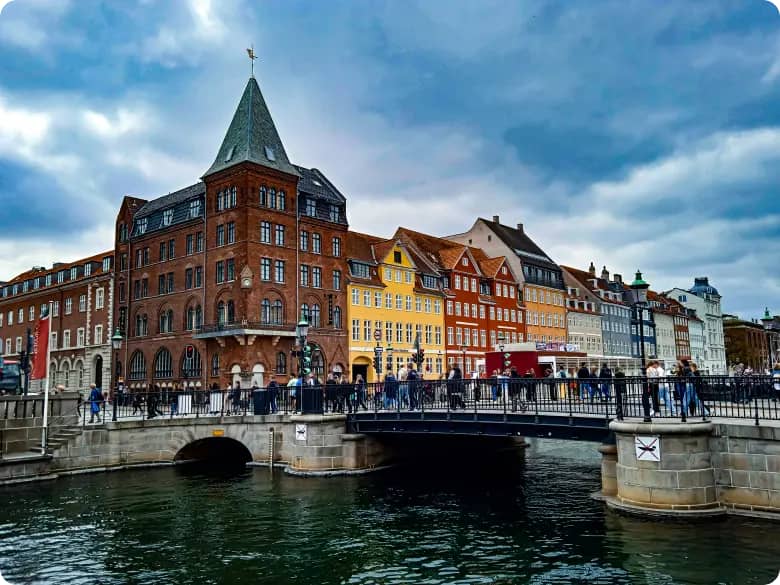
Denmark, known for its "hygge" lifestyle, progressive social policies, and strong economy, is a popular choice for those seeking a new home in Europe. The country offers a variety of residency options for non-EU citizens.
Family reunification
This visa is designed for individuals who want to join a family member residing in Denmark.
What you'll need:
- Proof of relationship: Marriage or registered partnership certificate, or a birth certificate for children.
- Sponsor's status: Your family member in Denmark must have a permanent residence permit, be a Danish citizen, or hold a temporary residence permit based on specific grounds like work.
- Housing requirement: You must have adequate housing in Denmark.
- Financial self-sufficiency: Your family in Denmark must prove they can support you financially.
- Integration requirements: Both you and your sponsor may need to meet certain integration requirements, which can include passing a Danish language test.
Work and residence permit
For those who have secured a job in Denmark, a combined work and residence permit is necessary. Several schemes are available:
- The Pay Limit Scheme: Applicable if you have a job offer with a high salary. The current minimum salary requirement is updated annually.
- The Positive List: For professions where Denmark has a shortage of qualified workers. The list is updated twice a year and includes various fields, from engineering and IT to healthcare.
- The Fast-track Scheme: For certified companies that frequently hire foreign employees. This scheme allows for a quicker and more flexible recruitment process.
What you'll need:
- A written job offer or employment contract.
- Proof of educational qualifications.
- An application fee.
- Your employer will need to be involved in the application process.
Student Visa
If you're planning to study in Denmark, you'll need to apply for a residence permit as a student.
What you'll need:
- Proof of admission to a Danish educational institution.
- Proof of financial means: You must demonstrate that you can support yourself financially during your studies.
- A valid passport.
- An application fee.
Start-up Denmark
For entrepreneurs who want to establish a business in Denmark, the Start-up Denmark scheme offers a path to residency.
What you'll need:
- An innovative business idea: Your business idea must be approved by a panel of experts appointed by the Danish Business Authority.
- Proof of sufficient funds: You must demonstrate that you can support yourself for the first year in Denmark.
- Active participation in the business: You must play an active role in running the business.
Finland residency visas
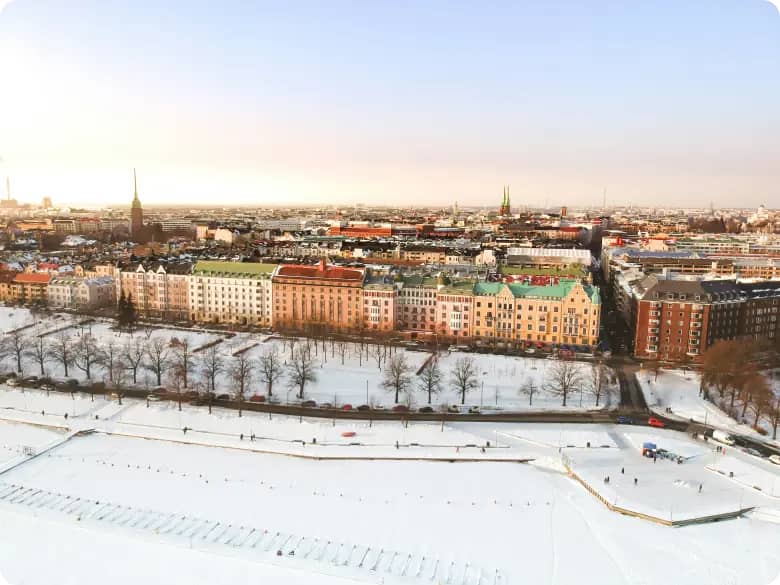
Finland, a Nordic country known for its stunning natural landscapes, high-tech cities, and excellent quality of life, offers a variety of residency options for non-EU citizens. The Finnish government provides several pathways for individuals looking to live, work, or study in the country.
Family-based residence permit
This permit is for individuals who wish to join a family member who is a Finnish citizen or a legal resident of Finland.
What you'll need:
- Proof of relationship: This can include a marriage certificate, registered partnership certificate, or birth certificate.
- Proof of the family member's status in Finland: Your family member will need to provide proof of their Finnish citizenship or residency.
- Proof of secure income: Your family member in Finland must demonstrate that they have sufficient financial resources to support you.
- Proof of adequate housing: You must have a place to live in Finland that is suitable for your family.
Work-based residence permit
If you have a job offer in Finland, you will need to apply for a residence permit for work. There are several categories under this permit, depending on the nature of your work.
What you'll need:
- Employment contract: A signed employment contract with a Finnish employer.
- Employer's application: The application is typically submitted by the employee, but the employer must provide a supplement to the application.
- Educational and professional qualifications: You may need to provide diplomas, certificates, and other proof of your qualifications.
- Labor market testing: In most cases, the employer must demonstrate that the position cannot be filled by a Finnish or EU citizen. However, this requirement is waived for certain highly skilled professionals.
Student residence permit
For those who wish to pursue their studies in Finland, the student residence permit is the appropriate route.
What you'll need:
- Acceptance letter: An official letter of acceptance from a recognized Finnish educational institution.
- Proof of sufficient financial means: You must demonstrate that you have enough money to cover your living expenses. The current requirement is €560 per month or €6,720 per year.
- Health insurance: You must have a comprehensive health insurance policy that covers you in Finland.
- Tuition fees: If you are a non-EU/EEA student, you will likely have to pay tuition fees.
Residence permit for an entrepreneur
If you wish to start a business in Finland, you will need to apply for a residence permit for an entrepreneur.
What you'll need:
- Business plan: A detailed and realistic business plan that outlines your business idea and its financial projections.
- Financial resources: You must demonstrate that you have sufficient financial resources to support yourself and your business.
- Profitability assessment: Before you can apply for the residence permit, your business plan must be assessed and approved by the Centre for Economic Development, Transport and the Environment (ELY Centre).
- Registration in the Trade Register: Your business must be registered in the Finnish Trade Register.
Residence permit for a specialist
This permit is for individuals who have a special skill or expertise that is needed in Finland.
What you'll need:
- Job offer: A job offer from a Finnish employer for a position that requires special expertise.
- Higher education degree: You must have a higher education degree.
- Salary requirement: Your gross salary must be at least €3,000 per month.
EU blue card
The EU Blue Card is another option for highly skilled professionals.
What you'll need:
- Job offer: A job offer for a high-skilled position for at least one year.
- Higher education degree: You must have a higher education degree.
- Salary requirement: Your gross salary must be at least €5,058 per month.
Iceland residency visas
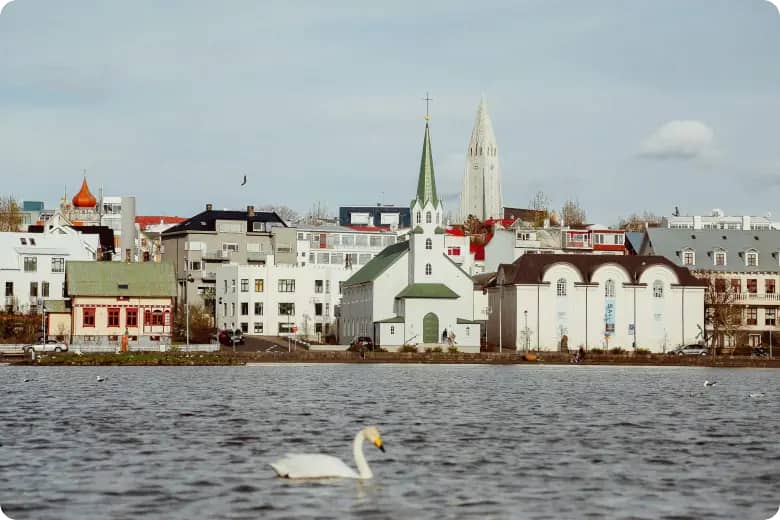
Iceland, the sparsely populated island nation in the North Atlantic, is renowned for its dramatic landscapes, from volcanoes and glaciers to geysers and the Northern Lights. While it may be known as a unique travel destination, Iceland also offers opportunities for non-EU citizens to live and work within its stunning natural beauty.
There are two main types of residence permits in Iceland: temporary and permanent.
Temporary residence permit
A temporary residence permit is issued for a specific purpose and for a limited time, usually for one year. It can be renewed as long as the conditions for the permit are still met. The primary grounds for obtaining a temporary residence permit are:
Work Visa
This is a common route for non-EU citizens to reside in Iceland. A residence permit based on work is tied to a specific job and employer. The permit is contingent upon the employer demonstrating that the position cannot be filled by an Icelandic or EEA/EFTA citizen.
Main Requirements:
- A signed employment contract.
- The work permit must be approved by the Directorate of Labour.
- Proof of financial support
- .Health insurance.
- A signed employment contract.
- The work permit must be approved by the Directorate of Labour.
- Proof of financial support.
- Health insurance.
There are some exceptions to the labor market test, such as for athletes and specialists with specific skills.
Study Visas
Students who have been accepted to study full-time at an Icelandic educational institution can apply for a residence permit.
Main Requirements:
- An official letter of acceptance from an Icelandic educational institution.
- Proof of sufficient financial means to support yourself during your studies.
- A valid health insurance policy.
- A clean criminal record.
- An official letter of acceptance from an Icelandic educational institution.
- Proof of sufficient financial means to support yourself during your studies.
- A valid health insurance policy.
- A clean criminal record.
Family Reunification
If you have a close family member who is an Icelandic citizen or has a permanent residence permit in Iceland, you can apply for a residence permit based on family reunification. This applies to spouses, cohabiting partners, and children under 18.
Au Pairs
A residence permit can be granted to an au pair between the ages of 18 and 25. This permit is for a maximum of one year and is not renewable. The au pair must have a contract with a host family and must be taking a course in Icelandic.
Remote Work
Iceland has a program for remote workers (often called a "digital nomad visa"). This allows individuals to live in Iceland for up to 180 days while working for a foreign company or as a self-employed individual.
Main Requirements:
- You are a citizen of a country that does not require a visa to travel to Iceland.
- You are not an EU/EEA/EFTA citizen.
- You can demonstrate that you can work remotely.
- You have a monthly income of at least 1,000,000 ISK (or 1,300,000 ISK if applying with a spouse).
- You have not been issued a long-term visa for remote workers in the last 12 months.
Permanent residence permit
After residing in Iceland on a temporary residence permit for a certain period, you may be eligible to apply for a permanent residence permit. A permanent residence permit allows you to live and work in Iceland indefinitely.
Main Requirements:
- You have lived in Iceland continuously for four years on a temporary residence permit.
- You have a valid residence permit.
- You have attended an Icelandic language course.
- You have a clean criminal record.
- You can demonstrate financial self-sufficiency.
- You have lived in Iceland continuously for four years on a temporary residence permit.
- You have a valid residence permit.
- You have attended an Icelandic language course.
- You have a clean criminal record.
- You can demonstrate financial self-sufficiency.
Norway residency visas
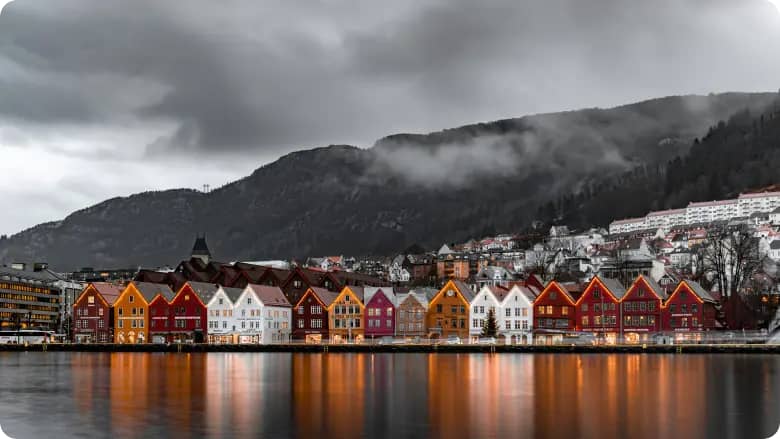
Norway is a highly sought-after destination for people from all over the world. If you're a non-EU/EEA citizen looking to make this stunning Scandinavian country your home, you'll need to navigate the Norwegian immigration system.
All immigration matters in Norway are handled by the Norwegian Directorate of Immigration (UDI), and their website (udi.no) is the primary source for all information and applications.
Work visas
Norway's strong economy means there are many opportunities for skilled professionals. A residence permit for work is the most common way for non-EU citizens to move to the country. You must, in almost all cases, have a concrete job offer before you can apply.
Skilled Workers
This is the main category for professionals and is designed for those who have a higher education degree or have completed vocational training.
- Who is it for? Individuals who have a university degree, a vocational school certificate, or special qualifications that are equivalent to a Norwegian craft certificate.
- Main Requirements:
. A concrete job offer from a Norwegian employer.
. The job must be full-time.
. The pay and working conditions must meet Norwegian standards (there are specific salary requirements depending on your education level).
. Your qualifications must be relevant to the job you've been offered.
Seasonal Workers
This permit is for jobs that are dependent on a specific time of year.
- Who is it for? Individuals working in sectors like agriculture, forestry, tourism, or the fishing industry.
- Main Requirements:
. The work must be of a seasonal nature.
. A concrete job offer is required.
. The pay and working conditions must meet Norwegian standards.
. This permit does not usually lead to permanent residency.
Work-Related Visas
Norway also offers a variety of more specialized work permits:
- Job Seekers: In certain, limited cases, skilled workers may be able to apply for a permit to come to Norway to look for work. This is typically for those with a background in a field with a high demand in Norway.
- Exchange Programmes, Culture, and Organisational Work: This includes permits for au pairs, volunteers, and individuals on cultural exchange programs.
- Researchers and Trainees: For those who will be conducting research or undergoing vocational training in Norway.
- Employees of Foreign Companies: For individuals who are being transferred to a Norwegian branch of their company (intra-corporate transferees).
Study visa
Norway's high-quality education system attracts students from around the world. To study in Norway, you'll need a study permit.
- Who is it for? Students who have been accepted into a Norwegian university, university college, vocational school, or other approved educational institution.
- Main Requirements:
. Proof of admission to an approved educational institution.
. Proof of sufficient funds to cover your living expenses. This is a significant requirement, and the amount is set annually by the UDI. You'll typically need to deposit this money into a Norwegian bank account.
. Proof of accommodation.
. A valid health insurance policy.
A study permit allows you to work part-time (up to 20 hours per week) during your studies and full-time during holidays.
Family reunification
Family reunification is a cornerstone of the Norwegian immigration system. The requirements vary depending on the nationality of your family member in Norway.
Joining a Norwegian or Nordic Citizen
- Who is it for? Spouses, registered partners, cohabitants (if you have lived together for at least two years or have children together), and minor children of Norwegian or other Nordic citizens.
- Main Requirements:
. Proof of your relationship (marriage certificate, birth certificate, etc.).
. Your family member in Norway must generally be able to financially support you.
. You must have a place to live in Norway.
. You must intend to live together in Norway.
Joining a Citizen of a Country Outside the EU/EEA
- Who is it for? Spouses, registered partners, and minor children of non-EU/EEA citizens who have a valid residence permit in Norway.
- Main Requirements:
. Similar to the above, you'll need to prove your relationship.
. The family member in Norway must have a valid residence permit and meet strict income and accommodation requirements.
Fiancé(e) Visa
It's also possible to apply for a residence permit to come to Norway to get married to a Norwegian resident. You must intend to marry within six months of arriving in Norway.
The Path to Permanent Residency
After living in Norway for a certain period with a temporary residence permit, you may be eligible to apply for a permanent residence permit.
- Who is it for? Individuals who have held a valid temporary residence permit for at least three years.
- Main Requirements:
. Continuous residence: You must have lived in Norway continuously for the past three years.
. Financial self-sufficiency: You must be able to prove that you can support yourself.
. Integration requirements: You must complete a certain number of hours of tuition in the Norwegian language and social studies and pass the relevant exams.
. Benefits: A permanent residence permit allows you to live and work in Norway indefinitely and provides stronger protection against expulsion.
Visa application process:
1. Gather your documents: The UDI website has detailed checklists for every visa type.
2. Fill out the application form online: This is done through the UDI's application portal.
3. Pay the application fee.
4. Book an appointment to submit your documents: This is usually done at a VFS Global application center or a Norwegian embassy or consulate in your home country.
5. Wait for the decision: Processing times can vary significantly depending on the visa type and the time of year.
Sweden residency visas
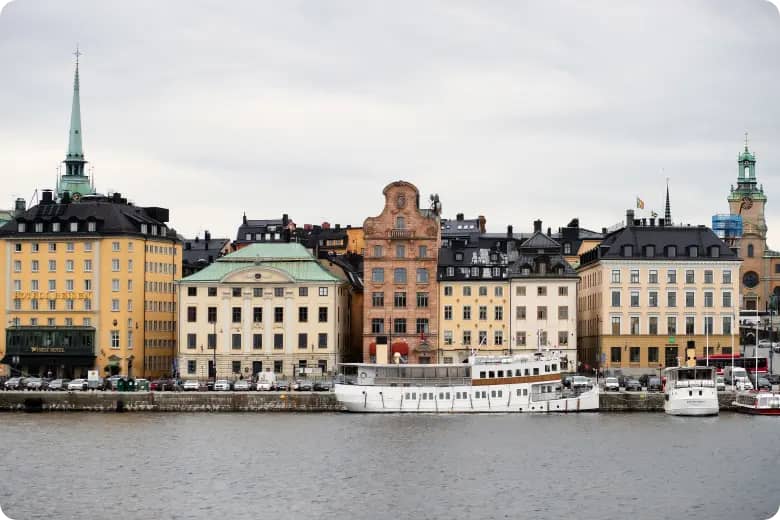
Sweden, a Scandinavian nation with a reputation for innovation, social welfare, and a high standard of living, offers several pathways to residency for non-EU citizens. The Swedish Migration Agency (Migrationsverket) is the primary authority for handling all applications.
Work-based residence permit
If you have secured a job in Sweden, you'll need a work permit. The permit is tied to your employer and specific role.
What you'll need:
- An official offer of employment: Your employer in Sweden must have initiated the application process by providing an offer of employment.
- A valid passport: From your country of citizenship.
- Terms of employment: The salary, insurance, and other conditions of your employment must meet the standards set by Swedish collective agreements or the customary norms of the profession or industry.
- The job must have been advertised in the EU/EEA: Your employer needs to have advertised the position in Sweden and the EU/EEA for at least ten days.
- Sufficient salary: You must be offered a salary that allows you to support yourself. The current minimum is SEK 13,000 per month before taxes.
Residence permit for self-employment
For those looking to start or run a business in Sweden, this permit is the one for you.
What you'll need:
- A valid passport.
- Relevant experience: You need to show you have significant experience in your field and previous experience running your own business.
- Language skills: You must have documented, good knowledge of Swedish and/or English.
- Business plan: You'll need to show that you are running the business, have the ultimate responsibility for it, and own at least 50% of it.
- Sufficient funds: You must prove you have enough funds to support yourself and your family for the first two years. The current requirement is SEK 200,000 for you, SEK 100,000 for your accompanying spouse, and SEK 50,000 for each accompanying child.
- Plausible business plan and market: Your business's services or goods must be produced and/or sold in Sweden. You will need to show a plausible budget and that you have created a customer network and/or a local network within your field.
Student residence permit
For non-EU citizens admitted to a full-time, accredited university program in Sweden.
What you'll need:
- A valid passport.
- Admission to a full-time program: You must have been accepted for full-time studies at a Swedish university or university college.
- Sufficient funds for your stay: You must be able to support yourself financially throughout your planned study period. The current requirement is SEK 8,568 per month for ten months of the year.
- Comprehensive health insurance: If you are studying for less than a year, you need comprehensive health insurance. If you are studying for a year or more, you will be registered in the Swedish population register and will be entitled to health care.
Residence permit to move to a family member
This permit is for individuals who wish to join a family member in Sweden.
What you'll need:
- A valid passport.
- Proof of relationship: You must be able to prove your relationship, for example, with a marriage certificate or birth certificate. This applies to spouses, registered partners, and children under 18.
- Your family member's status in Sweden: The family member in Sweden must be a Swedish citizen or have a permanent residence permit.
- Maintenance requirement: Your family member in Sweden must be able to support both of you and have a home of a sufficient size and standard for you to live in.
Key Takeaways
In summary, while the Nordic countries offer a wealth of opportunities, their approach to immigration is not monolithic.
Denmark, Finland, Iceland, Norway, and Sweden have each developed specific visa and residency programs tailored to their unique economic and demographic goals.
Share this article