Spanish Culture: A Guide for Expats
In short
Spain is one of the easiest places to romanticize and one of the easiest places to misunderstand if you rely only on clichés.
Summarise this article with the AI of your choice:
Moving to Spain is not only about getting your visa, finding housing, and sorting out paperwork. It is also about understanding how life actually works once you arrive.
Spain often feels welcoming from the start. People are social, the streets are lively, meals are taken seriously, and daily life can feel more human and more communal than many expats expect. But Spain also has its own rhythm, and that rhythm is not the same everywhere. Madrid is not the same as Barcelona. Andalusia is not the same as Galicia. The Balearic Islands do not feel like the Basque Country. Even something as simple as language can shift depending on where you live.
For expats, that matters a lot. The better you understand culture in Spain, Spanish customs, regional identity, and the logic behind daily routines, the easier it is to settle in, build relationships, and avoid feeling like you are always standing outside the culture looking in.
This guide brings all of that together in one place. It covers the main aspects of Spanish culture, how to learn Spanish customs, the history behind Spain’s cultural identity, the traditions that stand out most, the outside influences that shaped the country, the cultural character of Spain’s regions, and the significance of Spanish cuisine in everyday life.
Table of contents8
- What are the main aspects of Spanish culture?
- How to learn about Spanish customs?
- What is the history of Spain’s culture?
- What are unique Spanish traditions?
- How has Spanish culture been influenced?
- What are the regions of Spain and their cultures?
- What is the significance of Spanish cuisine?
- What expats living in Spain often say
AnchorLess webinarsFree
Your move, answered live
- With the AnchorLess experts
- Ask about your own case
- Or watch the replays
4.8/51,500+ reviews
What are the main aspects of Spanish culture?
Culture in Spain: the big picture
At its core, culture in Spain is social, regional, historically layered, and deeply tied to public life. Spain is not a country where culture sits only in museums, monuments, or schoolbooks. It shows up in the street, at the table, in local festivals, in how people greet each other, and in the pride people feel for their region, city, or town.
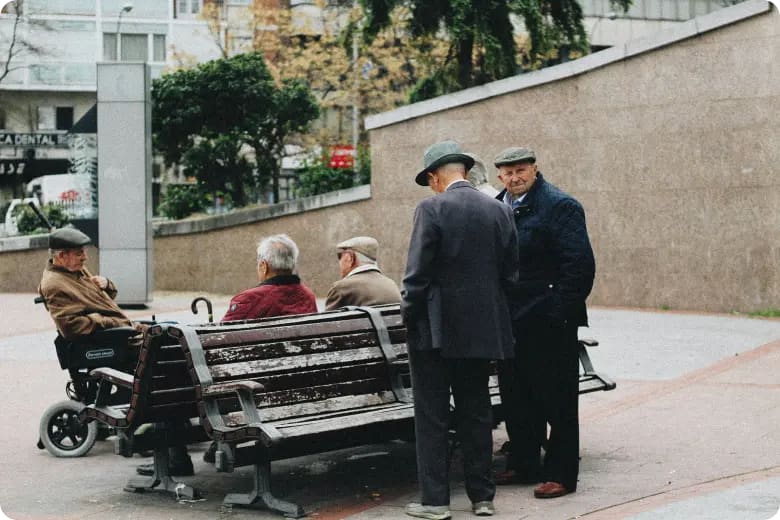
One of the clearest features of Spanish life is that it is outward-facing. People do not only socialize inside private homes. They meet in plazas, bars, cafés, terraces, parks, markets, and long neighborhood streets. Meals stretch. Conversations run late. Children are often present in family outings. Older generations remain visible in public life. There is usually a stronger sense of daily public sociability than many expats are used to.
Another defining trait is that Spanish culture is not uniform. Spain contains multiple identities, and regional attachment is often very strong. A person from Galicia, Catalonia, Madrid, Andalusia, or the Basque Country may all feel Spanish, but they may also feel deeply shaped by a local culture with its own history, food, rhythm, and customs.
Spanish customs and everyday values
Spanish customs are often built around warmth, politeness, flexibility, and social awareness.
In everyday life, people generally greet when entering small shops or local establishments. Conversation tends to be expressive rather than cold or distant. Eye contact matters. Tone matters. Presence matters. Even when communication is direct, it is often meant to be warm rather than harsh.
Time also works a little differently. Expats often notice that Spain is less rigid socially than some northern European or North American contexts. Meals happen later, evenings begin later, and certain meetings or visits may feel more flexible. That said, flexibility does not mean total disorder. Professional appointments, official meetings, and serious commitments still require punctuality and respect.
Another important value is modesty in social presentation. Spain can be stylish, but it is usually more about being presentable and appropriate than being flashy. People often pay attention to appearance, but not necessarily in a loud or showy way.
Cultural heritage in Spain
Spain’s cultural heritage is one of the richest in Europe because it comes from many historical layers living on top of each other.
Roman rule shaped language, law, urban planning, and infrastructure. Medieval Christian kingdoms left churches, monasteries, pilgrimage routes, and legal traditions. Islamic Al-Andalus transformed architecture, poetry, agriculture, science, and urban aesthetics. Jewish intellectual life contributed to philosophy, translation, and scholarship. Catholic tradition then shaped public ritual, festivals, saints’ days, and monumental architecture for centuries.
This is why Spain often feels historically dense. A single city may contain Roman foundations, medieval walls, Gothic churches, Islamic palaces, baroque facades, and modern cultural life all in the same landscape.
Spanish cuisine, art, music, and literature
Spain’s identity is also inseparable from Spanish cuisine, art, music, and literature.
Cuisine is central because it is not only about eating. It structures time, social life, and belonging. Art matters because Spain has produced some of Europe’s most influential painters and architects (from Gaudí to Calatrava). Music matters because traditions such as flamenco are not just entertainment, but powerful expressions of place, memory, and emotion. Literature matters because figures such as Cervantes, Lorca, Unamuno, and many others helped shape how Spain understands itself.
For expats, the practical takeaway is simple: Spanish culture is lived through routines, conversation, food, place, and participation. If you want to adapt well, start there.
How to learn about Spanish customs?
Learn Spanish as early as possible
The most helpful thing you can do to learn Spanish customs is to learn Spanish itself.
Many expats arrive thinking they can manage entirely in English, especially in Madrid, Barcelona, Valencia, Málaga, or tourist-heavy areas. Sometimes they can, at least at first. But the gap between surviving in Spain and truly integrating in Spain is usually language.
Basic Spanish helps with apartment viewings, neighborhood errands, bureaucracy, healthcare, friendships, and everyday respect. It also helps you catch the tone of what is happening around you. That matters because customs are often learned through repeated observation, not formal explanation.
In some regions, language awareness goes even further. In Catalonia, Galicia, and the Basque Country, you may also see how regional language shapes identity and public life, even when Castilian Spanish is widely understood.
Spanish courses, study guide, and online class options
If you want structure, Spanish courses can make a big difference. Instituto Cervantes is one of the clearest reference points for formal study, and its online learning options make it easier to start before you move or continue after arrival.
A useful study guide for expats should not focus only on textbook grammar. It should prioritize everyday function:
Language basics to learn first
- greetings and introductions
- asking for help
- understanding schedules and notices
- booking appointments
- housing and utility vocabulary
- restaurant and market language
- common bureaucratic terms
A good online class can help you build consistency, but it works best when combined with real-life exposure. Language exchanges, neighborhood conversations, local classes, and repeated use in daily errands speed up adaptation more than passive study alone.
Cultural etiquette in real life
Learning cultural etiquette in Spain means learning what people expect in ordinary situations.
Greetings
A handshake is common in formal settings or first meetings. Two cheek kisses may appear in more familiar social contexts, especially depending on age, region, and situation.
Social tone
People may stand closer during conversation than some expats expect. Conversation can be animated. Interruption is not always aggression. Often, it is enthusiasm.
Meals
Lunch is usually the main meal of the day, and dinner can begin very late compared with many countries. People often linger after meals, and this lingering conversation is part of social life rather than an accidental delay.
Invitations
If you are invited to someone’s home, bringing a small gift such as wine, chocolates, or something to share is generally a safe choice.
Dress
Spain often leans more polished than some expats expect. Very beach-oriented clothing belongs on the beach. In churches or more formal settings, dressing appropriately is still important.
Friends and family as your best cultural teachers
You can read about customs, but the fastest way to understand them is through real people. That can mean neighbors, coworkers, parents from your child’s school, classmates, language partners, or local friends.
Public expat discussions on Reddit and in public Facebook groups repeat the same message over and over: do not stay only in international circles. If you build your whole life around other expats, Spain may remain convenient but distant. If you build some local habits, it starts feeling real.
A social science view of adaptation
From a practical social science perspective, adaptation comes less from information and more from repetition.
That means going to the same café, greeting the same shop owners, attending the same class, joining the same sports group, shopping at the same market stall, and gradually becoming recognizable in your neighborhood. Customs become clearer when you live them often enough to stop translating them mentally.
What is the history of Spain’s culture?
History of Spain: the foundations
The history of Spain is not a straight line. It is a layered cultural formation shaped by many peoples and political eras.
The earliest cultural roots reach back to prehistoric Iberia. Over time, Phoenicians, Greeks, Celts, and Iberian peoples left traces across the peninsula. Then came Rome, which had a lasting impact on language, institutions, roads, cities, engineering, and law. Much of what later became Spanish culture was built on Roman foundations.
Spanish history in the Middle Ages
The Middle Ages added a defining layer to Spanish history.
After the fall of Rome, Visigothic rule shaped part of early medieval society. Later, the Muslim conquest of much of the peninsula created Al-Andalus, one of the most important centers of science, philosophy, architecture, poetry, and urban life in medieval Europe. Christian kingdoms in the north developed in parallel, and over centuries the peninsula became a place of coexistence, exchange, conflict, and reconquest among Christian, Muslim, and Jewish communities.
This mixture is essential to understanding Spain. It shaped not only buildings such as the Alhambra, the Mezquita of Córdoba, and the Alcázar of Seville, but also agriculture, philosophy, scholarship, and aesthetics.
Roman Catholic Spain and early modern identity
The role of Roman Catholic identity became especially powerful after the unification projects of the late medieval and early modern period. Catholic institutions shaped law, education, art, ritual, holidays, and public symbolism for centuries.
Even though today’s Spain is much more secular and religiously diverse in practice than in the past, Catholic tradition still leaves a visible mark on public life. You see it in Easter processions, Christmas rituals, saints’ festivals, church architecture, and family ceremonies.
The Spanish Empire and the Spanish Golden Age
The Spanish Empire gave Spain enormous international reach from the late 15th century onward. That imperial period also overlapped with the Spanish Golden Age, one of the most brilliant cultural eras in Europe.
This period produced major achievements in painting, literature, theater, and architecture. Cervantes gave the world Don Quixote. Velázquez reshaped portraiture and court painting. Lope de Vega and Calderón transformed drama. El Greco and, later, Goya became major pillars of European art.
For modern expats, the point is not just prestige. It is that Spain’s cultural self-image is deeply tied to the idea that art and letters matter.
The 20th century and cultural change
The 20th century changed Spain profoundly. The Civil War fractured the country, and the dictatorship of Francisco Franco imposed censorship, centralization, repression, and a narrow official version of national identity. Many artists, writers, and intellectuals went into exile. Regional languages and identities were constrained or politically charged.
Modern democratic Spain emerged after Franco, but the effects of that era still echo in public debate, historical memory, language politics, and how different regions see the state.
So when expats ask what Spanish culture comes from, the honest answer is this: it comes from Rome, medieval coexistence and conflict, Catholic tradition, imperial expansion, regional revival, artistic brilliance, dictatorship, democracy, and constant reinvention.
What are unique Spanish traditions?
Spanish customs that stand out most
Several Spanish customs stand out immediately to newcomers.
The first is rhythm. Spain often runs later. Lunch begins later. Dinner begins later. Social plans start later. Children are often still out in public when expats from other countries assume the day should already be over.
The second is social continuity. Meals are not always rushed, and conversation continues after the food. This post-meal lingering is part of the event, not a delay in leaving.
The third is the local calendar. Festivals, saints’ days, regional holidays, neighborhood events, and seasonal traditions matter much more than many newcomers expect.
Flamenco as a cultural symbol
Flamenco is one of the most recognizable cultural forms in Spain, but it is important to understand it properly. Flamenco is not just a dance for tourists. UNESCO describes it as an artistic expression that fuses singing, dance, and musicianship, with Andalusia as its heartland.
Its significance comes from emotion, technique, and cultural memory. Flamenco carries grief, pride, tension, celebration, and place. Even when experienced in a professional performance setting, it is rooted in a much deeper social tradition.
Siesta, tapas, and social rhythm
The siesta is one of the most famous Spanish traditions, though modern reality is more nuanced than the stereotype.
In smaller towns and some local businesses, midday slowdown can still be very visible. In big cities, professional life often looks more continuous. What remains culturally important is the broader idea that Spain has historically organized the day differently, especially around the main midday meal.
Tapas are another iconic tradition, but again, their importance is social as much as culinary. Tapas encourage sharing, movement between venues, and time spent together rather than fast, individual eating.
Bullfighting and cultural debate
Bullfighting is undeniably part of Spain’s historical image, but it should be understood with care. It is not universally accepted, and many Spaniards oppose it strongly. Some regions restrict or reject it. For expats, it makes more sense to treat bullfighting as a historically important but contested tradition rather than a simple summary of Spanish culture.
Festivals, cuisine, and paella
Spanish festivals are among the clearest expressions of local identity. Semana Santa, Las Fallas, La Tomatina, Feria celebrations, and countless regional and town-level fiestas bring together religion, food, costume, community, public art, and memory.
Food also enters here through tradition. Paella is internationally famous, but inside Spain it also points to regional identity, especially in Valencia. The same is true of countless other local dishes. Food is one of the ways Spain celebrates itself.
How has Spanish culture been influenced?
Cultural heritage shaped by many civilizations
Spain’s cultural heritage comes from mixture. The country was shaped by Iberian peoples, the Roman Empire, Visigothic rule, centuries of Islamic presence tied to North Africa, Catholic kingdoms, Jewish scholarship, and later modern European and Atlantic influences.
This mixture helps explain why Spain can feel both Mediterranean and Atlantic, both European and marked by a unique Moorish and Iberian historical path.
The role of empire, language, and politics
The Spanish Empire spread language, religion, institutions, and cultural influence across the Atlantic and beyond. At the same time, empire also deepened Spain’s own sense of itself as a global power.
Language played a parallel role. Spanish literature became one of the country’s major vehicles of cultural memory, prestige, and identity. Writers in Castilian Spanish helped shape national consciousness, while literary traditions in Catalan and Galician reinforced regional identity.
Politics mattered too. The 20th century, especially under Francisco Franco, shaped how culture, language, identity, and memory were managed and contested. Even now, regional culture in Spain cannot be fully understood without recognizing that political history.
Catalan, Basque Country, and multilingual Spain
No expat guide to Spain is complete without addressing multilingual identity.
Catalan is not just a local curiosity. It is a major language with its own literary and political tradition, especially central in Catalonia. The same goes for Galician in Galicia and Euskara in the Basque Country, where local identity can be especially strong.
For newcomers, this means that cultural adaptation in Spain is often regional adaptation. Learning how people in your part of Spain understand themselves is part of learning Spain itself.
What are the regions of Spain and their cultures?
Spain as a country of autonomous communities
Spain is divided into autonomous communities, and that matters more than many expats realize before moving. There are 17 autonomous communities and 2 autonomous cities, and many of them have strong cultural, linguistic, and historical identities.
You are not just choosing Spain. You are also choosing a region, and that region will shape your daily life.
Mainland regions with strong cultural identities
Andalusia
Andalusia is often the region most associated with classic images of Spain: flamenco, white villages, Moorish architecture, vibrant street life, and large public festivals. But Andalusia is not one mood. Seville, Granada, Málaga, Córdoba, and Cádiz each feel different.
Catalonia
Catalonia combines strong regional identity, its own language, major artistic heritage, and an urban Mediterranean character. Barcelona is the most famous city here, but Catalonia is much more than Barcelona alone.
Galicia
Galicia in the northwest has an Atlantic feel, a green landscape, strong seafood traditions, pilgrimage heritage, and a more reserved rhythm than the stereotypes many people associate with Spain.
Basque Country
The Basque Country is known for strong identity, gastronomy, coastal and industrial urbanism, and a local culture that often feels distinct from mainstream national imagery.
Madrid
Madrid is the political capital, but also one of Spain’s main cultural centers. It is energetic, social, museum-rich, and highly connected. Many expats find it easier at first because it is both very Spanish and very international.
Islands and distinct regional worlds
Balearic Islands
The Balearic Islands combine Mediterranean island life, tourism pressure, historic towns, and local identity shaped by both insular geography and outside influence.
Canary Islands
The Canary Islands have their own pace and identity, shaped by Atlantic geography and a cultural position that feels different from mainland Spain.
Madrid Barcelona and the expat lens
For many expats, the choice comes down to Madrid Barcelona or another major city. Both are large, vibrant, and international, but they are not culturally interchangeable.
Madrid often feels more nationally central and administratively connected. Barcelona feels more Mediterranean, more visually distinctive, and more shaped by Catalan public life. The better question is not which city is objectively better. It is which regional and cultural context fits the life you want.
What is the significance of Spanish cuisine?
Spanish cuisine as culture, not just food
The significance of Spanish cuisine goes far beyond recipes. Food in Spain is structure, ritual, conversation, and identity.
Meals organize the day. Lunch remains especially important. Dinner starts late. People linger. Going out for food often means going out to connect, not just to eat. That alone tells you how central cuisine is to Spanish life.
The foundations of Spanish cuisine
At the ingredient level, many expats quickly associate Spain with olive oil, tomatoes, garlic, peppers, legumes, rice, bread, cured meats, and seafood. Those ingredients matter because they connect Spain to the Mediterranean diet, but also because they show how strongly local produce shapes daily eating.
Traditional Spanish dishes and regional diversity
There is no single menu that explains all of Spain, but traditional Spanish dishes such as tortilla, paella, gazpacho, croquetas, jamón, seafood stews, roasted meats, and regional tapas each tell part of the story.
Paella and Valencia
Paella is globally famous, but in Spain it is also a reminder that rice dishes belong to a specific regional food tradition, especially Valencia.
Tapas across Spain
Tapas are one of the easiest ways expats encounter Spanish food culture because they turn eating into social movement and shared experience.
Galicia, Andalusia, and Basque food culture
Galicia is known for seafood, Andalusia for dishes such as gazpacho and fried fish, and the Basque Country for pintxos and its highly respected culinary culture.
Why food helps expats integrate faster
Food is one of the fastest ways to learn a place. Markets, neighborhood bars, lunch menus, local festivals, and repeated visits to the same cafés all teach you how a city or town works. For expats, understanding Spanish cuisine is often one of the shortest paths toward understanding Spain itself.
What expats living in Spain often say
Learn Spanish early
Even imperfect Spanish opens doors that English alone does not.
Expect bureaucracy
Many expats describe Spain as warm socially but slow administratively. Patience matters.
Build local habits, not only expat circles
The most useful advice is often to become a regular somewhere, join local routines, and avoid creating a fully detached expat bubble.
Adapt to schedules instead of resisting them
Late meals, midday breaks in some places, and quieter Sundays or local holiday closures are easier to live with once you stop expecting Spain to follow your home country’s timing.
What this means for new arrivals
The big lesson is that Spain tends to reward participation. The more you treat it as a place to join rather than a place to consume, the better your experience usually becomes.
Spain is one of the easiest places to romanticize and one of the easiest places to misunderstand if you rely only on clichés.
Yes, Spain offers sunshine, street life, tapas, flamenco, festivals, and a strong quality-of-life appeal. But it is also a country of deep regional identity, historical complexity, layered cultural heritage, multilingual reality, and social habits that only start making sense once you live them.
For expats, the real key is not trying to memorize every rule. It is learning the deeper logic of the country. Understand that region matters. Language matters. Meals matter. Public life matters. History matters. The pace may be different, but it is not random. It is cultural.
If you move to Spain with that mindset, adaptation becomes much easier. You stop feeling like you are trying to decode a stereotype, and you start learning how to live in a real place.
Share this article