Experiencing Easter in Spain: Traditions & Festivities
In short
Easter in Spain is much more than a holiday on the calendar. It is a week shaped by Semana Santa traditions, local identity, seasonal food, and public rituals that can change the rhythm of daily life across the country. For expats, understanding Easter means understanding a little more about how Spain lives its culture: in the streets, at the table, and through traditions that still matter today.
Summarise this article with the AI of your choice:
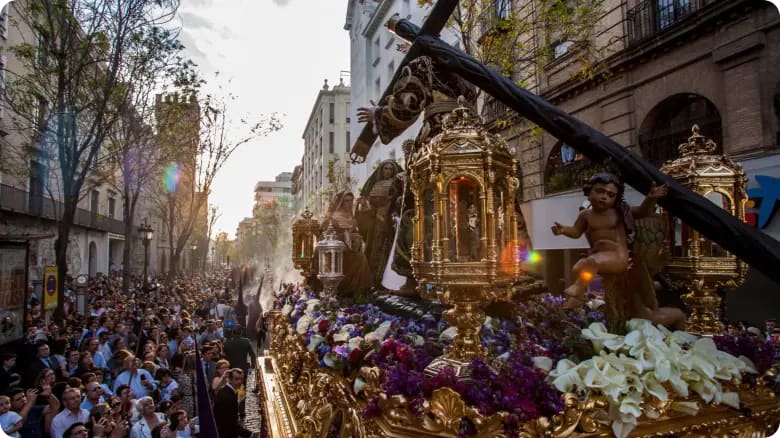
Moving to Spain comes with a learning curve, and holidays are often where the culture becomes most visible. Easter in Spain is one of those moments. While chocolate eggs and spring decorations do exist, Easter here is mostly lived through Semana Santa, or Holy Week: processions, brotherhoods, church calendars, packed pastry shops, family meals, and city centers that suddenly start moving to a different rhythm.
For some people, Easter in Spain is deeply religious. For others, it is more about cultural heritage, family tradition, and the atmosphere that takes over the streets. Either way, it is one of the clearest times of year to understand how history, faith, food, and local identity still shape daily life in Spain.
This guide explains what to expect during Easter in Spain with a practical lens for expats and newcomers: how Holy Week in Spain is celebrated, what the dates mean, which cities are most famous, what foods appear at the table, and how Semana Santa can affect your routine if you live there.
Table of contents8
- Understanding Easter in Spain
- The religious Easter in Spain
- Traditional Easter food in Spain for expats
- Are there gift-giving traditions in Spain for Easter?
- What are the Easter traditions in Spain?
- How does Easter affect daily life in Spain?
- Smaller Easter traditions and local festivals in Spain
- What are the traditions of Easter in Spain?
AnchorLess webinarsFree
Your move, answered live
- With the AnchorLess experts
- Ask about your own case
- Or watch the replays
4.8/51,500+ reviews
Understanding Easter in Spain
In Spain, Easter is mainly understood as Semana Santa, the week that begins on Palm Sunday and builds through Holy Thursday and Good Friday to Easter Sunday. It commemorates the Passion of Christ, the crucifixion of Jesus, and the resurrection of Jesus, but it is also one of the country’s most visible expressions of public religion and local tradition.
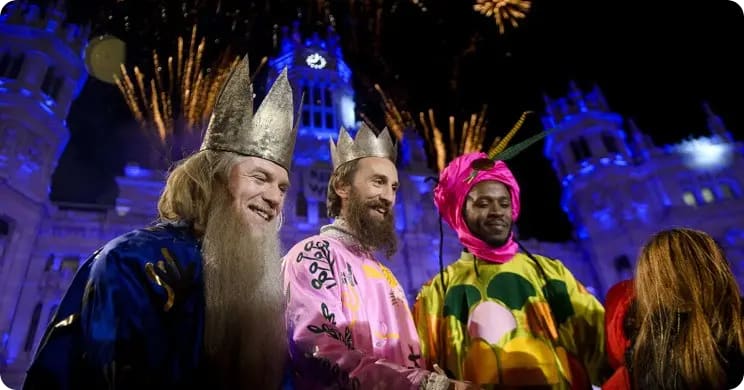
What makes Easter in Spain distinctive is that it is not only celebrated inside churches. In many places, due to the warmer Spanish weather, it moves into the streets through processions, music, incense, drumming, carved religious images, and neighborhood participation. In practice, that means Semana Santa is something you hear, smell, and navigate around, even if you are not personally religious.
When is Easter Sunday in 2026?
In 2026, the main Easter Week in Spain dates are:
- Palm Sunday: March 29, 2026
- Holy Thursday: April 2, 2026
- Good Friday: April 3, 2026
- Holy Saturday: April 4, 2026
- Easter Sunday: April 5, 2026
- Easter Monday: April 6, 2026
A practical detail matters here for residents: Good Friday is a national public holiday, while Holy Thursday is widely observed but not identical everywhere, and Easter Monday is only a public holiday in some autonomous communities. So if you live in Spain, the exact rhythm of the long weekend depends partly on your region.
The religious Easter in Spain
The religious core of Holy Week in Spain is the remembrance of the final days of Jesus’ life: his suffering, death, and resurrection. That is the central significance of Semana Santa. But in Spain, this meaning is expressed through a very public and artistic format.
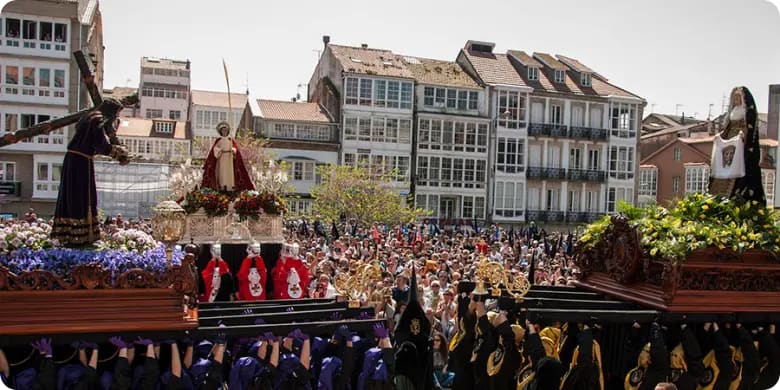
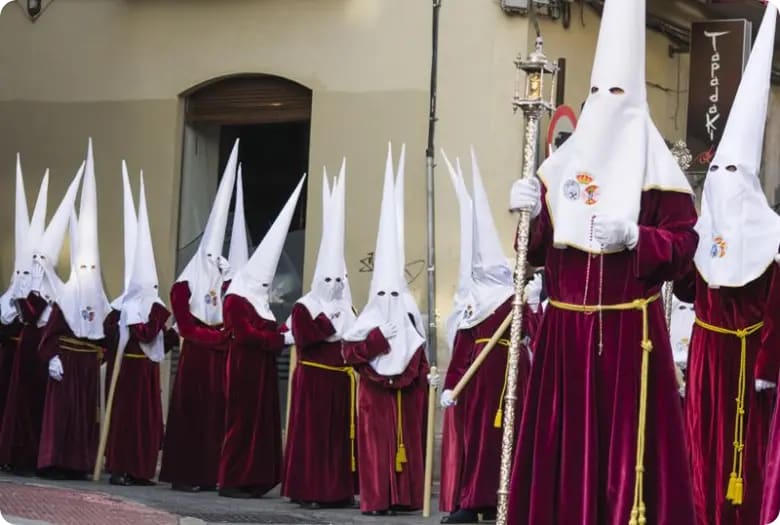
You will hear words like cofradías and hermandades, which are religious brotherhoods that organize many of the processions. You will also hear about nazarenos, the penitents in robes, and pasos, the large processional floats or sculptures that represent scenes from the Passion. In some cities, these processions are accompanied by marching bands. In others, the mood is more austere and silent. In Andalusia, you may also hear saetas, emotional flamenco-style devotional songs sung from balconies or from the street.
For residents, that means Semana Santa in Spain is not just an event to watch. It is a week when neighborhoods, churches, associations, and families all seem to be participating in the same calendar.
Where to celebrate Easter in Spain?
If you want to understand Easter in Spain, it helps to know that there is no single national style. Each place has its own tone.
Seville
Semana Santa in Seville is probably the best-known example internationally. It is famous for its scale, with dozens of brotherhoods, thousands of participants, and daily processions that run through the old city. It combines religion, sculpture, embroidery, music, and neighborhood identity in a way that feels almost theatrical, but to locals it is also a serious and deeply rooted tradition.
Málaga
Holy Week in Málaga is known for its enormous processional thrones, emotional moments on Good Friday, and a stronger sense of musical spectacle. It feels grand, crowded, and highly public. It is one of the places where the festive, communal side of traditional Easter celebrations in Spain is especially visible.
Granada
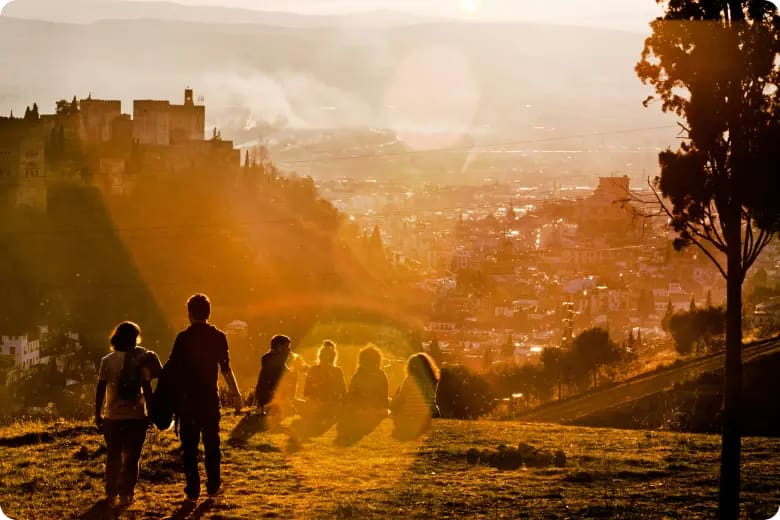
Semana Santa in Granada stands out because of its setting. Processions moving through the Albaicín, near the Alhambra, and across older parts of the city create one of the most visually striking versions of Easter in Spain. It is a strong example of how religious events and cultural heritage merge during Holy Week.
Valladolid
If Andalusian Holy Week feels emotional and musical, Valladolid is often described as more sculptural and solemn. It is especially known for the artistic value of its religious images and for processions that feel more restrained, historical, and formal. For many people, it is one of the best cities to understand the artistic heritage of Semana Santa.
Málaga, Seville, Granada, Valladolid, Salamanca, and Jerez de la Frontera
For a practical shortlist, the best cities for Easter celebrations in Spain are often Seville, Málaga, Granada, Valladolid, Salamanca, and Jerez de la Frontera. Salamanca adds the post-Easter custom of Lunes de Aguas, while Jerez offers a classic Andalusian Holy Week in a city already strongly associated with sherry, flamenco, and spring festival culture.
Traditional Easter food in Spain for expats
One of the easiest ways to recognize Easter in Spain is through food. Bakery windows change. Family tables change. Restaurant specials change. And while there is no single national Easter menu, there are some classics that show up again and again.
Sweet Easter food in Spain
The most iconic sweet is torrijas, which are probably the most famous example of traditional Easter food in Spain. They are slices of bread softened with milk, sweetened, fried in olive oil, and finished with sugar, syrup, honey, or wine. During Semana Santa, you will find them in pastry shops, supermarkets, and family kitchens.
Another major classic is mona de Pascua, especially along the Mediterranean coast. In some regions it is a sweet brioche topped with boiled eggs. In Catalonia, it often becomes a more decorative cake with chocolate figures. It is closely associated with Easter Monday, when children are often given a mona by grandparents or godparents.
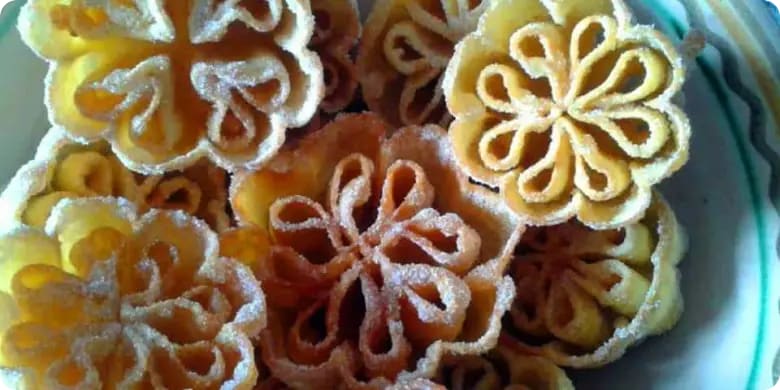
Other sweets you may see include pestiños, buñuelos, bartolillos, flores de Cuaresma, roscos de Semana Santa, and in northern Spain, leche frita.
Savory Easter food in Spain
Semana Santa is also linked to meatless dishes shaped by Lent. Two of the best-known are potaje de vigilia, a stew made with chickpeas, spinach, hard-boiled egg, and salt cod, and sopa castellana, or garlic soup, which is especially associated with northern and inland Spain.
For expats, this is worth noting because Easter in Spain is one of those times when gastronomy becomes highly seasonal and highly regional. If you want to understand what the week feels like locally, the pastry shop and the family table are just as revealing as the procession route.
Are there gift-giving traditions in Spain for Easter?
Spain does not usually center Easter around a nationwide gift culture in the same way some Anglo countries do. You will not generally find the same level of emphasis on Easter baskets, egg hunts, or large-scale gifting as a national norm.
That said, there are still family customs around giving sweets, especially mona de Pascua to children in parts of the Mediterranean. In some areas, Palm Sunday palms are also important keepsakes. So the answer is yes, but in Spain the tradition usually feels more local, family-based, and food-centered than commercial.
What are the Easter traditions in Spain?
What activities occur during Easter?
The main traditions of Easter in Spain include:
- Holy Week processions organized by religious brotherhoods
- Palm Sunday observances, including palm-related traditions in places like Elche
- Public religious events such as vigils, Stations of the Cross, Holy Burial processions, and resurrection-themed ceremonies
- Traditional Easter food celebrations in Spain, especially around torrijas, mona de Pascua, and Lent-friendly dishes
- Family gatherings and long meals, especially from Good Friday through Easter Sunday or Easter Monday depending on the region
- Local customs such as drumming traditions in Aragón or post-Easter outings like Salamanca’s Lunes de Aguas
!: You may see some pointy hats and white clothing, but fear not! There’s no triple letter threat. The costume has its history back to the Inquisition, centuries before, and it’s symbol of humility and penitence.
One of the most important things to understand is that Easter in Spain is both a religious celebration and a form of cultural heritage. Even people who do not actively practice religion may still participate as neighbors, family members, spectators, musicians, or people simply following a tradition they grew up with.
How does Easter affect daily life in Spain?
Now let’s get into the practical side of Easter in Spain for people who actually live there.
1. Work during Easter in Spain
The work week can feel shorter or more fragmented around Semana Santa. Good Friday is a national holiday, and in many places Holy Thursday also functions as a day off. In some regions, Easter Monday extends the long weekend further.
That means offices may close, teams may work with reduced staffing, and many people travel or spend more time with family. If you need to deal with paperwork, government tasks, or anything time-sensitive, it is smart to plan around the week.
2. Schools and family schedules
For families, Easter often means adjusted routines, holiday planning, and more attention to regional calendars. Because Spain’s public holiday structure is partly regional, families often organize their week around local school timing, local religious events, and family meals.
3. Shopping, transport, and city centers
In major Semana Santa cities, the center can become much harder to navigate on key days. Processions pass through historic districts, streets close, public transport routes may be adjusted, and some neighborhoods stay active until late at night.
If you live in a city with major Holy Week processions, it is worth checking official local schedules in advance, especially for parking, buses, and central errands.
4. Meals, social habits, and the overall atmosphere
Even if you do not attend religious events, you will probably notice Easter through the atmosphere. Pastry shops fill with seasonal sweets. Families gather. Restaurants lean into traditional dishes. TV programming shifts. And in many places, there is a stronger sense of pause, ritual, and springtime transition.
For residents, this is what Easter in Spain really means in practice. It is less about one isolated Sunday and more about a full week of altered rhythm.
Smaller Easter traditions and local festivals in Spain
Spain also has smaller or more local Easter customs that are worth knowing, especially if you want a fuller picture beyond Seville and Málaga.
Elche and Palm Sunday
Elche is famous for its Palm Sunday procession, where people carry beautifully crafted palm leaves. It is one of the clearest examples of how a single local tradition can become a major part of Holy Week celebrations in Spain.
Valencia and Maritime Holy Week
In Valencia’s maritime neighborhoods, Easter has its own distinct style, with the Blessing of the Palms, the Procession of the Holy Burial, and the Resurrection Parade. It feels different from inland Castilian Holy Week and shows how regional identity shapes the week.
Calanda and the drum tradition
In Calanda and other towns in Aragón, drumming is central. The famous rompida de la hora brings large groups of drummers together in one of the most powerful sound-based rituals of Easter in Spain.
Salamanca and Lunes de Aguas
In Salamanca, Easter spills beyond Sunday. Lunes de Aguas, celebrated on the first Monday after Easter, is associated with eating hornazo, a savory bread filled with meats and egg, often outdoors near the river. It is one of those local customs that residents remember just as strongly as Holy Week itself.
What are the traditions of Easter in Spain?
The main traditions of Easter in Spain center on Semana Santa, or Holy Week celebrations, with processions, traditional Easter food, religious ceremonies, family meals, and neighborhood customs. In many cities, Easter in Spainis also a major expression of cultural heritage, where you can discover the history and traditions of Semana Santa through brotherhoods, music, sculpture, food, and local identity.
How is Holy Week celebrated in Spain?
Holy Week in Spain is celebrated with processions, religious events, liturgies, and public rituals organized by religious brotherhoods. Thousands of people take part or line the streets to watch scenes of the events of Easter Week, especially those representing the Passion of Christ. The exact atmosphere changes by city, but the mix of devotion, tradition, and public ceremony is what defines it.
What is the significance of Semana Santa?
The significance of Semana Santa is that it commemorates the Passion of Christ, the crucifixion of Jesus, and the resurrection of Jesus. In Spain, those religious events are also a form of cultural heritage, so the meaning of Holy Week extends beyond worship into art, memory, local pride, and the long-standing traditions of Easter in Spain.
What foods are traditional during Easter?
The most famous traditional Easter food in Spain includes torrijas and mona de Pascua, along with pestiños, buñuelos, and savory dishes like potaje de vigilia and sopa castellana. Together, they create a very distinctive Easter food culture, with typical sweets, seasonal dishes, and a genuinely delicious gastronomy that makes Holy Week a unique experience.
When does Easter Week occur in Spain?
Easter Week in Spain takes place during the final stretch of Lent, beginning with Palm Sunday and ending on Easter Sunday, with Easter Monday observed in some regions. Because Easter is movable, the dates of Holy Week celebrations change every year. In 2026, Palm Sunday falls on March 29 and Easter Day on April 5.
What are the best cities for Easter celebrations?
The best cities for Easter celebrations in Spain usually include Seville, Jerez de la Frontera, Granada, Valladolid, Málaga, and Salamanca. Each offers a different style of Semana Santa, from Andalusian intensity and music to Castilian solemnity and strong local cultural heritage.
What are the main events during Semana Santa?
The main events during Semana Santa are the Holy Week processions, the appearances of religious brotherhoods, the carrying of pasos, live music or marching bands in many cities, moments of silence, Palm Sunday rituals, Holy Burial ceremonies, and the final Resurrection observances. In major cities, thousands of people gather to experience the atmosphere in the streets.
Easter in Spain is much more than a holiday on the calendar. It is a week shaped by Semana Santa traditions, local identity, seasonal food, and public rituals that can change the rhythm of daily life across the country. For expats, understanding Easter means understanding a little more about how Spain lives its culture: in the streets, at the table, and through traditions that still matter today.
Share this article