Moving in Spain
OUR EXPERT
Brenda L.

Written by

Brenda.L

After completing her higher education, Brenda joined AnchorLess in 2023. She is an expert on relocation issues in Europe.
WHY YOU CAN TRUST ANCHORLESS
+10,000
Expats guided
1194

reviews noted 4.9/5

Empadronamiento
Documents Expats
07/04/2026

Padron Spain: Easy Guide & Documents Needed

empadronamiento process in Spain

If you are planning a move to Spain, or you have just arrived, one of the first admin steps you will keep hearing about is empadronamiento.

At first, it can sound more complicated than it really is. In simple terms, empadronamiento is your local address registration. It is the process of adding your details to the padrón, which is the municipal register kept by the town hall of the place where you live.

This is one of those small pieces of Spanish admin that has a very real impact on day to day life. It helps prove where you live, connects you to your municipality, and often becomes part of the paperwork trail for other procedures later on.

For expats, the most important thing to understand from the start is this: empadronamiento is not the same as your visa, your residence card, or your immigration status. It is your local registration as someone living at a specific address in a specific municipality.

What is empadronamiento in Spain?

Empadronamiento is the act of registering yourself on the Padrón Municipal, the local population register managed by your town hall.

So, if you have ever asked what is the padrón in Spain, the easiest answer is this: it is the official municipal record of the people who live in that area. Each municipality keeps its own register, and if you live there on a habitual basis, that is where you are expected to be registered.

That is why people often use padrón and empadronamiento almost interchangeably in conversation. Strictly speaking, the padrón is the register itself, while empadronamiento is the registration process.

For expats, it helps to think of it as your official local address record. It shows the municipality that you live there and links your name to that address in the local system.

Why do expats need empadronamiento in Spain?

A lot of people only realize how important the padrón is once they are already trying to do something else.

The reason it matters is simple. It is often used as proof of address and as an official way to show where you live. That makes it useful across a range of procedures with Spanish public authorities and local institutions.

This is why the importance of padrón registration goes beyond just being listed in a local register. In practice, it can become part of the paperwork needed for healthcare enrollment, school-related processes, local administrative steps, and other residence-linked procedures.

For many expats, it is one of the first documents that helps turn a move into something that is formally recognized by the municipality.

Who needs to register on the padrón in Spain?

As a general rule, people living in Spain should be registered in the municipality where they habitually live.

That includes foreign nationals. In other words, if Spain is where you are actually living, the expectation is usually that you register with the local town hall for that municipality.

This point matters because many newcomers assume padrón registration is only for Spanish nationals or only for people who already hold long-term status. That is not how it works. The padrón is about where you live, not whether your immigration path is already complete.

padron spain scenic view

How to register on the padrón in Spain

If you are wondering how to register on the padrón, the short answer is that you do it through your local town hall.

The exact process can vary a bit depending on the municipality, which is why Spain can feel inconsistent from one city to another. Still, the broad flow is usually very similar.

1. Find your local ayuntamiento

Your padrón registration is handled by the ayuntamiento, or town hall, for the municipality where you actually live.

This is important because Spain does not handle empadronamiento through one central national office. It is a local process, so the relevant authority is the municipality itself.

2. Check whether you need an appointment

Some municipalities allow walk-ins for certain padrón procedures. Others require a cita previa in advance. Bigger cities are more likely to use appointment systems.

Before you go anywhere, it is worth checking your local town hall website to confirm whether you need a booking and which office handles padrón registration.

3. Complete the registration form

The form is often called a hoja padronal or a municipal registration form. This is the base document used for registering on the padrón.

If more than one adult is registering at the same address, the town hall may require signatures from everyone involved, depending on the local rules and the type of filing.

4. Gather the required documents

This is usually the part that makes or breaks the process.

Most municipalities will ask for identity documents and documents that show you live at that address or have the right to live there. That often includes things like a passport or ID, and a rental contract, housing document, or authorization from the person who holds the property rights or tenancy rights.

5. Submit the application

Depending on the municipality, you may be able to do this in person, online, or through a mixed system where you submit digitally and then complete part of the process later.

This is one reason expats often get confused. There is no single universal Spanish portal for padrón registration. The system is municipal, so the exact route depends on where you live.

6. Obtain your registration document

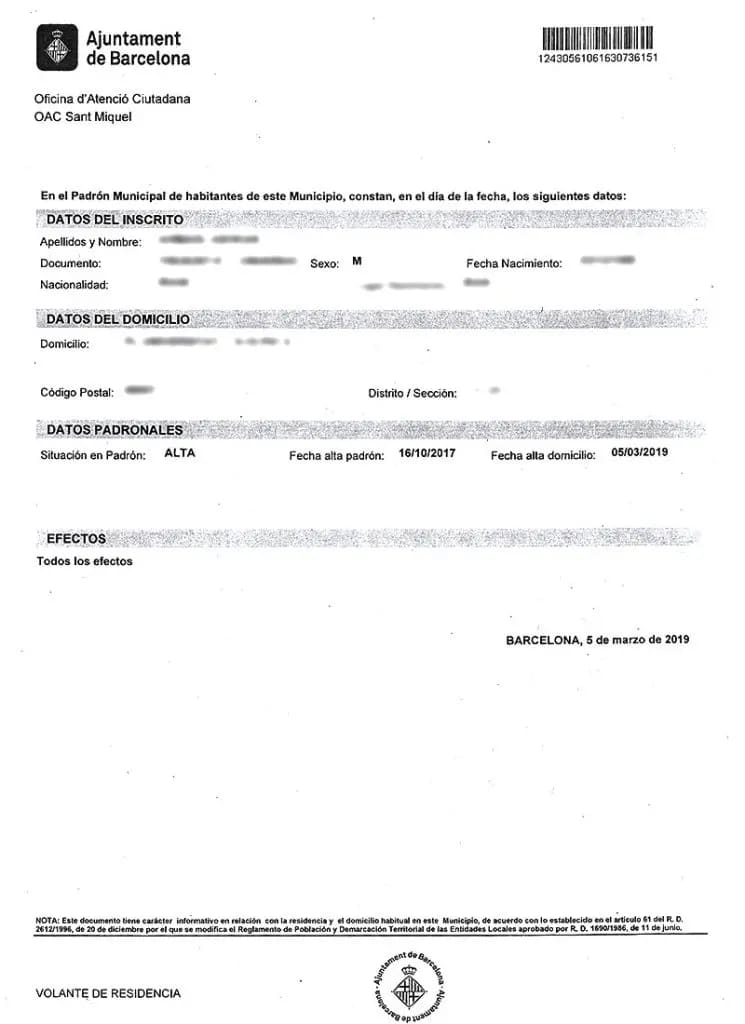
Once the process moves forward, you may receive a volante or a certificado de empadronamiento, depending on what you need and what your municipality issues for that purpose.

This is the document people usually mean when they say they need their padrón paper.

Documents needed for empadronamiento in Spain

The precise list can vary by municipality, but the core categories tend to stay fairly consistent.

You will usually need:

Identity documents

Foreign nationals are generally asked for a passport, national ID, residence card, or a combination of these depending on nationality and local rules.

A registration form

This is the municipal form used to request the inscription on the padrón.

Proof connected to the address

This often means a rental contract, deed, or another housing document that supports the fact that you live there or are entitled to live there.

Authorization, if needed

This is especially relevant for expats in shared flats, hosted arrangements, or informal housing situations.

A common misconception is that you must own the property or be the person named on the lease. In reality, many municipalities allow registration when the person who does hold the housing right authorizes the process.

That can make a big difference for people living with family, staying with a partner, renting a room, or sharing housing in ways that are common during the early months of a move.

Can you do empadronamiento online in Spain?

Sometimes, yes.

Some municipalities offer online pathways for padrón procedures. Others still rely more heavily on in-person appointments. Some use both.

This is where it helps to stay practical rather than assuming Spain works the same everywhere. A city like Madrid may offer a wider digital route than a smaller municipality, while another town may still expect the process to happen mainly at the office.

So the honest answer is that empadronamiento online exists in some places, but it is not a single nationwide process. It depends on the local government that manages your registration.

How long does empadronamiento take in Spain?

There is no one answer that fits all of Spain.

Some parts of the process can move quickly, especially if the application is straightforward and your municipality is efficient. In other cases, the town hall may need time to review the file and verify the documents before the registration is fully resolved.

That means it is better not to leave this until the last minute if you need the padrón or the certificate for another step soon after arrival.

What is the difference between empadronamiento, padrón, NIE, and residency?

This is the point that causes the most confusion, so it is worth slowing down here.

Empadronamiento is the act of registering your address.

Padrón is the municipal register where that information is recorded.

NIE is your foreigner identification number.

Residency refers to your legal right to live in Spain under the relevant immigration framework.

These things often interact, but they are not the same.

That leads to another common question: How to become a legal resident in Spain?

The answer depends on your nationality and your legal route into Spain.

For EU citizens, the rules and process are different from those for non-EU nationals. For non-EU nationals, residence usually depends on the appropriate visa, authorization, or residence permit route. For EU citizens, the framework is tied to the right of residence under EU rules and the relevant registration process.

What matters here is that being on the padrón does not, by itself, make you a legal resident. It helps prove where you live and can support other procedures, but it is not a substitute for the actual residence process.

In practical terms, think of empadronamiento as one important layer of your admin life in Spain, not the full legal residence picture.

Why is the padrón important?

The padrón benefits are practical, not abstract.

The padrón is important because it gives you a recognized local administrative presence. It can work as proof of address, help with access to services, and support the paperwork trail that many expats need when building a life in Spain.

If you are trying to settle in, that matters. It can affect how smoothly you deal with Spanish public authorities, local procedures, and sometimes services that need to connect you to a municipality.

So when people ask why is it important, the real answer is that it often sits quietly behind many other steps. You may not think about it every day, but you notice it the moment a process asks for proof of residence or a local registration document.

What are the benefits of padrón registration?

The benefits of having this document are tied to everyday life.

Among the most commonly mentioned padrón benefits are:

Access to healthcare

Padrón-related documentation can play a role in local healthcare-related registration and address verification processes.

Registering for schools

Families often encounter the padrón when dealing with school-related paperwork, because local address documentation can matter in education procedures.

Dealing with Spanish public authorities

Many administrative processes become easier when you can show a recognized local registration document connected to your address.

Obtaining a padrón certificate

Once your registration exists, the padrón certificate or related residence document becomes something you can present when a process requires official proof linked to your address.

For expats, the value is not just symbolic. It is administrative. It helps turn your address into something official and usable.

What is the certificado de empadronamiento?

The certificado de empadronamiento is the official document that proves your registration on the padrón.

In practical terms, this is the paper many people are actually looking for when they talk about needing empadronamiento for another process.

It acts as a proof of residence document and as an official document issued by the local government. It confirms that you are registered in that municipality and shows the address recorded there.

That is why it is often described as a registration document or a formal padrón certificate. It is the document you can present when another authority asks for evidence that you live where you say you live.

Depending on the municipality, you may also see the term volante used for a residence-related document connected to the padrón. The exact distinction between a volante and a certificate can vary in practice, but the important point is that both relate to your local registration record.

Do you need to renew or update your empadronamiento?

Sometimes, yes.

The most obvious case is when you move. If you change address, your padrón record should reflect where you actually live.

This matters because the whole point of the register is to record habitual residence truthfully. If your details no longer match your real address, the registration stops reflecting reality.

There are also cases where certain foreign nationals may need to renew or confirm their padrón status periodically, depending on their legal situation and the applicable municipal or administrative rules.

This is one of those details expats often miss because they assume empadronamiento is a one-time box to tick forever. In real life, it is something you may need to update as your housing situation changes.

Common empadronamiento mistakes expats make

One of the most common mistakes is assuming the padrón and residency are the same thing.

They are not. One is local address registration. The other is legal residence status.

Another common mistake is thinking you cannot register unless you own the property or hold the main lease. In many cases, that is not true. Shared housing and authorized occupancy can still work, depending on the municipality and the documents available.

A third mistake is assuming every town hall works the same way. Spain is very local when it comes to this process. A checklist that works in one city may not look identical in another.

And finally, many people wait too long. Because empadronamiento seems simple, it is easy to push it down the list. Then it suddenly becomes urgent when another process asks for proof of address.

To become legally resident in Spain, the process depends on your nationality and why you are living in Spain. For EU citizens, Spanish residency usually comes through the EU residence registration process if you are working, self-employed, studying, or can support yourself with health insurance. For non-EU citizens, becoming a legal resident usually means getting the right visa or residence authorization for your situation, such as work, study, family reunification, or another long-stay route.

The key point is that local address registration helps, but it does not create residency rights by itself. To be a legal resident, you need the correct residence status under Spanish immigration or EU rules. After enough years of legal and continuous stay, some people may later qualify as a permanent resident, but that comes after the initial residency process, not before.

Key Takeaways

If you are moving to Spain, empadronamiento is one of the admin basics worth understanding early.

It is not flashy paperwork, but it is important paperwork. It connects you to the municipality where you live, helps establish your address in an official way, and supports many of the practical steps that come with settling into life in Spain.

The clearest way to think about it is this: the padrón is the local register, empadronamiento is the act of getting onto it, and the certificado de empadronamiento is the document that proves that registration.

For expats, that makes it one of the simplest and most useful first moves after arrival.

Share this article

Share this article

Join a community of 10,000+ expats
Get the weekly tips, success stories, and step-by-step guides we share with our members to make their move a success.
Star Trustpilot
Star Trustpilot
Star Trustpilot
Star Trustpilot
Star Trustpilot
I love AnchorLess! They have been fantastic for my move to Portugal with the NIF, checking account, lawyer and tax consultation. I will be happy with when this process is over, but at least the journey has been smoother with them.
LD
Lisa D
From South Africa
Star Trustpilot
Star Trustpilot
Star Trustpilot
Star Trustpilot
Star Trustpilot
Guilherme was the best! I had so many questions and moving parts and he was responsive, always professional, and went above and beyond to help me with everything! He is a PRO!!!!
DS
Debra Savage
From The United States

Our readers also viewed

tie spain scenic landscape
TIE
Spain
19/03/2026
Learn about TIE Spain, its necessity, and application process. Essential info for those needing a TI...
Brenda
Brenda
Content Manager
documents spain spanish expats
Spain ID
Spain ID Numbers
Foreigner ID Spain
Essential ID Spain
14/08/2025
Learn what “Spain ID” means, including NIE, DNI and NIF, who needs each, how they’re used for taxes,...
Brenda
Brenda
Content Manager

More than a blog, an ecosystem

AnchorLess team
Webinars Hub

Join our free webinars and get concrete answers to your most pressing relocation questions.

conversation

Community

Connect with thousands of current and future expats. You're not alone on this journey.

AnchorLess partner

Partners

Insurance, housing: we've hand-picked and vetted the best services, so you don't have to.

Beach Portugal

Start your new life in Europe

Turn relocation stress into success with AnchorLess.

Relocating to Europe made simple.

Start to relocate now

Arrow icon
Talk to us for free
AnchorLess support team
4.9/5 Excellent
Star
Star
Star
Star
Star
Logo AnchorLess

AnchorLess is not a bank, accountant, tax advisor, investment advisor, or law firm, nor are we a government or official government website. We act as an intermediary, helping connect you with accredited professionals and streamlining administrative processes for your relocation in Europe.

Instagram icon
Facebook icon
Reddit icon
Linkedin icon
Amex logo
Visa logo
Mastercard logo
& more
Pay 4X free of charge with
Klarna logo

🇵🇹 MOVE TO PORTUGAL

Arrow

🇪🇸 MOVE TO SPAIN

Arrow

Resources

Terms and conditions

Privacy Policy

Disclaimer Policy

© 2022 - 2026 anchorless.io, all rights reserved.