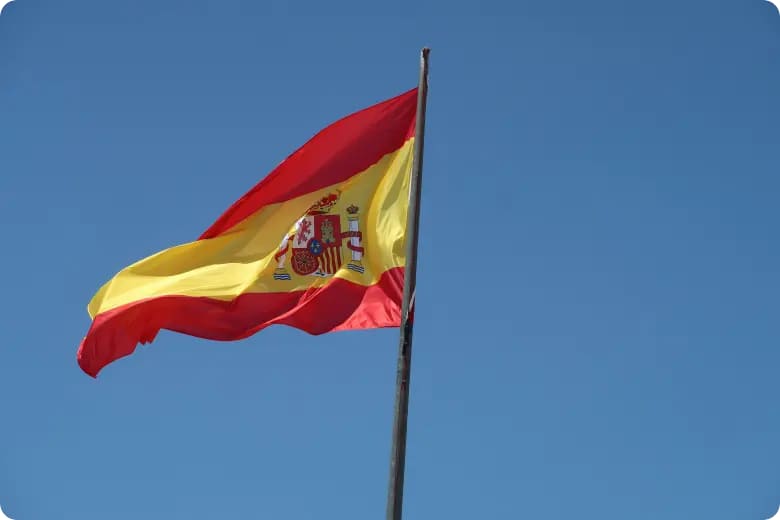
Moving in Spain
OUR EXPERT
Brenda L.

Written by

Brenda.L

After completing her higher education, Brenda joined AnchorLess in 2023. She is an expert on relocation issues in Europe.
WHY YOU CAN TRUST ANCHORLESS
+10,000
Expats guided
1194

reviews noted 4.9/5

Spain
Legal
10/04/2026

Legal Residency in Spain: Complete Process

legal residency Spain expats

Becoming a legal resident in Spain is not just about getting a visa. The full path depends on your nationality, why you are moving, and what you do after arriving in Spain.

For non-EU, non-EEA, and non-Swiss nationals, legal residence usually begins with a residence category and, if required, a national visa. But it only becomes fully operational once you complete the in-country steps such as obtaining your TIE, registering your address where relevant, and activating the right work or Social Security status.

For EU, EEA, and Swiss citizens, there is no long-stay visa route. Instead, the key step is registering correctly in Spain if the stay will last longer than three months.

As Spain also changed parts of its immigration framework with the new Immigration Regulation that entered into force on 20 May 2025, older articles and forum posts may now be incomplete or outdated, so in this guide we will dive into what is valid now.

Legal residency in Spain means you have a recognized legal basis to live there and you have completed the administrative steps that make that status valid in practice.

A lot of people confuse four different things:

Residency

Residency is your legal right to live in Spain under immigration law or EU free movement law.

NIE

The NIE is your foreigner identification number. It is used in many administrative, tax, employment, and practical processes. But having a NIE alone does not mean you are a legal resident.

TIE

The TIE is the physical foreigner identity card used mainly by non-EU nationals. It is the document that proves legal stay or legal residence in many non-EU cases.

Padrón

The padrón is the municipal register of your local address. It helps prove where you live for many public and practical procedures, but it is not immigration status by itself.

Spain expat residents guide

If you are from outside the EU, EEA, and Switzerland, and you need a visa, your route usually follows a full chain. The visa is only one step.

Step 1: Choose the correct legal route

Before anything else, you need the right legal basis for living in Spain. The most common options are:

  • Work for a Spanish employer
  • Self-employment or running a business
  • Digital nomad or international telework
  • Non-lucrative residence
  • Family reunification
  • Residence as a family member of a Spanish citizen
  • Studies, followed in some cases by a later transition to residence

If the legal basis is wrong, the rest of the process does not hold together.

Step 2: Apply for the residence route and visa

The exact application depends on the category.

Work route

If you will work for a Spanish employer, the employer often starts the authorization process in Spain first. After approval, you apply for the corresponding visa through the Spanish consulate.

Self-employment route

If you will work for yourself, you need the self-employment residence and work route, usually supported by a business plan, proof of viability, and professional or financial evidence.

Digital nomad route

If you will work remotely using computer and telecommunications means, usually for foreign companies, Spain has a telework or digital nomad route.

Non-lucrative route

If you want to live in Spain without working there, the non-lucrative route usually requires proof of sufficient funds and health insurance.

Family routes

If you are joining a qualifying family member, the route may be family reunification, or a separate route if the anchor relative is a Spanish citizen.

Step 3: Enter Spain with the correct status

For non-EU nationals who need a visa, the national visa is the entry document that lets you come to Spain for the approved purpose.

This is where many articles stop too early. But legal residence is not fully complete at this point.

Step 4: Secure a real address in Spain

Once you arrive, you need a real residential base. In practice, this usually means a rental, owned home, family address, or other valid accommodation.

This matters because several later procedures rely on your actual place of residence.

Step 5: Register on the padrón where needed

Once you have an address, you usually register with your municipality through the padrón.

The padrón is important because it helps establish your local residence in practice. It is often used in everyday administrative life and can be relevant for health access, local procedures, schooling, and later proofs of residence history.

It still does not replace immigration authorization. It supports your life in Spain, but it is not the same as a residence permit.

Step 6: Apply for your TIE if your authorization is for more than six months

This is one of the most important steps for non-EU nationals.

If your authorization or visa leads to a stay or residence of more than six months, Spain generally requires you to apply for the TIE after arrival. The usual rule is within one month from entry into Spain.

The TIE process normally involves:

Form EX-17

This is the standard application form for the foreigner identity card.

Fee payment

The usual fee is paid through Modelo 790, código 012.

Identity and entry proof

You normally bring your valid passport, visa where applicable, and proof of entry.

Photo and supporting documents

You usually need a recent photo and the supporting resolution or evidence for the residence authorization.

Step 7: Activate the work side if your route includes work

If your residence route allows work, there is often another layer beyond the visa and TIE.

Employees

If you are coming as an employee, the employment relationship usually needs to be activated through Social Security registration. This is part of what makes the right to work fully effective in practice.

Self-employed workers

If you are self-employed, you usually need the correct tax and Social Security setup after arrival. That includes obtaining the relevant registrations and complying with the self-employed framework.

Step 8: Keep your status active and valid

Being legal in Spain is not a one-time event. You need to maintain the conditions of your residence.

That may include:

  • keeping valid health coverage where required
  • maintaining the work or family basis of the permit
  • renewing or modifying your status before it expires
  • keeping your address information updated where relevant
  • staying within allowed absence limits if you plan to pursue long-term residence later

Step 9: Move toward long-term residence

For many non-EU nationals, the longer-term milestone is long-term residence after five years of legal and continuous residence in Spain.

That is when residence stops being only temporary and becomes much more stable.

The route is simpler, but it is still a real legal process.

Step 1: Enter Spain with your passport or national ID

If you are an EU, EEA, or Swiss citizen, you do not need a long-stay visa to move to Spain.

Step 2: Understand the three-month rule

If you stay in Spain for less than three months, there is generally no obligation to register as a resident.

If you will stay more than three months, you must regularize your status through the EU registration system.

Step 3: Get empadronado

Once you have a real address, you generally register with the municipality through the padrón.

This is part of the practical route to becoming established in Spain.

Step 4: Register in the Central Register of Foreigners

EU, EEA, and Swiss citizens staying longer than three months must apply in person for registration, usually at the immigration office or relevant police station.

The key filing usually includes:

Form EX-18

This is the main application form used for registration of EU citizens as residents.

Fee 790 code 012

This is the usual fee associated with the process.

Proof of the legal basis for your residence

You need to show why you are entitled to reside in Spain for more than three months.

This can include:

  • work as an employee
  • self-employment
  • study
  • sufficient resources plus health insurance
  • qualifying family relationship

Step 5: Receive the registration certificate with your NIE

If the application is accepted, Spain issues a registration certificate that includes your NIE.

For EU citizens, this certificate is the key residence document in practice. This is different from the non-EU TIE route.

Step 6: Complete the work and Social Security side where relevant

If you are working in Spain, you still need the correct labor and Social Security framework.

If you are self-employed, you need the appropriate business and contribution setup.

Step 7: Move toward permanent residence

After five years of legal and continuous residence, EU citizens generally acquire the right of permanent residence in Spain.

legal resident Spain guide

This is a separate path and often causes confusion.

A non-EU family member of an EU citizen does not usually follow the same route as the EU citizen. Instead, that person applies for the residence card of a family member of a citizen of the Union.

The application is usually made within three months of entry into Spain, and Spain states that the residence card should generally be issued within three months of submission.

Spain also has a dedicated route for certain family members of Spanish nationals.

This is not exactly the same as the EU family-card route. It has its own residence logic and its own documentary requirements.

If this is your case, it is important not to rely on old forum advice that treats all family routes as identical.

That is a different legal situation.

If you are already in Spain and do not have the correct status, the standard route of “apply abroad, get visa, enter Spain, get TIE” is often not the relevant path anymore.

In those cases, Spain’s current framework includes different forms of arraigo, which are separate regularization routes. These should be analyzed on their own facts.

Students and people transitioning to longer-term residence

A student permit in Spain is often a study stay, not the same as ordinary residence at the beginning.

However, it can still be an important pathway. In some cases, Spain allows later transitions, including job-search or business-start options after studies, and other residence modifications depending on the person’s situation.

What are the requirements for residency in Spain?

The requirements for residency in Spain depend on the type of legal permit you are applying for, but the application logic is consistent. A valid application form, identity document or passport, supporting documents, and route-specific proof must be submitted. That evidence may include a work authorization, admission letter, proof of savings, family relationship documents, criminal record certificates, proof of address, and valid health insurance where required. In many cases, the application process also involves translations, legalization or apostille, and proof that all legal conditionsof the chosen route have been met.

How to apply for Spanish residency?

To apply for Spanish residency, start by choosing the correct route, then follow the right application process, guide, and steps for that category. Non-EU applicants often submit their form, documents, and evidence through a consulate or through Spain’s immigration system, depending on the route. EU applicants usually apply in Spain at the immigration office or police station. In both cases, the correct requirements, proof, and supporting material must be submitted, and in some visa categories the authorities may request additional contact, clarification, or even an interview as part of reviewing the application.

What is the process for permanent residency?

The process for permanent residency in Spain normally depends on a period of continuous, legal living in the country. For many non-EU residents, long-term residence usually arrives after five years of legal and continuous residence. For EU citizens, permanent residence rights also generally arise after five years of continuous legal residence. The application usually requires the correct form, supporting documents, and proof that the person has satisfied the required duration, time, and legal conditions for permanent status.

How long does it take to get residency?

How long it takes to get residency in Spain depends heavily on the route. EU registration can be immediate once the appointment happens and the file is accepted. A family-member residence card can take longer, with official timelines often measured in months. Work-related or family-related residence paths may involve a prior authorization stage, a visa stage, and then the in-country card stage. So the real duration and time of the full application process depend on how many approvals are needed before all the evidence and proof are fully submitted and your status is recognized inside Spain.

What types of residency visas are available?

The main types of residency visas available in Spain include work visas, self-employment visas, the non-lucrative visa, digital nomad or telework visas, and several family-based routes. There are also student routes, though these often begin as a stay for studies rather than classic residence. Temporary residence is the normal starting point for many people. Permanent residence usually comes later, after years of legal residence. One major update is that the old golden visaroute is no longer one of the available options.

Can I get residency through investment?

If by investment you mean the old golden visa, Spain no longer offers that route. The investor residence visa system was ended in 2025. That means you generally cannot now get residency through investment in the old property-purchase sense. If your plan is to create and operate a real business in Spain, that may still fit a self-employment or business-based residence category, but it is a different application process, with different requirements, documents, and proof.

What is the difference between residency and citizenship?

The difference between residency and citizenship in Spain is major. Residency means you have permission to live in Spain under a specific legal framework. Citizenship means Spanish nationality. A resident can live in Spain legally, but is not automatically a Spanish citizen. Citizenship usually comes later, through a different application process, with its own requirements, documents, and legal evidence. Residency is about permission to live in Spain. Citizenship is about becoming legally Spanish.

What are the options for residency in Spain?

The main options for residency in Spain depend on profile. A non-EU person may use a work, self-employment, digital nomad, non-lucrative, family reunification, or family-of-Spanish-citizen route. An EU, EEA, or Swiss citizen uses the registration route for residence beyond three months. A non-EU relative of an EU citizen usually uses the family-member residence-card route. A person already inside Spain without legal status may need to examine one of the current arraigooptions instead of the classic visa path. These are the main types, visas, and residence frameworks that shape the Spanish application process.

Quick checklist

To become fully legal in Spain, you need more than an approval letter or an entry visa.

For a non-EU national, the practical full chain is usually:

Non-EU full legalization path

1. qualify under the right residence route

2. obtain the visa if that route requires one

3. enter Spain legally

4. secure an address

5. register on the padrón where relevant

6. apply for the TIE within the required deadline if your stay is over six months

7. activate Social Security or self-employment registration if applicable

8. renew or modify your status on time

9. move toward long-term residence after five years of legal and continuous residence

For an EU, EEA, or Swiss citizen, the practical full chain is usually:

EU full legalization path

1. enter Spain with passport or national ID

2. secure an address

3. register on the padrón

4. apply with EX-18 within three months if staying longer than three months

5. receive the registration certificate with your NIE

6. complete Social Security or work registration if relevant

7. move toward permanent residence after five years

The key distinction is simple: a NIE is not residency, the padrón is not immigration status, and the visa is not the end of the process.

Key Takeaways

Becoming a legal resident in Spain is a process, not a single document. The visa may open the door for some people, but real legal residence only takes shape when the full chain is complete, from the right residence route to the local registrations and residence documents that make daily life in Spain possible.

Once you understand the difference between residency, NIE, TIE, and padrón, the path becomes much clearer and much easier to navigate.

Share this article

Share this article

Join a community of 10,000+ expats
Get the weekly tips, success stories, and step-by-step guides we share with our members to make their move a success.
Star Trustpilot
Star Trustpilot
Star Trustpilot
Star Trustpilot
Star Trustpilot
I love AnchorLess! They have been fantastic for my move to Portugal with the NIF, checking account, lawyer and tax consultation. I will be happy with when this process is over, but at least the journey has been smoother with them.
LD
Lisa D
From South Africa
Star Trustpilot
Star Trustpilot
Star Trustpilot
Star Trustpilot
Star Trustpilot
Guilherme was the best! I had so many questions and moving parts and he was responsive, always professional, and went above and beyond to help me with everything! He is a PRO!!!!
DS
Debra Savage
From The United States

Our readers also viewed

know before moving to Spain
Moving
Spain
06/03/2026
Discover essential insights and tips on things to know before moving to Spain for smooth relocation.
Brenda
Brenda
Content Manager
retiring in Spain blog
Retiring
Spain
01/04/2026
Planning a retirement in Spain? Discover the 2026 Non-Lucrative Visa (NLV) income rules, the best ta...
Brenda
Brenda
Content Manager

More than a blog, an ecosystem

AnchorLess team
Webinars Hub

Join our free webinars and get concrete answers to your most pressing relocation questions.

conversation

Community

Connect with thousands of current and future expats. You're not alone on this journey.

AnchorLess partner

Partners

Insurance, housing: we've hand-picked and vetted the best services, so you don't have to.

Beach Portugal

Start your new life in Europe

Turn relocation stress into success with AnchorLess.

Relocating to Europe made simple.

Start to relocate now

Arrow icon
Talk to us for free
AnchorLess support team
4.9/5 Excellent
Star
Star
Star
Star
Star
Logo AnchorLess

AnchorLess is not a bank, accountant, tax advisor, investment advisor, or law firm, nor are we a government or official government website. We act as an intermediary, helping connect you with accredited professionals and streamlining administrative processes for your relocation in Europe.

Instagram icon
Facebook icon
Reddit icon
Linkedin icon
Amex logo
Visa logo
Mastercard logo
& more
Pay 4X free of charge with
Klarna logo

🇵🇹 MOVE TO PORTUGAL

Arrow

🇪🇸 MOVE TO SPAIN

Arrow

Resources

Terms and conditions

Privacy Policy

Disclaimer Policy

© 2022 - 2026 anchorless.io, all rights reserved.