How to apply for a TIE?
If you are searching how to apply or apply for a TIE, the process is usually not fully digital. You may book parts of it online, but the key step is generally done in person.
The TIE application process in Spain
In broad terms, the application process works like this:
1. Make sure your immigration route has been approved
Before the TIE card application, you typically need the immigration basis that justifies the card. That could be a residence permit, a student authorization, a family residence right, or a Withdrawal Agreement route.
2. Start the TIE application after arrival or after a favorable decision
For many residents in Spain, the official rule is that after entering Spain, or after renewal approval, they must apply for the Foreigner Identity Card. This is why many guides describe the TIE as the second administrative step, not the first one.
3. Book the appointment
A core part of how to apply for a TIE is scheduling an appointment. The appointment is commonly made through the official administration system, and the relevant police or foreigners’ office category often refers to fingerprints, card issuance, or toma de huellas.
4. Gather the required documents
The exact required documents depend on your route and province, but there is a general core set that appears again and again, which this guide covers below.
5. Attend the appointment in person
The TIE application is usually finalized in person at an Oficina de Extranjería or police station. This is where documents are checked and fingerprints are taken for the card.
6. Wait for issuance and collect the card
The card is usually not issued instantly. Processing times vary. In practice, many people wait several weeks before collection, and local variation is common.
A practical step-by-step guide to the TIE card application
Here is the clearer step-by-step guide version many expats actually need:
Step 1. Confirm your immigration category
Before doing anything else, confirm whether your case is a general TIE card application, a student card, an EU family member residence card, a long-term residence card, or a Withdrawal Agreement route.
Step 2. Confirm which form applies to your case
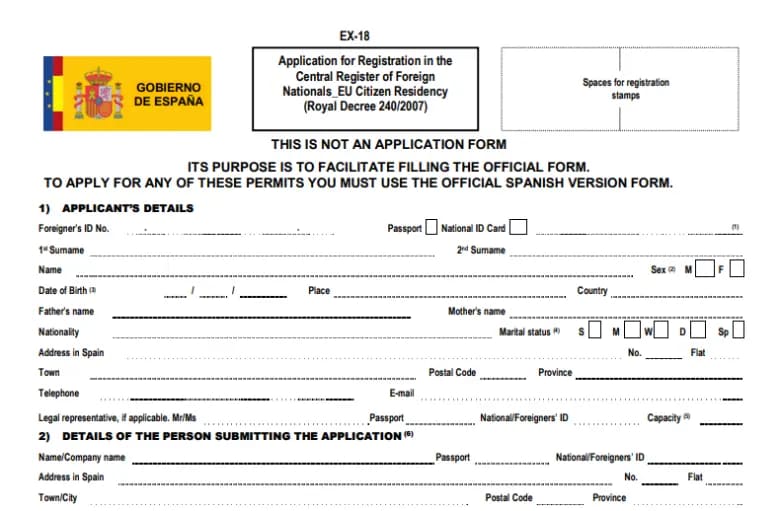
This matters because not every applicant uses the same form. The general TIE route commonly uses EX17, but other routes can require different forms.
Step 3. Book the correct appointment
When scheduling an appointment, choose the procedure that corresponds to card issuance, fingerprinting, or the specific residence route. Do not assume every police appointment category is interchangeable.
Step 4. Prepare originals, copies, photos, and fee receipt
Spain’s administrative culture is still very document-driven. Bring originals and copies unless the office guidance says otherwise.
Step 5. Attend the fingerprint appointment
For many applicants, this is the key stage. It is where the file becomes a physical card process.
Step 6. Collect the card
Once ready, the TIE is collected from the police station or office handling the issuance.