Número de Soporte in Spain: Where to Find It on Your NIE, TIE or DNI
In a hurry? Summarise this article with the AI of your choice:
Moving to Spain usually starts with the big words. Visa. NIE. TIE. padrón. Cl@ve. But then a form asks for something most expats have never heard of: the número de soporte. That is often the moment when the process stops, because people assume it is the same as the NIE. It is not. In Spain, the número de soporte is the reference code printed on the identity or residence document you are using, and official Spanish guidance explains it separately for the DNI, the EU citizen registration certificate, the foreigner’s card, and the residence permit.
For foreigners, this matters more than it first seems. Spain’s public administration portal explains that if you are registering for Cl@ve with an NIE, you may need your EU citizen registration certificate, TIE, or residence permit, plus a passport or, for EU citizens, a national identity document from the country of origin. In other words, Spanish systems do not just want your foreigner number. They often want the document reference linked to that number.
In this guide we will check what it really matters: what it is and how to identify it on YOUR document.
What is the número de soporte in Spain?
The easiest way to understand it is this: your NIE identifies you as a foreign national in Spain, while the número de soporte helps identify the specific document you are presenting. That is why official Cl@ve guidance says that when you identify yourself with an NIE, the system asks for the support number that appears on your document.
This is also why the term feels so unintuitive to people moving to Spain. In expat conversations, many people say “the support number of the NIE,” but that wording is misleading. The NIE is the number assigned to you. The support number belongs to the physical document connected to that identity, whether that document is a TIE, a residence permit, or the green EU registration certificate.
Apply for your Spanish NIE online in just 5 minutes
Your NIE number up to 3X cheaper than hiring a lawyer for that!
Get your Spanish NIE


The documents expats usually deal with
NIE
The NIE stands for Número de Identidad de Extranjero. It is your foreigner identification number in Spain, and it is one of the first pieces of identification many newcomers hear about. It's different from the TIE, or a legal permit.
TIE or Residence permit
The TIE, or Tarjeta de Identidad de Extranjero, is the foreigner identity card. For many non EU residents, this is the physical document that carries the identity data used in Spanish procedures and it is your residence permit.
EU registration certificate
If you are an EU citizen living in Spain, you may not have a TIE. Instead, you may have the Certificado de Registro de Ciudadano de la Unión, often called CUE or the green nie. Official Spanish guidance treats this certificate as one of the key documents foreigners use when registering or identifying themselves in public systems.
DNI
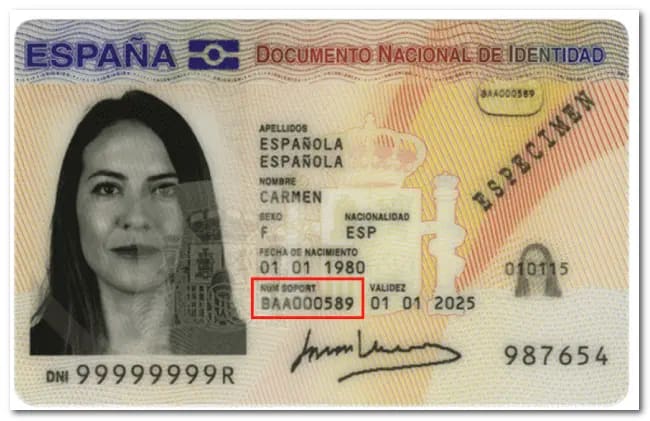
The DNI is the Spanish national identity document for Spanish citizens. It is not the document most expats use, but it often appears in explanations of the support number because Spain’s official guidance covers it alongside foreigner documents.
NIE, TIE, DNI, and número de soporte: the difference explained
NIE
The NIE, or Número de Identidad de Extranjero, the identification number assigned to foreigners who need to interact with Spain for economic, professional, or social reasons. It is a personal number, not a physical card by itself.
TIE
The TIE, or Tarjeta de Identidad de Extranjero, is the physical identity card issued to foreign nationals who are legally in Spain under the applicable immigration rules. In practical terms, many non EU residents will have an NIE and also receive a TIE as the physical document that proves their status and identity.
EU registration certificate
If you are an EU citizen living in Spain, you may not have a TIE. Instead, you may have the Certificado de Registro de Ciudadano de la Unión, often called the green EU certificate or 'green nie'. Spain’s administration portal says this certificate includes your name, nationality, address, NIE, and registration date.
DNI
The DNI is Spain’s national identity document for Spanish citizens, not for expats, unless they are or become Spanish citizens. It is relevant here only because official guidance also explains where the support number appears on the DNI, and some mixed households or dual nationals may encounter it.
Número de soporte
The número de soporte is the code printed on one of those documents. That is the piece of data Spanish systems may ask for when they want to verify the exact document you are using.
Where the número de soporte appears on each document
This is the part most people are actually looking for.
If you have a TIE or a foreigner’s card
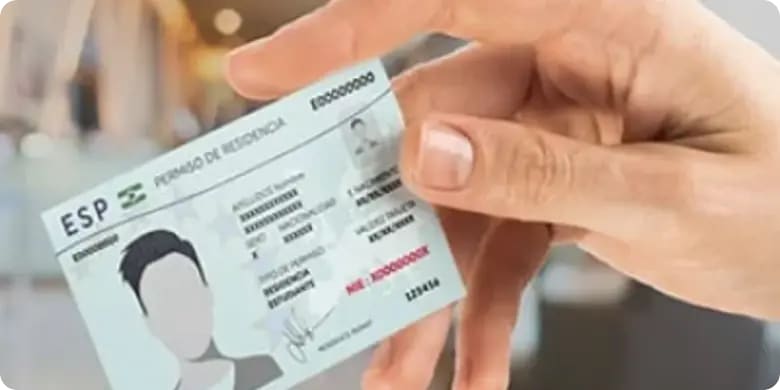
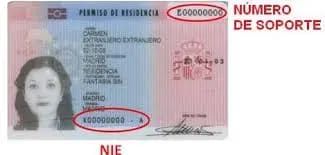
If your document is a foreigner’s card, which is a residence permit, the support number appears on the front and consists of the letter E followed by 8 digits. Official guidance gives the example E87654321.
If you have the EU citizen registration certificate
If your document is the EU citizen registration certificate, the support number is handled differently. In the card-style version, it appears on the back. In older folio-size certificates, the certificate number appears on the front, upper right corner. When entering it in a form, official guidance says you should place the letter C in front and complete with leading zeros if needed to reach the expected format.
If you have a Spanish DNI
If the document is a DNI, the support number appears on the front. Depending on the version, it appears under NUM SOPORTE, NUM SOPORT, or IDESP. A Justice Ministry guidance PDF also states that, for the electronic DNI, the support number consists of 3 letters and 6 digits.
Why Spain asks for it
Spanish bureaucracy often asks for the support number because it wants to verify the exact document you are using, not just the identity number written on it. This is why the support number appears in Cl@ve registration and related electronic identification flows. Official Cl@ve guidance is very direct: if you identify yourself with an NIE, the system will ask for the support number shown on your document.
That distinction matters in real life. If you type your NIE where the form wants the support number, the system may reject the identification. If you choose the right document and enter the support number in the format expected for that document, the process is much more likely to go through cleanly.
Spain’s Tax Agency even has specific help pages for users who get stuck at the “enter valid support number” step.
How expats should approach it step by step
1. Start with the document, not the acronym
Before filling anything in, ask yourself what physical document you actually have in hand. Is it a TIE, a residence permit, a green EU registration certificate, or a Spanish DNI? The right support number depends entirely on that answer.
2. Look at the correct side
For a TIE or residence permit, check the front. For the EU registration certificate, check the back if it is the card-style version, or the front upper right corner if it is the older folio version. For the DNI, check the front.
3. Enter the code in the expected format
This is where many people lose time. TIE or residence permit numbers follow E + 8 digits. EU certificate numbers are entered as C + digits, with zeros added on the left if needed. DNI support numbers follow the document format shown on the card, and the Justice Ministry guidance gives the electronic DNI example as 3 letters and 6 digits.
4. Do not enter your NIE again unless the form asks for it
The NIE and the número de soporte are different fields because they serve different purposes. The NIE identifies the person. The support number identifies the document. In many Spanish procedures, you may be asked for both.
Apply for your Spanish NIE online in just 5 minutes
Your NIE number up to 3X cheaper than hiring a lawyer for that!
Get your Spanish NIE
The mistake that catches most newcomers
The most common error is assuming that every number on a Spanish identity document is interchangeable. They are not.
A form asking for NIE wants your foreigner number. A form asking for número de soporte wants the printed reference of the specific card or certificate. Once you understand that difference, the whole concept becomes much less intimidating.
That is why this issue shows up so often among people moving to Spain. It is not that the concept is legally complex. It is that the wording is unfamiliar, the documents vary by immigration status, and Spanish forms often assume you already know which document reference they mean.
Official guidance do exist, but it is written more like technical help than like a newcomer’s guide.
Final takeaways
If you are an expat in Spain, remember this simple formula:
NIE = your foreigner identification number
Número de soporte = the code printed on the physical document linked to that identity
So when a Spanish website asks for your support number, stop thinking about the NIE alone and look at the actual document in your hand. That is usually where the confusion ends and the process starts moving again.
Share this article