NIE vs TIE: Key Differences Between the Number and the Card

In short
Obtaining the NIE and TIE in Spain can be a challenging but ultimately rewarding experience.
Summarise this article with the AI of your choice:
If you're planning to live in Spain as an expat, you'll quickly encounter the terms NIE and TIE. While they sound similar, they represent different aspects of your legal status in Spain.
Understanding the key differences between them is crucial for a smooth transition and avoiding bureaucratic headaches.
This guide is a quick resource on the NIE and TIE in Spain., it will provide a clear and concise breakdown of the differences between the NIE and TIE.
What is the NIE in Spain?
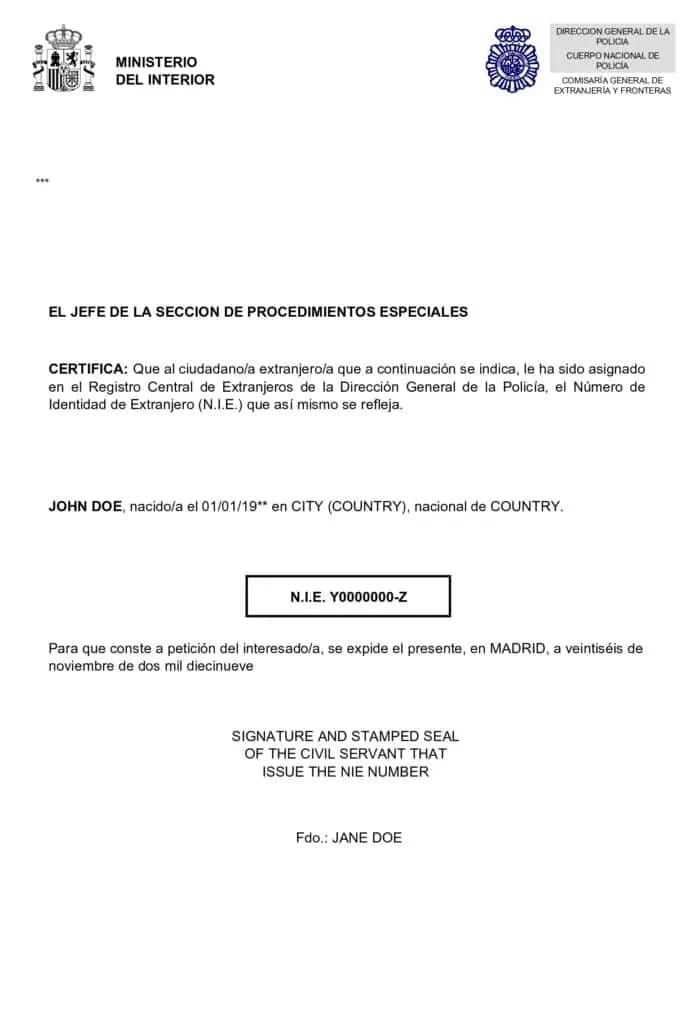
This is your Foreigner Identification Number. It's a unique number assigned to all foreigners who have dealings with the Spanish government or financial institutions.
Think of it as your Spanish tax ID.
Understanding the NIE
The NIE is more than just a number. It's a gateway to participating in the Spanish system, but it comes with hidden complexities:
- Non-Resident NIE (Temporary Fix): While you can obtain a non-resident NIE for specific transactions (e.g., buying property), it's generally not a long-term solution. If you plan to live in Spain, you must obtain a resident NIE linked to a valid residency permit.
- "Justification" Requirement: When applying for an NIE, you must provide a valid reason ("justificación"). This can be tricky.
- Acceptable justifications: A signed purchase agreement for property, an employment contract, a formal offer of employment, proof of enrollment in a university program.
- Unacceptable justifications: "I'm planning to look for a job." "I want to open a bank account in case I decide to move here." Be specific and provide concrete evidence.
- Lost or Stolen NIE Certificate: If you lose your NIE certificate, you can request a duplicate ("duplicado"). However, the process can take time, so it's essential to keep your certificate in a safe place. Knowing your NIE number by heart is highly recommended.
- NIE and Tax Implications: Obtaining an NIE does not automatically make you a tax resident. Tax residency is determined by the "183-day rule" and your economic interests. If you spend more than 183 days in Spain in a calendar year, you are generally considered a tax resident and are subject to Spanish income tax.
What is the TIE in Spain?
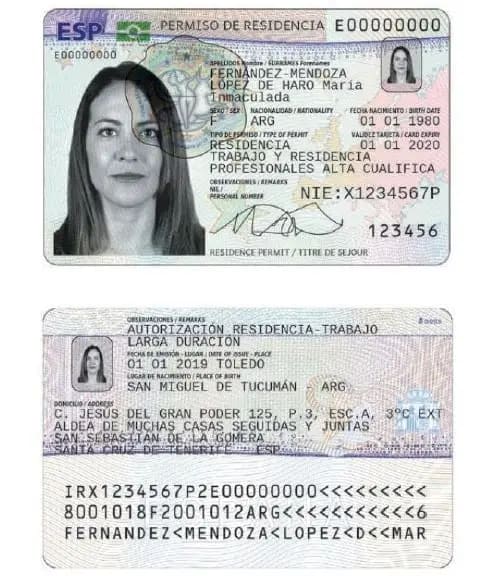
This is your Foreigner Identity Card (Tarjeta de Identidad de Extranjero). It's a physical card that proves your legal residency status in Spain (if you are a non-EU citizen).
Understanding the TIE
The TIE is your golden ticket to legal residency in Spain, but the path to obtaining it can be fraught with challenges.
- The 30-Day Deadline: The requirement to apply for the TIE within 30 days with your residence visa (or residency permit approval) is a major source of anxiety for expats.
- "Certificado de Empadronamiento" - Proof of Address, Proof of Life: This seemingly simple document can be a major hurdle.
- Common issues:Rental agreements not meeting the requirements (e.g., not in your name, not long enough), difficulty registering if you're staying with friends or family.
- Solutions: Ensure your rental agreement complies with local regulations. If staying with friends/family, explore the "declaración de cesión de vivienda" (declaration of transfer of housing) option, which allows the homeowner to formally declare that you are living there.
- Health Insurance - Public vs. Private: The type of health insurance you need depends on your residency status.
- Employed: You are generally covered by the Spanish social security system ("Seguridad Social").
- Self-Employed: You must register as self-employed ("autónomo") and pay social security contributions, which entitle you to public healthcare.
- Non-Lucrative Residents: You must have private health insurance that provides full coverage in Spain, with no co-pays or exclusions. Ensure your policy meets the specific requirements of the Spanish authorities.
- TIE Renewal - Don't Get Complacent: Renewing your TIE is not automatic. You must meet the eligibility requirements again and provide updated documentation.
- Common reasons for denial: Criminal record, failure to pay taxes or social security contributions, insufficient financial resources, absence from Spain for extended periods.
What are the main differences between NIE and TIE?
The most fundamental difference between the NIE and TIE is that the NIE is primarily an identification number, while the TIE is a residency card.
| Feature | NIE (Número de Identificación de Extranjero) | TIE (Tarjeta de Identidad de Extranjero) |
|---|---|---|
| Primary Purpose | Identification Number | Residency Card |
| Physical Document? | No (it's a number, sometimes on a certificate) | Yes (physical plastic card) |
| Photo? | No | Yes |
| Proof of Residency? | No | Yes |
| Who Needs It? | All foreigners with dealings in Spain | Non-EU citizens with residency in Spain |
| EU Citizens? | Yes, may need it | No |
| Expiration Date? | The Number Doesn't Expire. the Certificate does. | Yes (dependent on residency permit) |
Comparing the NIE and the TIE
Let's explore these differences in more detail:
1. Purpose and function
NIE: The NIE allows you to conduct financial and legal transactions in Spain. You'll need it for things like:
- Paying taxes
- Opening a bank account
- Buying property
- Signing contracts
- Starting a business
TIE: The TIE serves as proof of your legal residency in Spain. It demonstrates that you have the right to live in Spain and access certain services, depending on your residency permit. The TIE displays key information, including:
- Your photo
- Your NIE number
- Your residency status (e.g., student, worker, long-term resident)
- The expiration date of your residency permit
2. Physical form
- NIE: The NIE itself is just a number. You may receive a certificate ("certificado de NIE") confirming your number, but this is simply a document stating your NIE.
- TIE: The TIE is a physical plastic card, similar to a driver's license. It's an official ID document.
3. Who needs which?
- NIE: Any foreigner who has financial, professional, or social dealings in Spain may need an NIE. This includes both EU and non-EU citizens.
- TIE: The TIE is only for non-EU citizens who have been granted a residency permit in Spain. EU citizens do not need a TIE.
4. Expiration and renewal
- NIE: The NIE number itself never expires. However, the NIE certificate (if you have one) may have an expiration date. You may need to request a new certificate if the original one is too old for a specific procedure.
- TIE: The TIE's validity is tied to your residency permit. It will expire when your residency permit expires, and you will need to renew it to maintain your legal residency status in Spain.
Practical implications
- You Can Have an NIE Without a TIE: It's possible to have an NIE without a TIE. For example, if you're a non-resident property owner in Spain, you'll need an NIE to pay property taxes, but you won't need a TIE since you're not a resident.
- You Generally Can't Have a TIE Without an NIE: You generally need to have an NIE before you can apply for a TIE. The NIE is your identification number, and it will be printed on your TIE card. The card also carries its own support number, which identifies the card itself rather than you.
Common scenarios
To further clarify the differences, let's look at some common scenarios:
- Scenario 1: Non-EU Citizen Moving to Spain for Work:
- Obtain a work visa from the Spanish consulate in your home country.
- Upon arrival in Spain, apply for an NIE (if you don't already have one - it may be included in your visa process).
- Apply for a TIE within 30 days of your arrival in Spain or from the date your residency permit is approved.
- Scenario 2:EU Citizen Moving to Spain to Retire:
- Register as a resident in Spain if staying longer than 90 days.
- Obtain a "Certificado de Registro de Ciudadano de la Unión" (Green NIE).
- You do not need a TIE.
- Scenario 3: Non-Resident Buying a Vacation Home in Spain
- Apply for an NIE to purchase the property.
- You do not need a TIE, as you are not a resident.

What are the main doubts from expats in Spain?
- "Gestor vs. Abogado:" A "gestor" is generally sufficient for routine administrative tasks. However, if you have a complex situation or your application is denied, it's best to consult with an "abogado" (lawyer).
- "The 'Cita Previa' Lottery, Is There a Secret?": There's no magic bullet, but persistence is key. Check the website frequently, try different times of day, and consider using a browser extension that automatically refreshes the page.
- "Language Barriers - Can I Get By with English?": While it's possible to get by with English in some tourist areas, it's essential to learn Spanish if you plan to live in Spain long-term. Many government officials do not speak English, and all official documents are in Spanish.
- "Bureaucracy Bingo - Expect the Unexpected": Be prepared for delays, paperwork errors, and seemingly arbitrary decisions. Patience, flexibility, and a good sense of humor are essential.
What are the laws behind the NIE and the TIE?
There are basic laws and regulations that define each document’s purpose, but let's delve deeper into what they actually mean for you:
- Ley Orgánica 4/2000: This law, often amended, sets the stage. It's crucial to understand that "derechos y libertades" (rights and freedoms) are not absolute. They are subject to interpretation and administrative discretion. This is why seemingly identical cases can have different outcomes.
- What you need ot know: Don't assume your rights are automatically guaranteed. Be prepared to advocate for yourself and, if necessary, seek legal counsel.
- Real Decreto 557/2011: The devil is in the details of this regulation. It specifies the exact documentation required for each type of residency permit and TIE.
- What you need ot know: Pay meticulous attention to the document checklists. Even a minor omission can lead to rejection. Officially certified translations ("traducciones juradas") are non-negotiable for documents not in Spanish.
- EU Law (Directive 2004/38/EC): While EU citizens have the right to free movement, this right is not unlimited. Spain can restrict the right of residence if you become an "unreasonable burden" on the social assistance system.
- What you need ot know: Ensure you have sufficient financial resources or a valid work contract to avoid being deemed a burden. Health insurance is also critical.
Should I hire someone for my NIE or TIE in Spain?
Navigating the Spanish bureaucracy can be overwhelming. It’s normal to see things not going so smooth. If you are struggling with the NIE or TIE process, consider seeking professional help from:
- Lawyers (Abogados): An immigration lawyer can provide legal advice and represent you in dealings with the Spanish authorities. Prices tend to be hefty, though.
- "Gestores": A "gestor" can assist you with administrative tasks, such as preparing documents and scheduling appointments, but be attentive to scams, always check their background!
- Relocation Specialists: A relocation specialist (like us, at AnchorLess!) can help you with all aspects of your move to Spain, including obtaining the NIE and TIE.
Final takeaway
Obtaining the NIE and TIE in Spain can be a challenging but ultimately rewarding experience.
By understanding the legal framework, preparing your documentation carefully, and seeking help when needed, you can navigate the process successfully and enjoy your new life in Spain.
Share this article