Who can request a cita previa?
Who can book an appointment depends on the procedure.
For most immigration authorizations, the request can be made by the foreign national or an authorized representative, whether your procedure is tied to a visa, a residence permit, or a stand-alone document.
The official rules create exceptions that catch people out:
- An initial employee work-and-residence authorization must be requested by the employer or the employer's representative.
- A family reunification appointment must be requested by the sponsor or their representative.
- For minors or legally incapacitated people, a parent or legal representative makes the request.
So not every applicant should book personally.
Before you request a slot, confirm whether your procedure follows the general rule or one of these special cases, because booking under the wrong requester can invalidate the appointment.
What documents are needed for cita previa?
For the booking itself, you mainly need your personal data and identification.
After you select the province and procedure, the system asks for your identity details, and your appointment record is tied to those details and to the confirmation number.
Before you book, get four things ready: the province where you want to be seen, the exact trámite you need, your identification, and any procedure-specific fee.
Choosing the wrong procedure can send you to the wrong office or block the booking entirely.
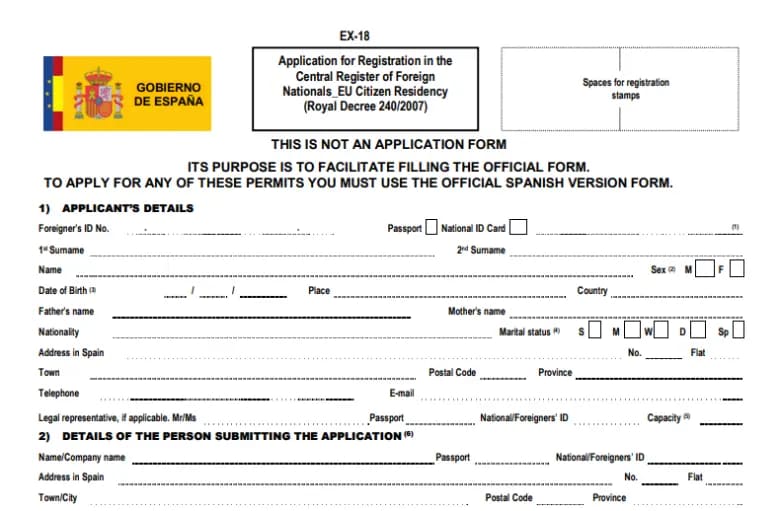
For the appointment day, the documents depend on the procedure. Common requirements include a valid passport, your identification, the completed form, and proof of any paid fee (the Tasa 790 forms cover many foreigner documents).
Some procedures also include fingerprinting, the 'toma de huellas', so check your province's page for the exact requirements before you go.
How to book a cita previa in Spain
To book a cita previa, you use the same appointment booking flow for most procedures.
Whether you are scheduling an appointment for a NIE, a TIE, a NIF Spain for a company, or another step or Spanish document, booking an appointment in Spain goes through the official appointment system, and the appointment type you choose depends on the province and procedure.
The six steps below are the whole process.
- Step 1: Open the official appointment portal.
To start, visit the official appointment hub on gob.es and enter the section for Delegaciones del Gobierno: Extranjería y otras áreas, then open the Cita Previa de Extranjería service.
If your procedure is run by the Policía Nacional, you may be directed to their own appointment page instead.
- Step 2: Choose the province.
Pick the province where you want to be seen.
Appointments are managed locally, so availability depends entirely on the office in that province.
- Step 3: Select the exact procedure.
Choose the precise foreigner procedure you need.
This is the step people get wrong, because the office that handles residence filings is not always the office that handles police procedures such as the NIE.
- Step 4: Enter your identification details.
After the province and procedure, enter the details the system asks for.
These are also used later to look up or cancel the appointment.
- Step 5: Pick a date and time.
If slots are open, choose your appointment.
If nothing appears, the office has no free slots right now, which is the situation the "no cita previa available" section below is about.
- Step 6: Save your confirmation number.
Save the confirmation number (the 'justificante') and keep the confirmation email.
You need it to confirm the appointment, look it up, or cancel it later, and the system can resend it to the email you used.
How to check appointment availability
To check appointment availability, select your province and procedure in the cita previa system and see whether any slots appear.
Availability is local and changes constantly, so an empty result now does not settle the afternoon.
There is no official appointment alerts feature or waiting list, so you check manually and try again.
If you want to compare offices, run the same check for a different province, since some free up slots more often than others.