Live in Ireland, Cyprus or Malta: Residence Permits for Non-EU Citizens
In short
The choice between Cyprus, Malta, and Ireland hinges on a clear assessment of one's financial capacity, professional background, and long-term ambitions.
Summarise this article with the AI of your choice:
For those seeking to establish a foothold in the European Union, the island nations of Cyprus, Malta, and Ireland offer unique and compelling options. Each boasts a strategic location, a business-friendly environment, and a high quality of life, yet they present distinct pathways to residency.
From the sun-drenched shores of the Mediterranean to the vibrant, green landscapes of the Atlantic, these countries attract a diverse range of individuals, including investors, skilled professionals, and retirees.
This article will explore the primary residency visa options available in Cyprus, Malta, and Ireland, providing a comparative look at what each nation requires.
Table of contents3
Moving in EuropeFree
Talk to us about your move
- Tell us your plans first
- Advice tailored to your move
- Book a time that suits you
4.8/51,500+ reviews
Cyprus residency visas
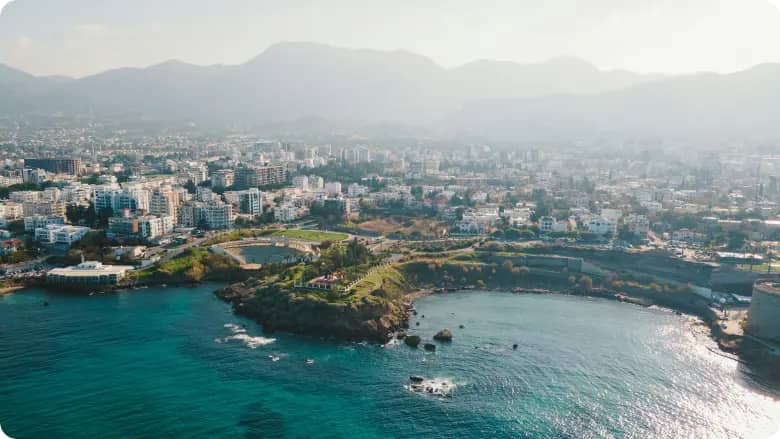
Cyprus, the third-largest island in the Mediterranean, is renowned for its beautiful beaches, rich history, and favorable business environment. Its strategic location at the crossroads of Europe, Asia, and Africa makes it an ideal base for business and travel. Let’s see an overview of the primary residency visas for non-EU citizens.

Temporary Residence Permit (Pink Slip)
This permit is for non-EU nationals who wish to stay in Cyprus for more than 90 days. It is typically granted for one year and can be renewed annually. This permit is suitable for various purposes, including tourism, visiting family, or exploring business opportunities.
What you'll need:
- Proof of sufficient income: You must demonstrate that you have a stable and adequate income from sources outside Cyprus to support yourself without needing to work. The required amount is generally around €2,000 per month for the main applicant, with an additional 20% for a spouse and 15% for each child.
- Bank guarantee: A bank guarantee from a Cypriot bank is required. The amount varies but is typically around €550.
- Health insurance: A comprehensive health insurance policy is mandatory.
- Rental or purchase agreement: Proof of accommodation in Cyprus.
- Application form and required documents: This includes a valid passport, passport photos, and other supporting documents.
Permanent residence permit (Category F)
This permit is for individuals who wish to reside in Cyprus permanently. It is granted to those who have a secured annual income from abroad and do not need to work in Cyprus.
What you'll need:
- Secured annual income: You must prove a secured annual income of at least €9,568 for a single applicant, plus €4,613 for each dependent person. This income must come from legal sources abroad, such as pensions, dividends, or other investments.
- Proof of accommodation: You must own or rent a property in Cyprus.
- Clean criminal record: A certificate of a clean criminal record from your country of origin and residence is required.
- Statement of not working in Cyprus: You must sign a statement confirming that you will not be engaged in any form of employment in Cyprus.
- Health insurance.
Work visa (Employment permit)
If you have a job offer from a Cypriot company, you will need a work visa. The employer must apply to the Civil Registry and Migration Department on your behalf.
What you'll need:
- Employment contract: A valid employment contract with a company in Cyprus.
- Employer's application: The employer must prove that the position cannot be filled by a Cypriot or an EU citizen.
- Educational and professional qualifications: You will need to provide your diplomas, certificates, and work experience.
- Medical certificate and police clearance certificate.
- Bank guarantee: The employer must provide a bank guarantee for you.
Student visa
This visa is for non-EU nationals who wish to study at a recognized educational institution in Cyprus.
What you'll need:
- Acceptance letter: An official letter of acceptance from a Cypriot educational institution.
- Proof of financial means: You must demonstrate that you have sufficient funds to cover your tuition fees and living expenses.
- Police clearance certificate.
- Medical certificate.
- Parental consent (for minors).
Investment-based residency
Cyprus offers a "Golden Visa" program that allows non-EU nationals to obtain permanent residency through investment.
What you'll need:
- Investment in real estate: You must invest at least €300,000 (plus VAT) in new residential property in Cyprus.
- Proof of funds: You must prove that the investment funds have come from abroad.
- Fixed deposit: You must deposit at least €30,000 in a Cypriot bank for a period of three years.
- Clean criminal record.
- Visit to Cyprus: You must visit Cyprus at least once every two years.
Ireland residency visas
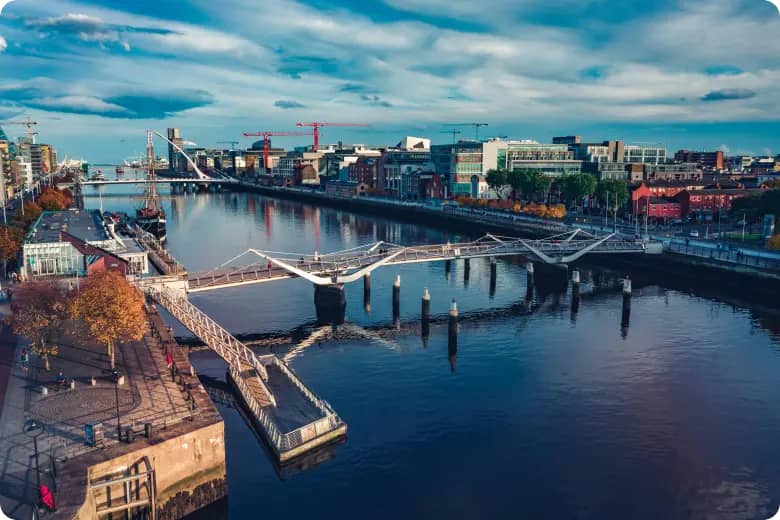
The charm of Ireland, the "Emerald Isle," is undeniable. From its vibrant cultural scene and thriving tech economy to its famously friendly people and breathtaking landscapes, it's a country that captures the imagination. If you're a non-EU/EEA citizen dreaming of calling Ireland home, you'll need to navigate its specific immigration system. While it can seem complex, it's a well-defined process.
Understanding the Irish "stamp" system
Before diving into the visa types, it's essential to understand Ireland's unique "Stamp" system. Your visa gets you into the country, but upon arrival (for stays over 90 days), you must register with the Immigration Service Delivery (ISD) and receive an Irish Residence Permit (IRP). This card will feature a "Stamp" that dictates what you are permitted to do in Ireland.
Here’s a quick summary of the most common stamps:
- Stamp 1: For those with an employment permit. You can work, but your permit is tied to a specific employer.
- Stamp 1G: For graduates to seek employment and for spouses/partners of Critical Skills Employment Permit holders to work without a separate permit.
- Stamp 2: For students enrolled in a full-time course. You can work limited hours.
- Stamp 3: For individuals joining a family member or volunteering. You cannot work or engage in business.
- Stamp 4: For long-term residents, spouses of Irish citizens, and those who have completed a Critical Skills permit. It allows you to work without an employment permit and establish a business. This is highly sought after.
- Stamp 0: For individuals of independent means who are financially self-sufficient. You cannot work or receive state benefits.
Visas to Irish residency
Ireland's visa system is guided on your reason for coming to the country.
Ireland Work Visas
Ireland's strong economy creates a high demand for skilled professionals. The employment permit system, managed by the Department of Enterprise, Trade and Employment, is the main pathway for most non-EU workers.
Critical Skills Employment Permit (CSEP)
This is the most desirable work permit, designed to attract highly skilled people in professions with a recognized shortage.
- Who is it for? Professionals on the Critical Skills Occupations List, including many roles in IT, engineering, healthcare, and science.
- What you'll need:
. A job offer of at least two years.
. A minimum annual salary of €38,000 for most eligible roles, or €32,000 for certain high-demand occupations.
. A relevant degree or high level of experience.
General Employment Permit (GEP)
This permit is for occupations not on the Critical Skills list.
- Who is it for? A broader range of professions, but subject to more stringent rules.
- What you'll need:
. A job offer with a minimum annual salary of €34,000 (for 2025, with some exceptions).
. Labour Market Needs Test: Your employer must prove they advertised the job in Ireland/the EU and couldn't find a suitable candidate.
Student Visa - Stamp 2
Ireland's world-class universities attract students from all over the globe.
- Who is it for? Students accepted into a full-time course on the official Interim List of Eligible Programmes (ILEP).
- What you'll need:
. A letter of acceptance from an Irish educational institution.
. Proof you have paid the tuition fees.
. Proof of sufficient funds to support yourself (currently €10,000 per year).
. Private medical insurance.
Family Reunification
This route allows you to join a family member already living in Ireland.
- Who is it for? Spouses, de facto partners, and children of Irish citizens, EU citizens, and non-EU legal residents.
- What you'll need: The requirements vary greatly depending on the status of your family member in Ireland.
. For spouses/partners of Irish citizens: You'll need to provide extensive proof of your relationship (marriage certificate, photos, communication logs). This usually leads to a Stamp 4.
. For joining a non-EU resident: Your sponsor must meet specific financial requirements and have a certain period of residency in Ireland before they can sponsor you.
For Investment and Entrepreneurs
Startup Entrepreneur Programme (STEP)
This program allows you to establish a business in Ireland.
- Who is it for? Entrepreneurs with an innovative business idea and funding.
- What you'll need:
. A high-potential startup idea (not a retail shop, restaurant, etc.).
. Minimum funding of €50,000.
. A comprehensive business plan.
Other Visas to Irish Residency
De Facto Partnership Visa
This is for long-term partners of Irish citizens or eligible residents who do not wish to marry. It requires extensive proof of a durable, cohabiting relationship for at least two years.
Persons of Irish Descent or Irish Associations
If you have an Irish-born grandparent, you may be eligible for Irish citizenship directly. If your connection is more distant (e.g., great-grandparent) or through other strong associations, you may be able to apply for a visa based on this, though it is discretionary.
Stamp 0 - Persons of Independent Means
This is for individuals who can fully support themselves financially without working or relying on state benefits.
- What you'll need: Proof of an annual income of at least €50,000 per person, plus access to a significant lump sum of money to cover any unforeseen major expenses.
Malta residency visas
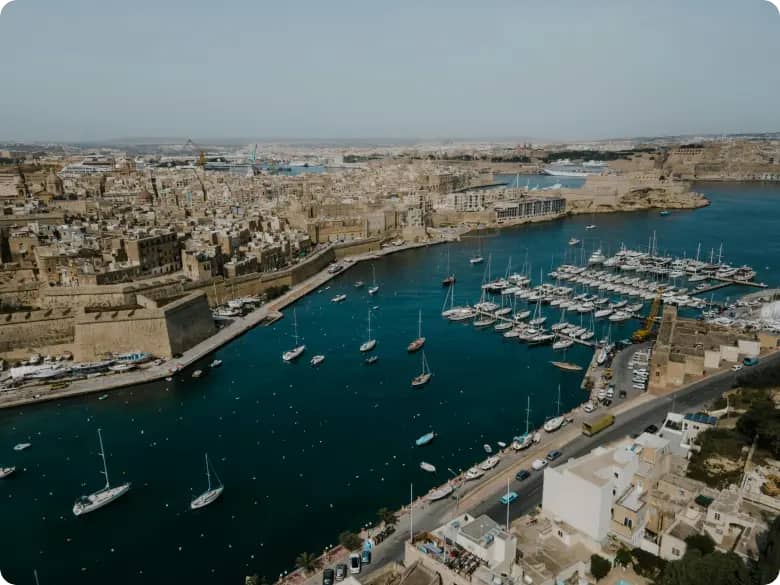
Malta is a Mediterranean archipelago offering old-world charm and modern living, making it an increasingly popular choice for expats. But before you can start enjoying the stunning beaches and historic sites, you'll need to navigate the residency process. We'll walk you through the main residency visas for non-EU citizens, complete with insider tips from those who have already made the move.
Nomad residence permit
If you're a digital nomad looking for a base in a sunny, English-speaking country, Malta's Nomad Residence Permit is an excellent option. This permit allows you to live in Malta and work remotely for a company based outside the country.
What you'll need:
- Proof of remote work: You'll need to demonstrate that you can work remotely and that you have a contract with a foreign employer or are a freelancer with foreign clients.
- Sufficient income: You must prove a gross monthly income of at least €3,500.
- A valid travel document: Your passport must be valid for the duration of your stay.
- Health insurance: You'll need a comprehensive health insurance policy that covers you in Malta.
- A rental or purchase agreement: You need to show that you have a place to live in Malta.
Malta permanent residence programme (MPRP)
The MPRP is an attractive option for those who want to make Malta their permanent home. This program grants a permanent residence permit to non-EU nationals who make a qualifying investment in the country.
What you'll need:
- A property investment: You'll need to either purchase a property in Malta for a minimum of €300,000 in the South of Malta/Gozo or €350,000 in the rest of Malta, or rent a property for a minimum of €10,000 per year in the South of Malta/Gozo or €12,000 in the rest of Malta.
- A government contribution: A non-refundable contribution of €68,000 if you purchase a property, or €98,000 if you rent.
- A donation to a non-governmental organization: A donation of €2,000 to a registered philanthropic, cultural, sport, scientific, animal welfare, or artistic non-governmental organisation or society.
- Proof of sufficient funds: You must show that you have sufficient financial resources to support yourself and any dependents.
Work visa
If you've secured a job offer from a Maltese employer, they will need to apply for a work permit on your behalf. This is the most common route for non-EU citizens who want to work in Malta.
What you'll need:
- A job offer: A formal offer of employment from a company in Malta.
- A completed application form: Your employer will handle this.
- A copy of your CV and qualifications: To prove you're qualified for the job.
- A valid passport and other identification documents.
- A health screening.
Student visa
If you're planning to study in Malta for more than three months, you'll need a student visa. Malta has a number of excellent educational institutions, including the University of Malta.
What you'll need:
- An acceptance letter: From a recognized educational institution in Malta.
- Proof of sufficient funds: To cover your tuition fees and living expenses.
- A valid passport.
- Health insurance.
- Proof of accommodation.
Key Takeaways
The choice between Cyprus, Malta, and Ireland hinges on a clear assessment of one's financial capacity, professional background, and long-term ambitions.
Cyprus and Malta stand out for their attractive residency-by-investment programs, offering expedited routes for those with significant capital to invest. Ireland, by contrast, focuses more on attracting skilled talent and entrepreneurs who can contribute directly to its dynamic and growing economy.
While all three provide a gateway to living and working within the EU, their differing approaches to immigration mean that what works for one applicant may not be suitable for another.
Share this article