




Expats i Lissabon: viktig information för invandrare

I korthet
Om du är beredd på utmaningarna och tar vara på möjligheterna kan Lissabon vara en givande och berikande plats att bo på.
Sammanfatta artikeln med den AI du föredrar:
Varför flyttar expats till Lissabon? Namnet väcker bilder av solbadande sluttningar, färgstarka azulejo plattor, de vemodiga tonerna från fado musik och doften av nybakade pastéis de nata. Portugals huvudstad har under de senaste åren blivit en magnet för expats, digitala nomader, pensionärer, studenter och familjer, som alla lockas av löftet om en bättre livskvalitet. Och på många sätt levererar Lissabon . Det är en stad genomsyrad av historia, med en levande kultur, en allmänt välkomnande befolkning och en storslagen naturmiljö.
Det är dock viktigt att notera att Lissabon år 2025 inte är samma stad som för tio år sedan. Staden har genomgått en period av snabb omvandling, driven av turism, utländska investeringar och en global förskjutning mot distansarbete. Detta har medfört många fördelar, men också skapat betydande utmaningar, särskilt när det gäller överkomliga bostäder och levnadskostnader.
Den här guiden syftar till att ge ett balanserat och realistiskt perspektiv på Lissabon och ta hänsyn till både stadens obestridliga dragningskraft och de nya förutsättningar som blivande expats måste förstå innan de flyttar. Vi är inte här för att sälja in en dröm, utan för att ge dig den information du behöver för att fatta ett välgrundat beslut.
Innehåll9
- Levnadskostnader i Lissabon för expats
- Arbetsmarknaden i Lissabon för expats
- Lissabon för expatfamiljer: skolor och universitet för expatbarn
- Att använda sjukvården i Lissabon som expat
- Vardagslivet i Lissabon som expat
- Kulturlivet i Lissabon som expat
- Socialt liv och integration i Lissabon som expat
- Portugisisk byråkrati när du bor i Lissabon som expat
- För- och nackdelar med att bo i Lissabon som expat
Flytta till PortugalGratis
Prata med oss om din flytt
- Berätta först om dina planer
- Råd anpassade efter din flytt
- Boka en tid som passar dig
4,8/51 500+ omdömen

Levnadskostnader i Lissabon för expats
Låt oss gå rakt på en av de viktigaste faktorerna: hur mycket kostar det egentligen att bo i Lissabon? Påståendet som ofta upprepas om att Lissabon är ”otroligt billigt” är, ärligt talat, förlegat. Även om staden fortfarande är mer prisvärd än många andra västeuropeiska huvudstäder (London, Paris, Dublin, Amsterdam osv.) har levnadskostnaderna, särskilt boendekostnaderna, stigit kraftigt under de senaste åren.
Här är en detaljerad genomgång baserad på uppgifter från aktuella rapporter från olika källor per 2025:
A. Boende i Lissabon
Detta är den i särklass största utgiften för de flesta expats och det område där berättelsen om ”billiga Lissabon” faller samman. Hyresmarknaden är extremt konkurrensutsatt, med en efterfrågan som vida överstiger utbudet.
- Hyra (lägenhet med 1 sovrum, i stadskärnan): Räkna med att betala mellan €1,200 och €2,000+ per månad. Det exakta priset beror i hög grad på den specifika stadsdelen (Chiado och Príncipe Real är betydligt dyrare än exempelvis Graça eller Anjos), lägenhetens storlek och skick (renoverad eller orenoverad) samt om den har bekvämligheter som balkong eller parkering.
- Hyra (lägenhet med 1 sovrum, utanför stadskärnan): Du kanske hittar något i prisklassen €850 till €1,400+ i områden som Benfica, Alvalade, Campo de Ourique (alla tre ligger i Lissabon, men inte i Baixa-området) eller ännu längre ut längs tåglinjerna. Men priserna stiger kraftigt även i dessa områden.
- Hyra (lägenhet med 3 sovrum, i stadskärnan): Räkna med att betala €2,000 till €4,000+ per månad. Familjelägenheter i attraktiva lägen är en lyx.
- Hyra (lägenhet med 3 sovrum utanför stadskärnan): Du får troligen mer utrymme för pengarna (€1,400 - €2,500+), men tänk på restider och tillgång till service.
Viktiga saker att tänka på
- Konkurrens: Var beredd att agera snabbt. Attraktiva lägenheter hyrs ofta ut inom några timmar efter att de annonserats. Ha alla dina dokument redo (pass, NIF, deposition, inkomstbevis, referenser).
- Hyresvärdarnas krav: Många hyresvärdar kräver flera månadshyror i förskott, en borgensman (fiador – en person bosatt i Portugal som medundertecknar hyresavtalet och kan undvaras om fler hyror betalas i förskott) och inkomstbevis som ofta visar att inkomsten är tre gånger så hög som månadshyran.
- ”Dolda” kostnader: Räkna med avgifter till bostadsrättsföreningen (condomínio), som kan variera från några euro till hundratals euro i månaden beroende på byggnadens faciliteter (även om det inte är särskilt vanligt).
B. Kostnader för el, vatten och internet i Lissabon
- El, uppvärmning, kylning, vatten och sophämtning (för en lägenhet på 85 m²): Räkna med att betala mellan €120 och €180 i månaden, beroende på förbrukning och årstid. Kostnaderna kan vara högre på vintern om du använder elelement (många äldre lägenheter saknar centralvärme).
- Internet/Telefon/TV: Paket kostar mellan €30 och €60 i månaden, beroende på leverantör och vilka tjänster som ingår.
C. Mat i Lissabon
- Matvaror (ensamstående): En realistisk månadsbudget för matvaror för en person är €200 till €400, beroende på dina matvanor. Att handla på lokala marknader (mercados) kan ofta vara billigare än att handla färska råvaror i mataffärer.
- Matvaror (familj på fyra): Räkna med €600 till €1,000+ per månad.
- Äta ute:Lunch (enkel meny med dryck) på en tasca (lokal restaurang): €10 - €15
- Middag (mellanklassrestaurang, för två): €40-€70.
- Kaffe (på ett kafé): €0.70 till €1.50
- Pastel de Nata: €1.20 - €2.00
D. Transport i Lissabon
- Månadskort för kollektivtrafik (Lisboa Viva-kort): €40. Det gäller för tunnelbana, bussar, spårvagnar och vissa färjor inom staden. Det är mycket prisvärt om du åker kollektivt regelbundet.
- Enkelbiljett för tunnelbana/buss: €1.80
- Taxi: Relativt prisvärt jämfört med andra europeiska städer. En kort resa i stadskärnan kan kosta €5-€10.
- Samåkningstjänster (Uber, Bolt): Finns i stor utsträckning och är ofta billigare än taxi.
- Att äga bil: En bil är inte nödvändig i stadskärnan, men kan vara praktisk för utflykter utanför Lissabon. Räkna dock med kostnader för köp eller leasing, försäkring, bränsle, parkering (som kan vara dyr och svår att hitta) och vägtullar.
E. Hälso- och sjukvård i Lissabon
- Offentlig hälso- och sjukvård (SNS): Som lagligt bosatt har du tillgång till Portugals nationella hälso- och sjukvård (SNS), som i allmänhet är prisvärd (låga patientavgifter för de flesta tjänster). Väntetiderna för specialistbesök och planerade ingrepp kan dock vara långa.
- Privat sjukförsäkring: Många expats väljer privat sjukförsäkring för att få snabbare tillgång till vård och ett större urval av läkare. Månadsavgifterna varierar mycket beroende på ålder, försäkringsskydd och försäkringsbolag, men räkna med att betala allt från €50 till €200+ per person.
F. Utbildning i Lissabon
- Internationella skolor: Om du har barn är internationella skolor en betydande utgift. Skolavgifterna kan ligga på mellan €8,000 och över €20,000 per år, beroende på skolan och årskursen.
- Offentliga skolor: Portugisiska offentliga skolor är avgiftsfria, men undervisningen sker på portugisiska.
G. Fritid och nöjen
- Gymmedlemskap: €30 - €60+ per månad.
- Biobiljett: €7 - €10
- Museumentré: €5 - €15 (många museer erbjuder gratis inträde vissa dagar eller för personer som bor i landet).
- Konsert-/evenemangsbiljett: Varierar kraftigt beroende på evenemanget.
H. Övriga utgifter
- Kläder: Priserna är generellt jämförbara med andra västeuropeiska länder, även om vissa iberiska butiker kan vara något billigare.
- Personlig omvårdnad: Frisörbesök, hygienartiklar och liknande kostar också ungefär lika mycket.
Hur ser det ut med bostadskrisen i Lissabon?
Glöm de glansiga broschyrerna och Instagraminläggen som visar upp charmiga fasader med kakel. Även om sådant absolut finns i Lissabon är verkligheten att hitta någonstans att bo i staden 2025 betydligt mer komplicerad och utmanande.
Det handlar inte bara om att hitta en ”fin lägenhet”, utan om att navigera på en bostadsmarknad i kris, präglad av skenande priser, hård konkurrens och en stor klyfta mellan förväntningar och verklighet.
Varför befinner sig Lissabons bostadsmarknad i kris?
Flera faktorer har samverkat och skapat den pågående bostadskrisen:
- Programmet med ”Golden Visa” (och liknande system): Även om syftet var att locka till sig utländska investeringar har programmet med Golden Visa, som erbjöd uppehållstillstånd i utbyte mot fastighetsinvesteringar, kritiserats hårt för att driva upp priserna och göra bostäder oöverkomliga för lokalbefolkningen och ”vanliga” expats. Programmet har visserligen förändrats (fastighetsinvesteringar ger inte längre rätt till visum), men skadan är redan skedd och följdeffekterna märks fortfarande.
- Framväxten av korttidsuthyrning (Airbnb med flera): Lönsamheten i korttidsuthyrning till turister har fått hyresvärdar att ta bort bostäder från marknaden för långtidsuthyrning. Det minskar kraftigt utbudet av tillgängliga bostäder för invånarna. Även om Lissabon har infört regler för att begränsa detta (till exempel genom att begränsa antalet tillstånd i vissa områden) är effekten fortfarande betydande.
- Fler expats och digitala nomader: Lissabons popularitet som en attraktiv destination har lett till en stor tillströmning av människor som vill bo där, vilket ytterligare ökar efterfrågan och sätter press på det begränsade bostadsutbudet.
- Begränsat nybyggande: Det pågår visserligen en del nybyggnation, men den håller inte jämna steg med efterfrågan, och mycket av den är inriktad på lyxbostäder snarare än prisvärda bostäder. Byråkratiska hinder och regler för markanvändning bromsar också byggprocessen.
- Inflation och stigande räntor: Den allmänna inflationen och stigande bolåneräntor har gjort det dyrare att köpa bostad, vilket ytterligare ökar efterfrågan på hyresbostäder.
- Spekulation och investeringar: Fastigheter i Lissabon betraktas som en trygg och lönsam investering, vilket lockar både inhemska och internationella investerare och driver upp priserna ytterligare.
Vad bör en expat förvänta sig av bostadsmarknaden i Lissabon?
- Hård konkurrens: Var beredd på att konkurrera med dussintals andra sökande om en enda bostad. Attraktiva lägenheter hyrs ofta ut inom några timmar efter att de annonserats.
- Snabb marknad: Du måste vara redo att agera omedelbart. Ha alla dina dokument klara (se nedan), var tillgänglig för visningar med kort varsel och var beredd att fatta ett snabbt beslut.
- Höga hyror: Hyrorna har skjutit i höjden under de senaste åren. Räkna med att betala betydligt mer än du kanske hade väntat dig utifrån äldre uppgifter eller andrahandsinformation.
- Krävande hyresvärdar: Hyresvärdar har möjlighet att vara kräsna. De kräver ofta flera månadshyror i förskott, borgensmän, inkomstbevis (ofta 3x månadshyran) och omfattande dokumentation.
- ”Dolda” kostnader: Var uppmärksam på tillkommande kostnader, till exempel avgifter för bostadsrättsföreningen (condomínio), som kan öka dina månatliga utgifter avsevärt.
- Bedrägerier: Tyvärr har den konkurrensutsatta marknaden också skapat möjligheter för bedragare. Var försiktig med annonser som verkar alltför förmånliga och för över inga pengar innan du har inspekterat bostaden och slutfört ett avtal.
Vilka dokument behöver jag för att hyra en bostad i Lissabon som expat?
För att ens komma i fråga för en hyresbostad i Lissabon behöver du vanligtvis:
- Pass (och kopior): Identitetsbevis.
- NIF (Número de Identificação Fiscal): Ditt portugisiska skatteregistreringsnummer. Du måste ha det.
- Inkomstbevis: Lönespecifikationer (de senaste, vanligtvis för de senaste 3 månaderna), anställningsavtal, skattedeklarationer, kontoutdrag. Hyresvärdar vill se att du har råd med hyran.
- Portugisiskt bankkonto (ibland): Många hyresvärdar föredrar att få hyresbetalningar från ett portugisiskt bankkonto.
- Referenser (ibland): Rekommendationsbrev från tidigare hyresvärdar.
- Garanter (Fiador): Vissa hyresvärdar kräver en garant, en person bosatt i Portugal som går med på att ansvara för hyran om du inte betalar. Det kan vara svårt att ordna för nyinflyttade.
- IRS-deklaration (för föregående år)
⚠️ Du kan gärna försöka visa upp IRS, garanter och referenser från andra länder. Vissa hyresvärdar kan vara tillräckligt flexibla för att godta dem. Kom ihåg att Lissabon snabbt håller på att bli ett internationellt nav och att flera personer anpassar sig till det.
Hur kan en expat hitta bostad i Lissabon?
- Börja tidigt: Börja leta i god tid innan du planerar att flytta. Ju mer tid du har, desto bättre.
- Använd flera plattformar: Förlita dig inte på bara en webbplats eller en byrå. Använd en kombination av nätportaler, fastighetsbyråer och rekommendationer från andra.
- Nätportaler:Idealista: https://www.idealista.pt/ (Portugals mest populära fastighetsportal)
- Imovirtual: https://www.imovirtual.com/
- Casa Sapo: https://casa.sapo.pt/
- OLX: https://www.olx.pt/ (Även om annonssajter kan innebära större risker finns det också några riktigt bra erbjudanden där).
- CustoJusto: https://www.custojusto.pt/
- Uniplaces: https://www.uniplaces.com/ (Främst för studenter, men erbjuder även en del långtidsuthyrningar.)
- Spot-a-home: https://www.spotahome.com/ ⚠️ Vi har en rabattkod hos Spot-a-home! Kontakta oss för att få din.
- Fastighetsmäklare:ERA
- Remax
- Century 21
- Engel & Völkers (för mer exklusiva bostäder)
- Lokala mäklarbyråer (sök efter "imobiliária" + områdets namn)
- Facebook-grupper:"Aluguer Lisboa" (och liknande grupper) - Var försiktig med bedrägerier, men dessa grupper kan vara en bra källa till tips.
- Nätverk: Berätta för alla du känner – vänner, kollegor och kontakter i Lissabon – att du letar efter bostad. Mun-till-mun-metoden kan vara mycket effektiv.
- Var flexibel: Överväg områden utanför stadskärnan (Baixa-området). Områden som Benfica, Alvalade och Campo de Ourique (alla fortfarande inom Lissabon), och även platser längre ut längs tåglinjerna (t.ex. Almada och Queluz), kan vara mer prisvärda och erbjuda god livskvalitet.
- Överväg att hyra kortsiktigt till en början: Om möjligt, ordna ett korttidsboende (t.ex. via Airbnb eller Booking.com) för de första veckorna eller månaderna. Då får du tid att utforska olika områden och hitta ett långsiktigt boende utan att behöva fatta ett beslut direkt vid ankomsten.
- Lär dig lite portugisiska: Många hyresvärdar och mäklare talar engelska, men grundläggande kunskaper i portugisiska kan vara en stor fördel och hjälpa dig att förstå viktiga termer som hyra (aluguer) eller korttidsuthyrning (temporada).
- Var uthållig: Ge inte upp om du inte hittar något direkt. Bostadsmarknaden i Lissabon är tuff, men uthållighet lönar sig.
- Förhandla: Även om marknaden är konkurrensutsatt kan det fortfarande finnas visst utrymme för förhandling, särskilt vid längre hyresavtal.
- Förstå dina rättigheter: Hyreslagstiftningen i Portugal är ganska förmånlig för hyresgäster.
Extra avgifter vid hyra i Lissabon som expat
Utöver månadshyran bör du vara medveten om dessa möjliga kostnader:
- Avgifter till bostadsrättsföreningen (Condomínio): Det här är månadsavgifter för underhåll av gemensamma utrymmen i flerfamiljshus (till exempel städning, underhåll av hissar och säkerhet). De kan variera från några euro till flera hundra euro i månaden, beroende på byggnaden och dess bekvämligheter. Alla byggnader har inte sådana avgifter. Kontrollera alltid med ägaren eller fastighetsförvaltaren.
- Driftskostnader: Hyran inkluderar vanligtvis inte el, gas eller vatten.
- Internet/telefon/tv: Dessa är vanligtvis också separata kostnader.
- Arvode till mäklare: Om du anlitar en fastighetsmäklare kan denne ta ut ett arvode (vanligtvis upp till en månadshyra).
- Deposition: Vanligtvis motsvarande en till tre månadshyror, återbetalas vid hyresperiodens slut (förutsatt att bostaden inte har skadats).
- Förskottshyra: Vissa hyresvärdar kan kräva flera månadshyror i förskott, utöver depositionen (särskilt utan en borgensman).
⚠️ Det är olagligt för hyresvärdar att hyra ut bostäder med långtidskontrakt utan att registrera dem hos skattemyndigheterna. Hyresvärdar gör ofta så för att slippa betala skatt, men det utsätter hyresgästen för risker. Kräv alltid ett registrerat hyresavtal.
Arbetsmarknaden i Lissabon för expats
Lissabons arbetsmarknad erbjuder en blandning av möjligheter och utmaningar för expats.
Samtidigt som vissa branscher blomstrar i staden är det också viktigt att känna till verkligheten på den portugisiska arbetsmarknaden.
A. Branscher med stor efterfrågan
- Teknik: Lissabon har blivit ett viktigt europeiskt teknikcentrum och lockar både nystartade företag och etablerade multinationella företag. Detta har skapat stor efterfrågan på kvalificerade yrkespersoner inom områden som:
- Programvaruutveckling (olika språk och ramverk: Python, Java, JavaScript, React, Angular osv.)
- Datavetenskap och dataanalys
- Cybersäkerhet
- Molntjänster (AWS, Azure, Google Cloud)
- Projektledning (agilt arbetssätt, Scrum)
- UX/UI-design
- Fintech
⚠️ Företag som Google, Microsoft, Amazon, Cisco och Siemens har en betydande närvaro i Lissabon, tillsammans med ett växande antal portugisiska teknikföretag och nystartade företag.
- Turism och hotell- och restaurangbranschen: Som ett stort turistmål erbjuder Lissabon många möjligheter inom turism och hotell- och restaurangbranschen. Det är dock viktigt att notera att många av dessa jobb är säsongsbetonade och kan ha lägre löner än jobb inom andra branscher.
- Hotellledning
- Restaurangpersonal (kockar, servitörer och bartendrar).
- Reseledare
- Evenemangsplanering
- Kundservice (på hotell, semesteranläggningar osv.)
- Kundservice/Delade servicecenter: Många multinationella företag har etablerat kundservice- eller delade servicecenter i Lissabon, där det ofta krävs flerspråkiga kunskaper.
- Kundtjänstmedarbetare (olika språk)
- Specialister på teknisk support
- Personaladministration
- Ekonomi och redovisning
- Undervisa i engelska: Det finns en stadig efterfrågan på engelsklärare i Lissabon, särskilt på dem som har TEFL-certifiering (Teaching English as a Foreign Language) eller CELTA-certifiering (Certificate in English Language Teaching to Adults). Det finns möjligheter på privata språkskolor, internationella skolor och universitet.
- Fastigheter: Fastighetsmarknaden är fortfarande aktiv, trots sina utmaningar, och det finns möjligheter för fastighetsmäklare, fastighetsförvaltare och närliggande yrkesgrupper. För dessa roller är det dock vanligtvis viktigt att behärska portugisiska flytande.
B. Start-up-scenen i Lissabon
Lissabon har ett blomstrande start-up-ekosystem, med stöd från inkubatorer, acceleratorer, coworkingutrymmen och riskkapitalinvesteringar. Detta skapar möjligheter för entreprenörer och personer som söker arbete i en snabb och innovativ miljö.
Viktiga start-up-hubbar
- LX Factory: Ett tidigare industrikomplex som har omvandlats till en kreativ mötesplats med coworkingutrymmen, butiker, restauranger och evenemangslokaler.
- Second Home Lisboa: En coworkingplats som är känd för sin design och gemenskap.
- Startup Lisboa: En företagsinkubator som erbjuder stöd och resurser till nystartade företag.
- Beato Creative Hub: Ett storskaligt projekt för att omvandla ett tidigare militärkomplex till en plats för innovation och entreprenörskap.
- Web Summit: Den årliga teknikkonferensen Web Summit, som hålls i Lissabon, har stärkt stadens profil som ett teknikhub betydligt och väckt internationell uppmärksamhet.
C. Löner och arbetsvillkor i Portugal som expat
Det är viktigt att ha realistiska förväntningar på lönerna i Lissabon. Även om levnadskostnaderna kan vara lägre än i vissa andra västeuropeiska huvudstäder är lönerna också i allmänhet lägre.
- Genomsnittslöner: Den genomsnittliga nettomånadslönen i Lissabon är betydligt lägre än i städer som London, Paris eller Berlin.
- Minimilön: Portugal har en nationell minimilön (870 euro brutto), som är relativt låg jämfört med andra EU-länder.
- Arbetstid: En normal arbetsvecka i Portugal är 40 timmar.
- Betald semester: Anställda får vanligtvis 22 arbetsdagars betald semester per år, utöver allmänna helgdagar.
- 13:e och 14:e månadslönen: I Portugal är det vanligt att få en 13:e månadslön (julbonus) och en 14:e månadslön (semesterbonus), som vanligtvis motsvarar en månadslön vardera.
D. Språkbarriären (portugisiska jämfört med engelska)
Även om engelska talas i stor utsträckning inom teknik- och turistbranschen och bland yngre generationer är goda kunskaper i portugisiska en stor fördel på arbetsmarknaden och ofta ett krav, särskilt för tjänster utanför dessa specifika branscher.
- Engelskkunskaper: Även om många företag arbetar på engelska kan den dagliga kommunikationen på arbetsplatsen ändå ske på portugisiska.
- Konkurrensfördel: Att kunna kommunicera på portugisiska ökar dina chanser att hitta ett jobb och komma in i arbetslivet avsevärt.
- Kundnära roller: För roller som innebär kontakt med portugisiska klienter eller kunder är flytande portugisiska vanligtvis avgörande.
E. Hitta jobb i Lissabon: resurser och strategier
Jobbportaler online
- LinkedIn: En viktig plattform för nätverkande och för att hitta jobbmöjligheter, särskilt inom teknikbranschen och internationella sektorer.
- Indeed: En populär jobbsökmotor med många platsannonser i Lissabon.
- Net-Empregos: En portugisisk jobbsökningssajt (främst på portugisiska).
- Glassdoor: Här finns företagsrecensioner, löneuppgifter och platsannonser.
- Landing.jobs: Inriktad på teknikjobb.
- Nätverkande: Delta i branschevenemang och träffar.
- Gå med i nätgemenskaper (Facebook-grupper, LinkedIn-grupper).
- Ta kontakt med personer inom ditt yrkesområde.
- Informationssamtal: Kontakta personer som arbetar inom den bransch eller på det företag du är intresserad av för att genomföra informationssamtal.
- Rekryteringsföretag: Flera rekryteringsföretag i Lissabon är specialiserade på att hjälpa expats att hitta jobb.
- Direkta ansökningar: Många företag, särskilt inom teknikbranschen, uppmuntrar till direkta ansökningar via sina webbplatser.
F. Nätverkande och yrkesorganisationer i Lissabon som expat
- Lisbon Digital Nomads: En stor och aktiv gemenskap av digitala nomader och distansarbetare.
- Expat grupper på Facebook och Meetup.com: Ger möjligheter att knyta kontakter med andra expats och få information om jobbmöjligheter.
- Branschspecifika organisationer: Många yrkesorganisationer i Portugal har avdelningar eller evenemang i Lissabon (särskilt inom teknikområden).

Lissabon för expatfamiljer: skolor och universitet för expatbarn
För expats som flyttar till Lissabon med barn är utbildning en viktig fråga. Lissabon erbjuder flera olika alternativ, från internationella skolor med olika läroplaner till portugisiska offentliga skolor.
A. Internationella skolor i Lissabon
Internationella skolor är ett populärt val för expatfamiljer och erbjuder undervisning på engelska (eller andra språk) samt internationellt erkända läroplaner. De är dock i allmänhet dyra, och antagningen kan vara konkurrensutsatt.
- Brittiska skolor: St. Julian's School (Carcavelos): en av de äldsta och mest prestigefyllda brittiska skolorna i Portugal, med den engelska nationella läroplanen och International Baccalaureate-programmet (IB). (Åldrar 3–18)
- St. Dominic's International School (São Domingos de Rana): en IB World School som erbjuder IB:s grundskoleprogram (PYP), mellanstadieprogram (MYP) och diplomprogram (DP). (Åldrar 3–18)
- International Preparatory School (Alfragide): erbjuder den engelska nationella läroplanen. (Åldrar 3–11)
- Greene's Tutorial College (Lissabon): erbjuder IGCSE- och A-Level-program.
- Amerikanska skolor: Carlucci American International School of Lisbon (CAISL) (Sintra): Erbjuder en amerikansk läroplan och ett IB-diplomprogram. (Åldrar 3–18)
- TASIS Portugal (The American School in Switzerland), Portugals filial (Linhó, Sintra): Öppnade 2020 och erbjuder en amerikansk läroplan.
- Andra internationella skolor: Lycée Français Charles Lepierre (Lissabon): Erbjuder den franska läroplanen som leder till fransk studentexamen. (Åldrar 3–18)
- Deutsche Schule Lissabon (Lissabon och Estoril): Erbjuder den tyska läroplanen som leder till tysk Abitur. (Åldrar 3–18)
- Spanska institutet "Giner de los Ríos" (Lissabon): Erbjuder den spanska läroplanen.
- Oeiras International School (Oeiras): En IB World School som erbjuder IB MYP och DP. (åldrar 11–18).
- United Lisbon International School (Lissabon): Erbjuder en internationell läroplan.
Viktiga faktorer att tänka på när det gäller internationella skolor
- Läroplan: Välj en skola med en läroplan som stämmer överens med ditt barns tidigare skolgång och framtidsplaner.
- Avgifter: Terminsavgifterna varierar kraftigt, från cirka 8 000 € till över 20 000 € per år, beroende på skola och årskurs. Ytterligare kostnader kan tillkomma för ansökan, inskrivning, skoluniform och transport.
- Läge: Tänk på skolans läge och hur nära den ligger ditt hem och din arbetsplats. Det kan vara svårt att pendla i Lissabon.
- Antagning: Antagningsprocessen kan vara konkurrensutsatt, särskilt på populära skolor. Det är klokt att ansöka i god tid, ofta ett år eller mer före önskat startdatum.
- Väntelistor: Vissa skolor har väntelistor, särskilt för vissa årskurser.
- Undervisningsspråk: De flesta internationella skolor bedriver undervisning på engelska, men vissa erbjuder tvåspråkiga program eller undervisning på andra språk.
B. Portugisiska offentliga skolor
Portugisiska offentliga skolor är avgiftsfria för personer bosatta i landet, inklusive expats. Undervisningen sker på portugisiska, vilket kan vara en stor utmaning för barn som inte talar språket. Att vistas i en portugisiskspråkig miljö kan dock vara ett utmärkt sätt för barn att snabbt lära sig språket.
- Läroplan: Portugisiska offentliga skolor följer en nationell läroplan som fastställs av utbildningsministeriet.
- Kvalitet: Kvaliteten på offentliga skolor kan variera, men många har ett gott anseende.
- Integration: Att gå i en portugisisk offentlig skola kan hjälpa barn att integreras i det lokala samhället och kulturen.
- Språkstöd: Vissa skolor erbjuder stöd i portugisiska för utländska elever.
C. Högre utbildning i Lissabon för expats
Lissabon har flera välrenommerade universitet:
- Universidade de Lisboa (Lissabons universitet): Portugals största universitet, med ett brett utbud av kandidat- och masterprogram, varav vissa ges på engelska.
- Universidade Nova de Lisboa (NOVA University Lisbon): Känt för sina starka utbildningsprogram inom ekonomi, företagsekonomi, management, juridik och teknik. NOVA SBE (School of Business and Economics) har särskilt gott anseende.
- Universidade Católica Portuguesa (Portugals katolska universitet): Ett privat universitet med gott anseende, särskilt inom juridik, ekonomi och humaniora.
- ISCTE—Instituto Universitário de Lisboa: Ett offentligt universitet med inriktning på ekonomi, teknik, samhällsvetenskap och offentlig politik.
- Instituto Superior Técnico (IST): Det är en del av Lissabons universitet och en ledande ingenjörshögskola.
⚠️ Många portugisiska universitet erbjuder utbildningar på engelska, särskilt på avancerad nivå. Det är dock klokt att kontrollera de specifika språkkraven för varje utbildning.
Att använda sjukvården i Lissabon som expat
Portugal har en nationell sjukvårdstjänst (SNS—Serviço Nacional de Saúde) som erbjuder universell sjukvårdstäckning för personer bosatta i landet, inklusive expats som är lagligt bosatta i landet. Parallellt med SNS finns en välutvecklad privat vårdsektor.
A. Den portugisiska nationella sjukvårdstjänsten (SNS)
- Täckning och förmåner: SNS erbjuder ett brett utbud av sjukvårdstjänster, bland annat:
- Läkarbesök (hos allmänläkare och specialistläkare)
- Sjukhusvård
- Akutvård
- Mödravård
- Psykisk hälsovård
- Receptbelagda läkemedel (subventionerade)
- Diagnostiska undersökningar (röntgen, blodprov osv.)
- Registrering hos SNS: För att få tillgång till SNS måste du registrera dig på din lokala vårdcentral (centro de saúde). Du behöver uppge:
- Ditt pass
- Ditt NIF (Número de Identificação Fiscal)
- Ditt uppehållstillstånd (eller adressbevis)
- Ditt Número de Utente (vårdanvändarnummer), som du får vid registreringen.
- Hitta en husläkare (médico de familia): När du har registrerats får du en husläkare som blir din huvudsakliga kontakt för vårdbehov. Du kan önska en viss läkare, men det finns ingen garanti för att hen är tillgänglig.
- Väntetider och tillgång till specialister: En av de största nackdelarna med SNS är risken för långa väntetider till specialistbesök och planerade ingrepp. Detta gäller särskilt vissa specialiteter och vissa regioner.
- Patientavgifter (taxas moderadoras): SNS finansieras till stor del av skatter, men det tillkommer mindre patientavgifter för vissa tjänster, till exempel läkarbesök och besök på akutmottagningen. Avgifterna är i allmänhet överkomliga (några euro).
- Akutvård: Vid ett medicinskt nödläge kan du uppsöka akutmottagningen (urgência) på vilket offentligt sjukhus som helst. Numret för akuta ärenden är 112.
B. Privat sjukvård i Lissabon för expats
Många expats väljer att ha privat sjukförsäkring, antingen som ett komplement till SNS eller som sin huvudsakliga källa till sjukvård.
- Privat sjukförsäkring: Fördelar: Kortare väntetider för besök och behandlingar, ett större urval av läkare och sjukhus, tillgång till privata rum på sjukhus och ofta personal som talar bättre engelska.
- Populära försäkringsbolag: Multicare (Fidelidade), Médis (Ageas Seguros), AdvanceCare, Allianz och Saúde Prime.
- Kostnader: Premierna varierar stort beroende på ålder, täckning, befintliga sjukdomar och vald försäkringsgivare. Räkna med att betala mellan €50 och €200+ per person och månad. Det är viktigt att jämföra försäkringarna noggrant och förstå vad som täcks (och inte täcks).
- Privata sjukhus och kliniker: Lissabon har flera privata sjukhus och kliniker som erbjuder ett brett utbud av tjänster.
- Hospital da Luz
- Hospital CUF Descobertas
- Hospital Lusíadas Lisboa
- Clínica CUF Alvalade
C. Apotek (farmácias)
Apotek känns lätt igen på sin gröna korssymbol.
Apotekare i Portugal är välutbildade och kan ge råd om lindriga besvär och receptfria läkemedel. Många läkemedel som kräver recept i andra länder finns receptfritt i Portugal.
Vardagslivet i Lissabon som expat
Undrar du hur vardagslivet blir när du flyttar till Lissabon? Ta en titt på den här informationen för att få en bild av vad du kan stöta på.
A. Transport i Lissabon
Lissabon har ett välutvecklat kollektivtrafiksystem, vilket gör det relativt enkelt att ta sig runt utan bil, särskilt i stadskärnan.
- Metro (Metropolitano de Lisboa): Tunnelbanan är det snabbaste och effektivaste sättet att ta sig runt i stora delar av staden. Den har fyra linjer (blå, gul, grön och röd) som täcker de flesta centrala områdena och sträcker sig till vissa förorter.
- Bussar (Carris, på portugisiska ”Autocarro”): Carris driver ett omfattande nätverk av busslinjer som täcker hela staden och de omgivande områdena. Bussar är ett bra alternativ för att ta sig till områden som inte trafikeras av tunnelbanan.
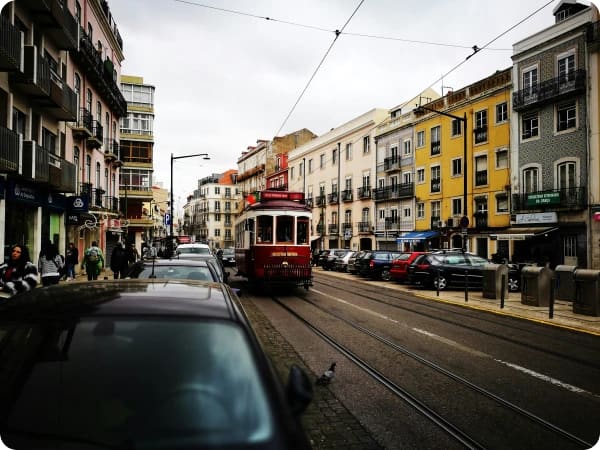
- Spårvagnar (Elétricos): Lissabons ikoniska gula spårvagnar är ett charmigt sätt att ta sig runt, särskilt i de kuperade områdena som Alfama och Graça. Spårvagn 28 är en populär turistlinje, men används också av lokalbefolkningen. Se upp för ficktjuvar på trånga spårvagnar.
- Linbanor (Ascensores): Lissabon har tre linbanor (Glória, Bica och Lavra) som underlättar resor i stadens branta backar.
- Färjor (Transtejo & Soflusa): Färjor förbinder Lissabon med Tagusflodens södra strand (Cacilhas, Almada, Seixal, Barreiro, Montijo). De bjuder på enastående utsikt över staden.
- Tåg (CP—Comboios de Portugal): CP driver pendeltågslinjer som förbinder Lissabon med kringliggande orter och städer, bland annat Cascais, Sintra och Azambuja, samt erbjuder långdistansresor till exempelvis Porto eller Faro.
- Taxi: Det finns gott om taxibilar i hela Lissabon. De är relativt prisvärda jämfört med andra större europeiska städer.
- Samåkningstjänster: Uber och Bolt används flitigt i Lissabon och är ofta billigare än taxi.
- Bil: Det kan vara utmanande att köra i Lissabon på grund av smala gator, tät trafik, begränsade parkeringsmöjligheter och aggressiva förare. Många expats, särskilt de som bor i stadskärnan, väljer att inte äga bil.
- Parkering: Det är ont om parkeringsplatser i centrala Lissabon, och de är dyra. Gatuparkering är ofta avgiftsbelagd, och parkeringsgarage kan vara kostsamma.
- ZTL (Zona de Tráfego Limitado): I vissa delar av stadskärnan finns trafikbegränsade zoner (ZTL), där endast boende och behöriga fordon får köra.
- Körkort: Om du planerar att köra i Portugal kan du behöva byta ut ditt utländska körkort mot ett portugisiskt.
- Lisboa Viva-kort: Det här är ett laddningsbart kort som kan användas i all kollektivtrafik i Lissabon (tunnelbana, bussar, spårvagnar, bergbanor och vissa färjor). Det är det smidigaste och mest prisvärda sättet att resa kollektivt. Du kan köpa och ladda kortet på tunnelbanestationer, i Carris-kiosker och hos andra auktoriserade återförsäljare.
B. Bank och ekonomi
- Öppna ett bankkonto: Det kan vara förvånansvärt byråkratiskt att öppna ett bankkonto i Portugal. Vanligtvis behöver du:
- Ditt pass
- Ditt NIF (Número de Identificação Fiscal)
- Adressbevis (till exempel en elräkning eller ett hyresavtal)
- Inkomstintyg (till exempel lönespecifikationer eller ett anställningsavtal)
- Vissa banker kan också kräva en minsta insättning.
Större banker i Portugal
- Caixa Geral de Depósitos (CGD)—statligt ägd bank
- Millennium BCP
- Novo Banco
- Santander Totta
- BPI
- Överföra pengar: Om du behöver överföra pengar till eller från Portugal kan du överväga tjänster som Wise (tidigare TransferWise), Revolut eller andra internationella leverantörer av penningöverföringar. De erbjuder ofta bättre växelkurser och lägre avgifter än traditionella banker.
- Bankomater (Multibanco): Bankomater finns i stor utsträckning i hela Lissabon och Portugal. De erbjuder flera tjänster utöver kontantuttag, bland annat betalning av räkningar, köp av mobiltelefonkredit och till och med konsertbiljetter.
C. Byråkrati i Portugal som expat (kontakter med Finanças, Segurança Social med mera)
Den portugisiska byråkratin är känd för att vara långsam, komplicerad och ofta frustrerande. Var beredd på pappersarbete, långa köer och flera besök på myndighetskontor.
- Finanças (skattemyndigheten): Du måste registrera dig hos Finanças för att få ditt NIF och lämna in din årliga skattedeklaration.
- Segurança Social (socialförsäkringen): Om du är anställd i Portugal måste du registrera dig hos Segurança Social och betala socialförsäkringsavgifter.
- AIMA: Om du är medborgare i ett land utanför EU behöver du kontakta AIMA för ditt uppehållstillstånd.
⚠️ Överväg att anlita en jurist, en redovisningskonsult eller en flyttkonsult för att få hjälp med att navigera i den portugisiska byråkratin, särskilt i mer komplicerade ärenden som visum, uppehållstillstånd och skattefrågor.
D. Att lära sig portugisiska som expat
Även om engelska talas allmänt i Lissabon, särskilt i turistområden och bland yngre generationer, rekommenderas det starkt att lära sig portugisiska för att få ett mer givande och integrerat liv.
Fördelar med att lära sig portugisiska
- Enklare vardag: Vardagliga ärenden (som att handla, sköta bankärenden och hantera byråkrati) blir mycket enklare.
- Bättre jobbmöjligheter: Öppnar upp för ett bredare utbud av jobbmöjligheter.
- Djupare kulturell förståelse: Gör det möjligt att knyta an till den portugisiska kulturen på ett mer meningsfullt sätt.
- Social integration: Underlättar för dig att bygga relationer med lokalbefolkningen.
- Resurser för att lära sig portugisiska:Språkskolor: Många språkskolor i Lissabon erbjuder kurser i portugisiska för utlänningar (t.ex. CIAL Centro de Línguas, Lusa Language School och International House Lisbon).
- Privatlärare: Många portugisiska lärare erbjuder privatlektioner, antingen på plats eller online.
- Online-resurser: Duolingo, Babbel, Memrise och andra appar och webbplatser för språkinlärning kan vara till hjälp för att lära sig ordförråd och grammatik.
- Språkbytespartner: Hitta en portugisisktalande person som vill lära sig ditt språk, så kan ni öva tillsammans.
- Språkbadsmetoden: Det bästa sättet att lära sig ett språk är att omge sig med det. Titta på portugisiska filmer och tv-program, lyssna på portugisisk musik och försök att tala portugisiska så mycket som möjligt.
E. Hur är tryggheten och säkerheten i Lissabon?
Lissabon anses generellt vara en trygg stad, med låg våldsbrottslighet. Småstölder (ficktjuveri och väskryckningar) kan dock vara ett problem, särskilt i turistområden, på fullsatt kollektivtrafik (i synnerhet spårvagn 28) och på natten.
- Var uppmärksam på omgivningen: Håll koll på dina tillhörigheter och var uppmärksam på vilka som befinner sig omkring dig.
- Förvara värdesaker säkert: Visa inte upp dyra smycken eller elektroniska apparater. Förvara plånboken och telefonen i en säker ficka eller väska.
- Undvik att promenera ensam på natten: I dåligt upplysta eller folktomma områden är det bäst att ta en taxi eller en samåkningstjänst.
- Rapportera alla incidenter: Om du utsätts för stöld ska du anmäla det till polisen (Polícia de Segurança Pública—PSP).
F. Shopping i Lissabon
- Stormarknader: Bland de största stormarknadskedjorna i Portugal finns Continente (Modelo Continente), Pingo Doce, Jumbo (Auchan), Lidl och Intermarché.
- Lokala marknader (Mercados): I Lissabon finns många traditionella marknader där du kan köpa färska råvaror, fisk, kött, ost och andra lokala produkter. Dessa marknader är ofta billigare än stormarknader och erbjuder en mer genuin shoppingupplevelse. (t.ex. Mercado da Ribeira, Mercado de Campo de Ourique, Mercado de Arroios).
- Köpcentrum (Centros Comerciais): I Lissabon finns flera stora köpcentrum med ett brett utbud av internationella och portugisiska varumärken. (t.ex. Colombo, Vasco da Gama, Amoreiras).
- Specialbutiker: I Lissabon finns många fristående butiker som säljer kläder, skor, accessoarer, böcker, antikviteter och andra varor.
G. Posttjänster i Lissabon
- CTT (Correios de Portugal): Portugals posttjänst. På CTT-kontor kan du skicka brev och paket, köpa frimärken och få tillgång till andra posttjänster.
H. Mobiltelefoner och internet i Portugal
- Större mobiloperatörer: MEO, Vodafone, NOS och NOWO.
- SIM-kort: Det är enkelt att skaffa ett kontantkort med ett portugisiskt telefonnummer.
- Internet: Höghastighetsinternet är allmänt tillgängligt i Lissabon.
I. Återvinningsregler i Lissabon
Portugal har ett omfattande system för avfallshantering och återvinning. Du behöver bara lägga avfallet i de avsedda behållarna. Behållarna är färgkodade:
- Blå: Papper och kartong
- Gul: Plast och metall
- Grön: Glas
- Grått/svart: Ej återvinningsbart avfall
Kulturlivet i Lissabon som expat
Lissabon har ett rikt och mångsidigt kulturliv där traditionellt portugisiskt kulturarv möter moderna influenser. Stadens historia, läge vid floden Tejo och Atlantkusten samt livliga konstnärsgemenskap bidrar alla till dess unika karaktär.
A. Fadomusik
Fado är en portugisisk musikgenre som kännetecknas av sina melankoliska melodier och texter, ofta med teman som längtan, förlust och saudade (ett unikt portugisiskt begrepp som rymmer nostalgi, melankoli och en längtan efter något som gått förlorat eller inte går att uppnå).
Även om fado är en kulturellt betydelsefull del av Lissabons historia är det snarare ett turistiskt inslag än en del av vardagslivet. Vi rekommenderar dock varmt att du tar dig tid att upptäcka och förstå den portugisiska kulturen.
Var du kan lyssna på fado
- Alfama: Den historiska stadsdelen Alfama är fados traditionella hemvist, med många fadorestauranger (casas de fado) där du kan lyssna på liveframträdanden, ofta i samband med middag. Några välkända fadorestauranger i Alfama är:
- Clube de Fado
- A Baiuca
- Sr. Fado de Alfama
- Parreirinha de Alfama
- Bairro Alto: Bairro Alto har också flera fado hus, ofta med en mer samtida eller turistinriktad atmosfär.
- Mouraria: Ännu en historisk stadsdel med en stark fado tradition.
Fadomuseer
- Museu do Fado (Alfama): Ägnat åt fadons historia och kultur.
B. Museer och konstgallerier i Lissabon
Lissabon har ett stort utbud av museer och konstgallerier för olika intressen:
Konst
- Museu Nacional de Arte Antiga (MNAA): Nationalmuseet för äldre konst, med en omfattande samling portugisisk och europeisk konst från medeltiden till 1800-talet.
- Museu Calouste Gulbenkian: Ett museum i världsklass med en mångsidig konstsamling som omfattar egyptiska, grekisk-romerska, islamiska, asiatiska och europeiska verk.
- Museu Coleção Berardo: Ett museum för modern och samtida konst med verk av Picasso, Warhol, Dalí och andra framstående konstnärer.
- MAAT (Museu de Arte, Arquitetura e Tecnologia): Ett museum för samtida konst i en iögonfallande modern byggnad vid floden Tejo.
- Museu Nacional de Arte Contemporânea do Chiado (MNAC): Nationalmuseet för samtida konst, med fokus på portugisisk konst från slutet av 1800-talet fram till i dag.
- Underdogs Gallery: Samtida urban konst.
Historia och kultur
- Museu de Lisboa: Flera platser runt om i staden berättar om Lissabons historia.
- Museu Nacional dos Coches: Nationalmuseet för hästvagnar, med en anmärkningsvärd samling kungliga vagnar.
- Museu da Marinha: Sjöfartsmuseet, som visar Portugals sjöfartshistoria.
- Museu do Oriente: Ägnat åt historien om Portugals närvaro i Asien.
- Museu Arqueológico do Carmo: Arkeologiskt museum inrymt i ruinerna av en gotisk kyrka.
Andra museer
- Museu da Marioneta: Dockmuseum
- Museu da Farmácia: Apoteksmuseum
C. Historiska platser i Lissabon
Lissabon är fullt av historiska platser som speglar stadens rika och mångfacetterade förflutna:
- São Jorge Castle: Ett moriskt slott med utsikt över staden och panoramavyer.
- Jerónimos Monastery (Belém): Ett magnifikt kloster byggt på 1500-talet, ett mästerverk inom manuelinsk arkitektur (portugisisk sengotik).
- Belém Tower: Ett befäst torn vid floden Tejo, också byggt i manuelinsk stil.
- Padrão dos Descobrimentos (Monument to the Discoveries): Ett monument som hyllar den portugisiska upptäcktsresornas epok.
- Lissabons katedral (Sé de Lisboa): Den äldsta kyrkan i Lissabon, med anor från 1100-talet.
- Praça do Comércio: Ett storslaget torg vid floden Tejo, där det kungliga palatset tidigare låg.
- Rossio-torget (Praça de D. Pedro IV): Ett livligt torg i hjärtat av Lissabon.
- Santa Justa-hissen: En hiss från 1800-talet som förbinder stadsdelen Baixa med stadsdelen Carmo.
- Aqueduto das Águas Livres: En imponerande akvedukt.
D. Festivaler och evenemang i Lissabon
Lissabon står värd för många festivaler och evenemang under hela året:
- Festas de Lisboa (juni): En månadslång hyllning till Lissabons skyddshelgon Santo António, med gatufester, parader, konserter och traditionella festligheter.
- NOS Alive (juli): En stor musikfestival med internationella och portugisiska artister.
- Super Bock Super Rock (juli): Ytterligare en populär musikfestival.
- Lisbon & Sintra Film Festival (november): En internationell filmfestival.
- MOTELx—Lisbon International Horror Film Festival (september): En skräckfilmsfestival.
- DocLisboa (oktober): En dokumentärfilmfestival.
- Out Jazz (sommaren): Gratis jazzkonserter i Lissabons parker och trädgårdar.
- Feira da Ladra (tisdagar och lördagar): En loppmarknad i Alfama.
E. Gastronomi i Lissabon
Det portugisiska köket är känt för sin färska fisk och skaldjur, smakrika grytor och läckra bakverk.
- Fisk och skaldjur: Lissabon är ett paradis för den som älskar fisk och skaldjur. Prova bacalhau (saltad torsk), sardinhas assadas (grillade sardiner), arroz de marisco (ris med fisk och skaldjur) och andra rätter med färska råvaror från havet.
- Pastéis de Nata: Den ikoniska portugisiska vaniljkrämstårtan. Det mest berömda stället att prova dem på är Pastéis de Belém i Belém.
- Bifanas: En traditionell portugisisk smörgås med marinerat fläskkött.
- Caldo Verde: En traditionell portugisisk soppa med potatis, grönkål och chouriço (korv).
- Vin: Portugal producerar ett stort utbud av utmärkta viner, däribland Vinho Verde (grönt vin), portvin och viner från Douro.
- Restauranger: Lissabon har ett mycket stort utbud av restauranger, från traditionella tascas (små, familjeägda restauranger) till restauranger med Michelinstjärnor.
F. Nattlivet i Lissabon
Lissabon har ett livligt nattliv med något för alla:
- Bairro Alto: Området är känt för sina många barer och klubbar och lockar en ung och livlig publik.
- Cais do Sodré: Ett tidigare red light-distrikt som har förvandlats till ett trendigt nattlivsområde med barer, klubbar och scener för livemusik. (Pink Street)
- LX Factory (Alcântara): Ett tidigare industrikomplex med trendiga barer, restauranger och butiker.
G. Utomhusaktiviteter i Lissabon
Lissabons milda klimat och vackra naturomgivningar gör staden idealisk för utomhusaktiviteter:
- Stränder: Lissabon ligger nära flera vackra stränder, bland annat:
- Carcavelos: En populär strand för surfing och solbad.
- Guincho: En vild och blåsig strand, känd för surfing och vindsurfing.
- Costa da Caparica: En lång sträcka med sandstränder söder om Lissabon.
- Parker och trädgårdar:Parque Eduardo VII: En stor park med panoramautsikt över staden.
- Jardim da Estrela: En vacker trädgård framför Estrelabasilikan.
- Parque Florestal de Monsanto: En stor skogsklädd park i utkanten av Lissabon, med vandrings- och cykelleder.
- Jardim Botânico de Lisboa: En botanisk trädgård med en varierad samling växter.
- Vandring: Det finns många vandringsleder i och runt Lissabon, bland annat i Sintrabergen och naturparken Arrábida.
- Surfing: Lissabon är ett populärt resmål för surfing, med flera surfskolor och surfbutiker.
- Segling: Tejo erbjuder möjligheter till segling och andra vattensporter.
Utflykter:
- Sintra: Ett UNESCO-världsarv med sagolika palats, slott och trädgårdar.
- Cascais: En charmig kuststad med stränder, en marina och en historisk stadskärna.
- Évora: En historisk stad med romerska ruiner, en medeltida katedral och en charmig gammal stad.
Socialt liv och integration i Lissabon som expat
Att skapa ett socialt liv och komma in i en ny kultur kan vara en av de mest givande och ibland utmanande aspekterna av att flytta till ett nytt land.
A. Expatgrupper och gemenskaper i Lissabon
Lissabon har en stor och aktiv expatgemenskap som erbjuder många möjligheter att få kontakt med andra utlänningar:
- Facebookgrupper: Det finns många Facebookgrupper för expats i Lissabon, för olika nationaliteter, intressen och yrkesgrupper. Några exempel är:
- Digitala nomader i Lissabon
- Expats i Lissabon
- Amerikaner i Portugal
- Britter i Lissabon
- Expats och lokalbor i Lissabon
- Meetup.com: Meetup är en plattform där du kan hitta och gå med i grupper utifrån gemensamma intressen. Det finns många Meetup-grupper i Lissabon för expats, digitala nomader och personer med särskilda hobbyer eller intressen.
- InterNations: InterNations är ett globalt nätverk för expats med en lokalavdelning i Lissabon. De anordnar evenemang och aktiviteter för medlemmar.
- Couchsurfing: Couchsurfing är främst känt för sin boendeplattform, men har också en livlig gemenskap i Lissabon med veckovisa träffar och evenemang.
- Timeleft Events: Ett helt nytt portugisiskt företag som schemalägger middagar runt om i Lissabon
B. Träffa lokalbor i Lissabon som expat
Det är lätt att få kontakt med andra expats, men det kan krävas mer ansträngning att bli vän med lokalbor. Det är dock viktigt för att verkligen integreras i det portugisiska samhället.
- Lär dig portugisiska: Även grundläggande kunskaper i portugisiska hjälper dig långt med att få kontakt med lokalbefolkningen.
- Gå på kurser eller workshoppar: Gå en matlagningskurs, danskurs, keramikkurs eller någon annan aktivitet som intresserar dig. Det här är ett utmärkt sätt att träffa människor med gemensamma intressen.
- Volontärarbeta: Volontärarbete är ett givande sätt att bidra till samhället och träffa människor som brinner för en sak.
- Gå med i en idrottsförening eller ett gym: Att ägna sig åt idrott är ett utmärkt sätt att träffa människor och hålla sig aktiv.
- Besök lokala evenemang: Gå på festivaler, konserter, marknader och andra lokala evenemang.
- Var öppen och vänlig: Le, hälsa och var öppen för att inleda samtal med människor du träffar.
- Använd språkbytespartners: Hitta någon som talar portugisiska och vill lära sig ditt språk, så kan ni öva tillsammans.
C. Portugisisk kultur och etikett för expats
Att förstå portugisisk kultur och etikett kan hjälpa dig att undvika missförstånd och bygga starkare relationer med lokalbefolkningen.
- Hälsningar: Det är vanligt att hälsa på människor med ett handslag eller en kindpuss på båda kinderna (mellan kvinnor eller mellan en man och en kvinna).
- Artighet: Portugiser är i allmänhet artiga och formella, särskilt mot personer de inte känner väl. Använd ”Senhor” (herr) och ”Senhora” (fru) när du tilltalar personer du inte känner, såvida de inte ber dig att använda deras förnamn (men de kan tilltala dig med herr eller fru följt av ditt förnamn).
- Punktlighet: Även om punktlighet uppskattas är inställningen till tid mer avslappnad i Portugal än i vissa andra kulturer. Det är inte ovanligt att människor kommer några minuter för sent till sociala tillställningar. Om du blir bjuden på en födelsedagsmiddag kommer du att se gäster anlända mer än en halvtimme efter utsatt tid.
- Etikett vid måltider:
- Vänta på att bli visad till ett bord på restauranger.
- Du kan höra ”Bom apetite!” (smaklig måltid!) innan ni börjar äta.
- Lägg inte armbågarna på bordet.
- Det är artigt att lämna en liten dricks (cirka 5–10 %) på restauranger, men det är inget krav.
- Familj: Familjen är mycket viktig i den portugisiska kulturen.
- Respekt för äldre: Äldre behandlas i allmänhet med respekt.
- Kommunikationsstil: Portugiser kan vara ganska direkta och rättframma i sin kommunikation, men de värdesätter också artighet och diplomati.
D. Att hantera kulturchock i Lissabon som expat
Att flytta till ett nytt land kan kräva en stor omställning, och det är normalt att uppleva kulturchock.
- Ha tålamod med dig själv: Ge dig själv tid att anpassa dig till den nya kulturen.
- Lär dig om portugisisk kultur: Ju mer du förstår om lokala seder och traditioner, desto lättare blir det att anpassa sig.
- Ta kontakt med andra expats: Att dela dina erfarenheter med andra expats kan hjälpa dig att känna dig mindre ensam.
- Håll kontakten med din hemkultur: Håll kontakten med vänner och familj där hemma och sök även efter lokala grupper med landsmän.
- Sök stöd vid behov: Om du har svårt att anpassa dig ska du inte tveka att söka professionell hjälp hos en terapeut eller rådgivare.
E. Skapa ett socialt nätverk i Lissabon
Att bygga upp ett starkt socialt nätverk är avgörande för att känna sig hemma och trivas på en ny plats.
- Ta initiativ: Vänta inte på att andra ska ta kontakt med dig. Ta själv initiativ till att höra av dig till andra.
- Tacka ja till inbjudningar: Även om du känner dig trött eller tveksam, försök att tacka ja till sociala inbjudningar.
- Gå med i grupper och delta i aktiviteter: Hitta grupper och aktiviteter som passar dina intressen.
- Var öppen för nya upplevelser: Prova nya saker och gå utanför din bekvämlighetszon.
- Var dig själv: Försök inte vara någon du inte är. Äkthet är avgörande för att skapa genuina kontakter.
Portugisisk byråkrati när du bor i Lissabon som expat
Det kan vara komplicerat att hantera de juridiska och administrativa aspekterna av att bo i Portugal, särskilt för personer som inte är EU-medborgare.
A. Visum och uppehållstillstånd i Portugal
- Medborgare i EU/EES och Schweiz: Medborgare i EU/EES-länder och Schweiz behöver inget visum eller uppehållstillstånd för att bo och arbeta i Portugal. Om du planerar att stanna längre än tre månader måste du dock registrera dig hos ditt lokala kommunhus (câmara municipal) och skaffa ett Certificado de Registo (registreringsbevis).
- Medborgare utanför EU: Medborgare utanför EU behöver i allmänhet visum för att resa in i Portugal och uppehållstillstånd för att stanna längre än 90 dagar. Vilken typ av visum och uppehållstillstånd du behöver beror på syftet med din vistelse (till exempel arbete, studier, pensionering och investeringar).
- D7-visum (visum för passiva inkomster): Detta visum är populärt bland pensionärer, personer med passiva inkomster och distansarbetare som kan visa att de har tillräckliga ekonomiska medel för att försörja sig utan att arbeta i Portugal. Du måste visa att du har regelbundna passiva inkomster, till exempel pension, hyresintäkter eller avkastning på investeringar, som uppgår till minst den portugisiska minimilönen (kontrollera de aktuella kraven eftersom beloppet kan variera). D7-visumet ger inledningsvis tillfälligt uppehåll, som senare kan omvandlas till permanent uppehåll.
- D2-visum (visum för entreprenörer och självständiga yrkesutövare): Detta visum är avsett för entreprenörer, frilansare och självständiga yrkesutövare som vill starta ett företag eller erbjuda tjänster i Portugal. Du behöver lägga fram en affärsplan och visa att du har tillräckliga ekonomiska resurser för att investera i ditt företag eller försörja dig själv.
- Golden Visa (ARI—Autorização de Residência para Atividade de Investimento): Golden Visa-programmet erbjuder uppehållstillstånd i utbyte mot investeringar i Portugal. Investeringar i fastigheter i Lissabon, Porto och kustområden berättigar dock inte längre till detta. Godkända investeringar omfattar nu:
- Kapitalöverföring på minst ett visst belopp (kontrollera gällande bestämmelser för det exakta beloppet).
- Skapande av ett visst antal arbetstillfällen.
- Investering i vetenskaplig forskning.
- Investering i konstnärlig produktion eller kulturarv.
- Investering i riskkapitalfonder eller investeringsfonder med inriktning på kapitalisering av företag.
- Studentvisum: För personer som inte är EU-medborgare och vill studera vid ett portugisiskt universitet eller en annan utbildningsinstitution.
- Arbetsvisum: För dig som har ett jobberbjudande.
- Andra visumalternativ: Det finns andra visumalternativ beroende på dina specifika omständigheter. Det är bäst att rådgöra med den portugisiska ambassaden eller konsulatet i ditt hemland eller med en immigrationsjurist i Portugal.
- Ansökningsprocessen: Visumansökan kan vara komplicerad och tidskrävande. Det är viktigt att samla in alla nödvändiga dokument och följa instruktionerna noggrant.
B. Beskattning i Portugal för expats
- Skatterättslig hemvist: Du anses i allmänhet ha skatterättslig hemvist i Portugal om du tillbringar mer än 183 dagar i landet under ett kalenderår eller om du har en permanent bostad till ditt förfogande i Portugal.
- Skatteregistreringsnummer (NIF): Du måste skaffa ett NIF (Número de Identificação Fiscal) för att kunna utföra officiella ärenden i Portugal, bland annat öppna ett bankkonto, hyra en lägenhet, köpa en bostad, få ett jobb och betala skatt.
- Inkomstskatt: Portugal har ett progressivt inkomstskattesystem med skattesatser från 14.5% till 48% (2023, kontrollera om det finns uppdateringar).
- Regimen för personer utan stadigvarande bosättning (NHR): NHR-regimen erbjuder skatteförmåner för nya invånare i Portugal som uppfyller vissa kriterier. Enligt NHR-regimen kan kvalificerande inkomster från utlandet (t.ex. pensioner, utdelningar, räntor och royaltyintäkter) vara undantagna från portugisisk skatt under en period på 10 år. Inkomster från anställning och egenföretagande inom aktiviteter med ”högt förädlingsvärde” kan beskattas med en fast skattesats på 20%. NHR-regimen genomgår dock förändringar, och det är viktigt att söka aktuell professionell rådgivning.
- Skatteavtal: Portugal har skatteavtal med många länder för att undvika dubbelbeskattning.
- Skattedeklaration: Skattedeklarationer (Declaração de IRS) lämnas vanligtvis in online varje år mellan april och juni.
C. Juridisk rådgivning för expats i Portugal
Det är ofta klokt att söka juridisk rådgivning från en advokat (advogado) i Portugal, särskilt i komplicerade frågor som problem med visum och uppehållstillstånd, fastighetsköp och företagsstart.
För- och nackdelar med att bo i Lissabon som expat
Lissabon erbjuder en lockande blandning av historia, kultur och klimat samt en relativt avslappnad livsrytm. Staden har blivit ett populärt resmål för expats, digitala nomader, pensionärer och familjer som söker ett nytt äventyr.
Det är dock viktigt att flytta till Lissabon med realistiska förväntningar och en grundlig förståelse för både fördelarna och nackdelarna.
Fördelar:
- Rik historia och kultur: Lissabon är en stad rik på historia, med ett livligt kulturliv och ett stort utbud av museer, historiska platser, fado musik, festivaler och evenemang.
- Vacker miljö: Stadens läge vid floden Tejo och närheten till stränderna bjuder på storslagna vyer och möjligheter till utomhusaktiviteter.
- Milt klimat: Lissabon har medelhavsklimat med varma, torra somrar och milda, regniga vintrar.
- Välkomnande människor: Portugiser anses i allmänhet vara vänliga och välkomnande mot utlänningar.
- Relativt överkomliga levnadskostnader (jämfört med vissa andra västeuropeiska huvudstäder): Även om levnadskostnaderna, särskilt boendekostnaderna, har ökat avsevärt kan Lissabon fortfarande vara billigare än städer som London, Paris eller Dublin, särskilt om du har en lön som inte betalas ut i Portugal.
- God mat och gott vin: Det portugisiska köket är utsökt och varierat, med färska skaldjur, smakrika grytor och utmärkta viner.
- Bra kollektivtrafik: Lissabon har ett välutvecklat kollektivtrafiksystem som gör det enkelt att ta sig runt utan bil.
- Växande tekniksektor: Lissabon har blivit ett betydande europeiskt teknikcentrum som lockar till sig nystartade företag och multinationella bolag.
- Internationell gemenskap: Det finns en stor och aktiv expatgemenskap i Lissabon.
- Bra sjukvård: Portugal har en nationell sjukvårdstjänst (SNS) som erbjuder allmän sjukvårdstäckning, och det finns även en blomstrande privat sjukvårdssektor.
Nackdelar:
- Bostadskris: Den största utmaningen för expats i Lissabon är bostadskrisen, som kännetecknas av kraftigt stigande hyror, hård konkurrens och krävande hyresvärdar.
- Ökande levnadskostnader: Även om det fortfarande är relativt prisvärt jämfört med vissa andra huvudstäder, ökar levnadskostnaderna i Lissabon, särskilt boendekostnaderna.
- Byråkrati: Den portugisiska byråkratin kan vara långsam, komplicerad och frustrerande.
- Lägre löner: Lönerna i Portugal är i allmänhet lägre än i andra västeuropeiska länder.
- Konkurrens på arbetsmarknaden: Det kan vara hård konkurrens på arbetsmarknaden, särskilt för den som inte talar portugisiska.
Avslutande tankar och råd
Lissabon är en fängslande stad som erbjuder många expats hög livskvalitet. Men det är inget paradis utan utmaningar. Bostadskrisen är ett betydande hinder, och de stigande levnadskostnaderna är en växande oro.
Innan du flyttar är det viktigt att:
- Gör din research: Ta noga reda på allt om livet i Lissabon, inklusive levnadskostnader, bostadsmarknaden, jobbmöjligheter, hälso- och sjukvård, utbildning och kultur.
- Besök Lissabon: Besök om möjligt Lissabon innan du bestämmer dig för att flytta. Ägna tid åt att utforska olika stadsdelar, prata med lokalbefolkningen och expats och lära känna staden.
- Ha realistiska förväntningar: Förvänta dig inte att Lissabon är ett billigt, oupptäckt paradis. Var beredd på utmaningar och var anpassningsbar.
- Lär dig portugisiska: Även grundläggande kunskaper i portugisiska kommer att förbättra din upplevelse avsevärt.
- Bygg ett nätverk: Ta kontakt med andra expats och lokalbefolkningen.
- Ha tålamod: Det kan ta tid att hitta bostad, ett jobb och komma till rätta.
- Var beredd på byråkrati: Ha tålamod och var uthållig när du hanterar portugisisk byråkrati.
- Se till att ha en ekonomisk buffert: Se till att du har tillräckliga ekonomiska resurser för att täcka dina initiala utgifter och eventuella oförutsedda kostnader.
- Överväg professionell rådgivning: Sök råd från jurister, revisorer och flyttkonsulter, särskilt i komplexa frågor som visum, uppehållstillstånd och skatter.

Avslutande ord
Om du är beredd på utmaningarna och tar vara på möjligheterna kan Lissabon vara en givande och berikande plats att bo på.
Det är en stad med en unik blandning av gammaldags charm och modernt liv, där du kan njuta av ett rikt kulturliv, en vacker miljö och en välkomnande gemenskap. Men gå in i det med öppna ögon och var beredd på att arbeta för det.
Dela denna artikel










 FLYTTA INOM EUROPA