Aima
Residence
21/09/2026

How to Apply for Your First AIMA Residence Permit Portugal

AIMA residence permit Portugal

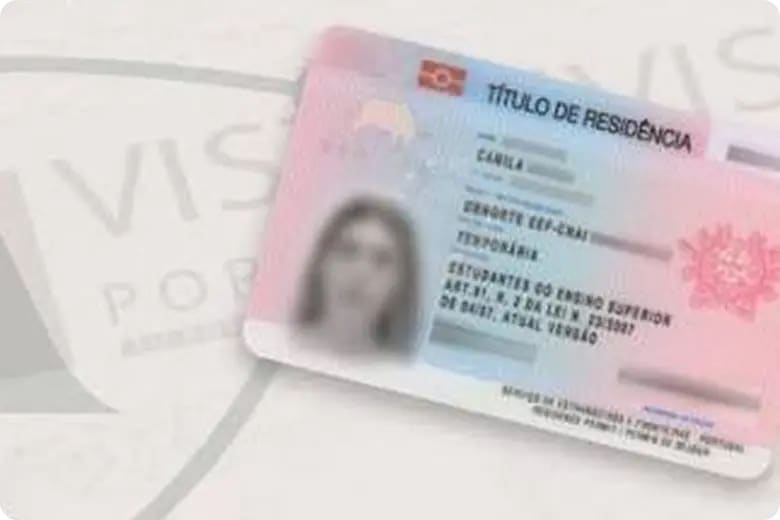
Your first AIMA residence permit is the document you apply for that turns a Portugal residence visa into the legal right to remain and live here. If you arrived on a D visa issued by a Portuguese consulate, the next step is to apply for your first AIMA residence permit in Portugal through the Agência para a Integração, Migrações e Asilo. In practice that means you book an AIMA appointment, submit your residence permit application with the documents needed, give your biometrics, pay the fee, and receive your residence card.

Below, we go through the initial AIMA residence permit application: how to apply for a Portugal residence permit, the documents needed, the AIMA residency permit appointment process, the fees, how to check your application status, how long a Portugal residence permit stays valid, and how to renew it. It follows the standard route for a residence permit after a consular visa, and flags where the Golden Visa and the EU family route work differently.

Most of the stress around the residence permit comes from treating it as one event. It is really a sequence, and each stage has its own rules, its own waiting time, and its own things that can go wrong:

residence visa → AIMA appointment → application → assessment → decision → residence card

Get that mental map right and the rest gets easier, because the single most useful thing you can know at any moment is which stage you are actually in. Waiting for an appointment, waiting for a decision, and waiting for the printed card are three different waits, and people who blur them together end up chasing the wrong office about the wrong thing.

What is an AIMA residence permit?

An AIMA residence permit is the authorization that lets a non-EU national reside in Portugal after arriving on a residence visa. AIMA is the government agency responsible for migration, integration and legal residence, which took over this work from the old SEF, and it is the body responsible for receiving your application, taking your biometrics, deciding the case, and issuing the residence card.

A residence visa and a residence permit are not the same document, and the difference trips up a lot of new arrivals. Your residence visa is issued before the move, by a Portuguese consulate, and its job is to get you into the country. Your residence permit is issued after you arrive, by AIMA, and it is what makes you a legal resident. If you searched for an "AIMA visa permit," the thing you need once you land is the residence permit, and it is a separate step from the visa that brought you.

Is your residence permit already approved once your visa is approved?

No. The consular visa and the residence permit are linked stages of the same move, but they are decided separately. Holding the visa does not mean AIMA has granted the permit. AIMA still has to receive your application and can ask for current or additional documents before it decides.

Who applies for a first residence permit this way?

This is the route for people who arrived on a Portuguese residence visa, such as the D7 (passive income), the D8 (remote work), the D1 work route, the D3 route for highly skilled professionals, or the D4 student visa, and now need their first residence permit.

Two other first-card situations run on separate tracks and should not be mixed in with this one. A non-EU family member of an EU citizen applies for a residence card under a different law (the Article 15 route), and an investor applies through the Golden Visa (ARI) programme, which has its own portal, documents and fees. Both are covered briefly near the end, but the main sequence below is the standard consular-visa route.

How do you apply for a residence permit in Portugal?

For a standard residence-visa holder, the practical process is built around one appointment. You check whether AIMA already gave you one, request it if not, attend with a complete file, and then wait out the assessment and the card.

Here is the whole application process in five steps, before we go into the parts that actually cause trouble.

Step 1: Check whether your AIMA appointment is already booked

Some residence visas are issued with the AIMA appointment already scheduled, and the date travels with your visa paperwork. Others are not. Before you do anything else, read the documents the consulate gave you with your visa, because requesting a second appointment when you already have one only tangles your file.

Step 2: Request an appointment if your visa did not include one

If there is no appointment, you schedule an AIMA appointment yourself through AIMA's Contact Form, the online service on the AIMA portal. For a non-CPLP consular visa, AIMA's instruction is to select the subject type 'Autorização de Residência' and then the option 'Autorização de residência com visto consular (Não CPLP)', enter your passport and visa numbers, and upload a copy of each. If the form has no option that fits your case, AIMA currently accepts a request by email to geral@aima.gov.pt with 'Pedido de Agendamento' in the subject line. Meeting the appointment requirements up front, the right consular visa and a clean set of numbers, is what gets an AIMA visa appointment moving. Nationals of a CPLP country follow a parallel option in the same form, under the CPLP Mobility Agreement.

An AIMA appointment is free. AIMA has repeatedly warned that it never charges for scheduling, so any site charging you simply for access to an appointment is not an official channel. A real payment request only appears later, inside AIMA's own system.

Step 3: Prepare your document file

Build the file around your specific route and the type of residence permit you hold, not around the shortest list another applicant got away with. The core documents are covered in their own section below, along with the route-specific evidence and the supporting papers that individual offices sometimes ask to see.

Step 4: Attend the appointment

At the appointment you submit your application in person: AIMA checks your identity, passport and visa, reviews your supporting documents, takes your biometric data, and confirms or collects the fee. Once the application is registered you get an application confirmation, a receipt with a process number. Keep it, because that number is how you follow the case and send any missing documents later.

Step 5: Wait for the decision and the card

After the appointment your application moves into assessment, AIMA issues a decision, and only then is the residence card produced and delivered. That gap between an approved decision and a card in your hand is where most people get anxious, so it has its own section further down.

What is the AIMA appointment process, and why is it the hard part?

Securing the AIMA appointment is the single biggest hurdle of a first residence permit, and it is mainly done through the AIMA online service portal. Once you are at the counter with a complete file, the appointment itself is usually straightforward. Getting the date is what is unpredictable.

What if your appointment is many months away?

An appointment already sitting in your file does not lock you out of asking for a better one. In mid-2026 AIMA confirmed that consular-visa holders can use the Contact Form to request another appointment even when one has already been assigned by the consulate, and some applicants report getting a considerably earlier date this way.

The trade-off is location. An earlier slot is often in another city, and applicants who live near Lisbon or the Algarve are regularly reassigned to offices further inland or north. If speed matters more than distance, be ready to travel; if it does not, keep the slot you have. Once AIMA has an open request on file, the system may also refuse a second one, so resubmitting is not a reliable lever.

Why are some applicants paying before the appointment?

Traditionally the fee was paid at the counter. Through 2026, a growing number of first-permit applicants describe a different sequence: they submit the Contact Form request, AIMA asks them to create an account on its services platform and pay the fee first, and only then proposes a date. It does not happen to everyone, and it has not been published as a universal rule, but paying before you are scheduled is no longer unusual. Keep the DUC (the single payment document AIMA generates), the bank confirmation and a screenshot of the payment status, because applicants report one AIMA screen showing a payment as done while another still shows it as owing.

What happens on the day?

Expect AIMA to check your passport and visa, go through your documents, take fingerprints and a photo, register the application and handle the fee. Applicants often report an officer scanning only part of a much larger file, which is not a reason to have left the rest at home. Different officers ask for different things, and the safest position is a complete file rather than an argument at the desk.

What documents are needed for a residence permit?

For a standard first application, AIMA's published requirements are the starting point: a valid passport or other valid identification, your valid residence visa, proof of means for your category, and proof of address in Portugal. On top of those core application documents your route adds its own, and AIMA states plainly that an incomplete file can be refused, so the file needs to be built with care rather than assembled at the last minute.

Documents on AIMA's official list

If a document is on AIMA's list for your case, bring it. Someone in a Facebook group saying they were not asked for it does not make it optional, and neither does another applicant on the same visa being processed without it. One officer skipping a document at someone else's appointment tells you nothing about yours. Community experience is worth a lot for knowing what might happen; it does not overrule the official checklist.

Alongside the core papers, get your Portuguese numbers in order before the appointment. Your NIF (tax number) is needed almost everywhere, and AIMA increasingly expects a NISS (social security registration) on file for certain cases. Health coverage is part of the picture too, through private health insurance or registration with the public health service.

Documents that depend on your visa route

The route that brought you shapes what AIMA wants to see:

  • D7 applicants show current evidence of the passive or recurring income the route rests on, not only the figures filed for the visa.
  • D8 applicants show current proof of remote employment or independent activity, plus the income tied to it; officers in 2026 report cross-checking an employment contract or work contract against invoices and bank statements.
  • Work and highly qualified routes show the current employment or professional relationship behind the permit, and a later change of employer can affect it.
  • Student routes turn on proof of admission or enrollment and the conditions attached to the study permit.

Do you need a new criminal record certificate?

Not automatically. For a standard first permit, a fresh foreign criminal record certificate is not presented by AIMA as a universal requirement the way it is for some other routes, and many applicants are processed without one. Even so, some offices have asked individual applicants for an updated certificate, while others have not.

The practical move is to prepare, not to gamble. Before you leave your home country, find out how to obtain a fresh certificate, whether it needs an apostille or other legalization, whether it needs translation, and how long that takes. What you want to avoid is discovering, after AIMA asks, that the easiest place to get or legalize the document was the country you just left. If AIMA does ask for one in your case, providing it is the priority; only if it is genuinely hard to obtain is it worth taking legal advice on the request rather than treating another applicant's smoother experience as a reason to skip it.

What counts as proof of accommodation?

Accommodation is where preparation pays off most, because officers have been looking at it more closely. AIMA wants a declaration of your address and evidence of the legal basis on which you occupy the home: registry evidence if you own it, or the landlord or accommodation documentation if you rent.

Where a landlord, a management company or another party sits between you and the owner, an officer may want to see the full chain of authority, showing that whoever signed your lease actually had the right to rent the property to you. If anything about ownership or your right to live there is not obvious from a single document, carry enough to make it easy to follow. Applicants have had appointments interrupted or rescheduled over exactly this, so arriving able to show the chain is faster than arguing it was not required.

Should you bring documents AIMA might not ask for?

Yes, when they are relevant to your case. There is a difference between a coherent supporting file and hauling in every document ever mentioned in an immigration group. If a document is officially required, bring it even if a forum says nobody is ever asked for it. And if AIMA specifically requests something after the appointment, provide it wherever you reasonably can, rather than deciding the request is invalid because it was not on a checklist. AIMA is the authority deciding your case; supplying what it asks for is almost always faster than contesting it.

How much does the first AIMA residence permit cost in 2026?

For a standard temporary permit, AIMA's fee table, in force since early 2026 and re-indexed each year, has two lines that are billed together.

Standard temporary residence permitStandardWith 25% reduction
Reception and analysis€133.00€99.80
Grant of the permit€114.30€85.80
Total€247.30€185.60

In practice, first-permit applicants in 2026 commonly report a single charge of €185.60, the reduced total, because AIMA applies the 25% reduction in the situations its rules define, including use of its digital channel. Always pay the amount your own case generates rather than a figure copied from someone else.

One number causes constant confusion: the €307.20 (or €230.40 reduced) that circulates alongside these fees is a different charge entirely. It is the fee for assessing a request to be exempted from the consular-visa requirement, a route used by certain work and investment cases. If you already arrived on a D visa, it is not your fee.

The Golden Visa (ARI) runs on a far higher scale, with reception at €842.80 and the grant at €8,418.90 (€632.10 and €6,314.20 reduced), which is another reason it is treated as its own process. A residence card for an EU citizen's family member, the Article 15 route, follows a separate, much lower schedule under Law 37/2006: an in-person issue is €18 for applicants over 25 and €15 for those under 25, with reduced, exempt and urgent rates besides.

What happens after your AIMA appointment?

Attending the appointment starts the assessment; it does not end the process. Understanding the steps that follow is what stops the wait from feeling like a black box.

Your application goes into assessment

AIMA reviews whether the legal and documentary conditions are met while your application is in processing. It may decide from the file as submitted, or come back asking for more evidence.

If AIMA asks for more documents

A request for additional documents does not mean a refusal; it means AIMA wants more before deciding. There is an official channel for sending documents into a pending case, and it asks for the process number from your appointment receipt, which is why that receipt matters. Respond as quickly as you reasonably can and keep a copy of everything you send.

AIMA issues a decision

A first application should generally be decided within 90 days, and since Law 62/2026 took effect in mid-September 2026 that period can be extended by a further 30 days in exceptional, justified cases, with the applicant informed. That is a decision deadline for the initial grant. It is not a promise that the card is printed and delivered inside 90 days, and a renewal runs on its own separate deadline.

Approval is not the same as a delivered card

A favorable decision is one stage; producing and posting the residence card is another. This is exactly why an application can read as approved while you are still waiting on the physical card, sometimes for a few more weeks, since delays at the printing and delivery stage are common. If delivery fails, the card can be held for collection or returned to AIMA, so keep your address current and report any change of address in AIMA's records.

How do you check your AIMA application status?

Once the file is in, the question is always the same: what is the status of my application? You check your AIMA application status and track an AIMA application through the AIMA portal, using the process-tracking option on the Contact Form and the number from your receipt, rather than relying on email alone, since applicants report a status changing before any separate message arrives. That is how you follow a submitted application through to a decision.

Application tracking is not always tidy. Keep your appointment notice, your process number, your payment confirmation and screenshots of any status updates together in one place. If a portal stops showing your submitted application or the displayed status turns inconsistent, that record is what protects you. And do not measure your own progress against someone else's card-delivery date or reported processing time: the same stage can take very different lengths of time from one office to the next.

How long does a first residence permit take in 2026?

Two answers sit behind this question, and keeping them apart saves a lot of worry. There is the legal deadline, the 90 days (plus a possible 30) that AIMA has to decide, and there is the actual processing time applicants live through, which the law does not govern.

Self-reported cases shared across expat communities give a useful, if unofficial, picture of first applications that reached the appointment stage in 2026. Among completed cases, the decision came a median of about 19 days after the appointment, the card followed a median of another 10 to 11 days, and the whole appointment-to-card stretch ran a median of roughly five weeks, with about 8 in 10 completed cases finishing within about nine weeks.

Read that as a snapshot, not a forecast. It only counts people who already reached an outcome, and trackers miss those who get the card and never update their entry, so the honest takeaway is that completed 2026 cases often moved from appointment to card in weeks rather than months, while the spread stayed wide enough that no single number predicts an individual case. AIMA does not publish official waiting times, processing time varies by office, and delays are common, so treat a delay at one stage as a stage-specific problem rather than a sign the whole case has stalled. For anyone who arrived without an appointment, the longest wait usually sits before the application is even lodged, in the gap between the Contact Form request and the proposed date.

What if your appointment falls after your visa expires?

This is common, because an appointment can be scheduled well beyond the expiry printed on a D visa. An appointment date after your visa expires does not mean you should abandon it or invent another route. Keep your visa, your appointment confirmation or pending request, and any AIMA correspondence, because together they show what stage of the process you are in.

International travel is where it gets delicate. A pending-application receipt is not a visa or a residence card, and it is not automatically a valid re-entry document at every border, especially once the underlying visa has expired. If international travel is unavoidable while your documents are in transition, check the rules for your nationality and your exact situation before booking, rather than relying on another applicant's border story.

How long is the AIMA residence permit valid?

A standard first residence permit is a temporary residence permit, and its validity period is generally two years from the date the card is issued, depending on the permit type. After that the residence permit validity extends in successive three-year terms through renewal, unless your specific route sets a different term. Each renewal keeps your valid residence unbroken.

The validity of the permit is not the same as the validity of the visa that brought you. The visa can expire while the residence process runs on its own timeline, and your legal residence is defined by the permit and its renewals, not by the old visa.

How do you renew an AIMA residence permit?

The renewal process is a separate procedure from the first application, and it is now far simpler. Instead of an in-person appointment, most renewals run online through AIMA's renewal portal: you start the AIMA renewal application, pick the route that matches your permit, submit the documents, pass the automatic checks against tax and social security, pay, and in most cases never visit an office.

The renewal requirements are lighter than a first application, but they still expect your NIF active and your NISS registered, valid proof of accommodation and income, health coverage, and a criminal record certificate where it applies. Start the process before the permit has expired: your right of residence generally continues for a period after the card's expiry while a submitted renewal is processed, but an expired permit with no renewal underway is the situation to avoid, so renew your residence permit early, and carry both the old card and the submission proof until the renewed card arrives, so that you remain a legal resident throughout.

What are the benefits of AIMA residency?

The benefits of AIMA residency go beyond simply being legal. The AIMA advantages are the reason the paperwork is worth it: with legal residence you can live and work in Portugal, register with and use the public health service, open and run a bank account without the friction foreign residents face before they hold a permit, enrol children in school, and travel within the Schengen area on your card and passport. Living in Portugal as a resident, rather than on a visa, is what makes daily life work, which is the whole point of AIMA and its integration and migration role.

These advantages are why residence permits matter beyond the plastic card, and they hold as long as you remain a legal resident. Residency also starts a clock that matters later: time spent as a legal resident on temporary permits counts toward permanent residence, or permanent residency, after five years, and toward eligibility for Portuguese citizenship under the Portuguese language and residence conditions that apply, which usually means passing a basic Portuguese language test. Each renewal you keep, and each receipt you file, is part of the record those later applications rest on, which is one more reason to stay organized from the first permit onward.

Is the Golden Visa the same process?

No. Portugal's Golden Visa, formally the ARI, is a separate residence-by-investment route. The application is registered through its own ARI portal, the documents and qualifying investment are uploaded there, the fee is generated, and AIMA schedules an in-person visit for documents and biometrics only once the case reaches that stage. Its requirements, fees and residence conditions are specific to the investment regime, so they should be checked on their own rather than mixed with the standard D-visa route. The Golden Visa can eventually count toward permanent residence or citizenship, but those are later steps, not automatic results of the ARI.

What about family members of an EU citizen?

A non-EU national joining an EU-citizen family member in Portugal applies for a residence card under the EU-family route, a form of family reunification, rather than the standard consular-visa permit. The card is requested at AIMA, by appointment, when the family member will remain in Portugal for more than three months, and the document set turns on proof of the family relationship and of the EU citizen being joined. The fees and the timeline applicable to this route differ from the consular-visa permit, so treat it, like the Golden Visa, as its own category.

How can AnchorLess help you with your first AIMA residence permit?

Most of this you can do yourself, and the honest truth is that no service controls when AIMA books you or when it decides. Where an outside hand helps is before you are at the counter, making sure the file is right, because a missing or inconsistent document is what turns one appointment into two.

AnchorLess can review your AIMA file for your specific route, so gaps in the required documents, the accommodation chain or your income evidence surface ahead of the appointment rather than at it. Where your case depends on foreign documents, we can arrange certified translation and notarization, which is usually the slow part when a criminal record or a civil document has to be apostilled and translated in time. And if your situation needs legal input, an immigration consultation connects you with someone who can weigh it.

What none of that does is replace AIMA or promise an appointment or an approval, which stay with the agency. AnchorLess supports relocations to Portugal and Spain, but the value here is simple: arriving prepared, so the parts you control are not the ones that hold you up.


Key Takeaways

Getting the first permit right is mostly about preparation

You cannot control which office you are assigned, how fast AIMA decides, or when the card is posted. You can control the file you walk in with, and that is what separates a clean first appointment from a wasted one.

Two applicants with the same visa can still have different experiences at AIMA, because officers ask for different things. Community reports are useful for knowing what might come up; they are not a licence to skip an official requirement. So if AIMA lists it, bring it. If it reasonably helps prove something AIMA has to check, bring it. If AIMA asks for it, make providing it the priority. Being ready for more than the minimum is nearly always cheaper than losing weeks of your move to Portugal because the one document you left behind was the one your case needed.

Share this article

Share this article

Join a community of 10,000+ expats
Get the weekly tips, success stories, and step-by-step guides we share with our members to make their move a success.
Star Trustpilot
Star Trustpilot
Star Trustpilot
Star Trustpilot
Star Trustpilot
I love AnchorLess! They have been fantastic for my move to Portugal with the NIF, checking account, lawyer and tax consultation. I will be happy with when this process is over, but at least the journey has been smoother with them.
LD
Lisa D
From South Africa
Star Trustpilot
Star Trustpilot
Star Trustpilot
Star Trustpilot
Star Trustpilot
Guilherme was the best! I had so many questions and moving parts and he was responsive, always professional, and went above and beyond to help me with everything! He is a PRO!!!!
DS
Debra Savage
From The United States

Our readers also viewed

portuguese citizenship through parent
Portuguese
Citizenship
06/07/2026
If a parent was Portuguese when you were born, you likely qualify already. See who's eligible for ci...
Brenda
Brenda
Content Manager
portuguese citizenship grandparent guide
Portuguese citizenship grandparent
Portuguese nationality grandchild
06/07/2026
Portuguese citizenship through a grandparent got stricter in 2026: you now must show language, cultu...
Brenda
Brenda
Content Manager
Beach Portugal

Start your new life in Europe

Turn relocation stress into success with AnchorLess.

Relocating to Europe made simple.

Start to relocate now

Arrow icon
Talk to us for free
AnchorLess support team
4.9/5 Excellent
Star
Star
Star
Star
Star
Logo AnchorLess

AnchorLess is not a bank, accountant, tax advisor, investment advisor, or law firm, nor are we a government or official government website. We act as an intermediary, helping connect you with accredited professionals and streamlining administrative processes for your relocation in Europe.

Instagram icon
Reddit icon
Linkedin icon
Amex logo
Visa logo
Mastercard logo
& more
Pay 4X free of charge with
Klarna logo

🇵🇹 MOVE TO PORTUGAL

Arrow

🇪🇸 MOVE TO SPAIN

Arrow

🇮🇹 MOVE TO ITALY

Arrow

Resources

Terms and conditions

Privacy Policy

Disclaimer Policy

© 2022 - 2026 anchorless.io, all rights reserved.